The Most Dangerous Weapon Ever Invented
When people argue about the most dangerous weapon ever invented, the usual suspects come up. The atom bomb. The machine gun. Gunpowder. More recently, drones, surveillance tech, engineered viruses, artificial intelligence. There’s always a new candidate. A new mushroom cloud on a new horizon.
But all of these weapons share a limitation. They have to be used. They require a finger, a button, a launch order. They kill in events — discrete, datable, countable. You can list the dead. You can mark the day.
There is an older weapon, far quieter, that doesn’t need any of that.
It has no on-switch. It can’t be banned by treaty. It leaves no craters and produces no bodies a coroner could examine. It has been deployed continuously, in every society on earth, for as long as humans have lived in groups. Most of the people using it don’t know they’re using it. Most of the people it works on don’t know it’s working.
The most dangerous weapon ever invented is language — specifically, language engineered to make certain thoughts impossible to think.
This is not a metaphor. This is the actual thing Orwell was writing about, and we have spent seventy years quoting him without quite hearing him.
What Orwell Was Really Warning About
The popular reading of 1984 says it’s a warning about surveillance. Big Brother. Telescreens. Cameras. We’ve covered this on InkSight before — that reading is the smaller half of the book. Orwell wasn’t most afraid of being watched. He was afraid of being rewritten.
And the engine of that rewriting wasn’t the boot. It was Newspeak.
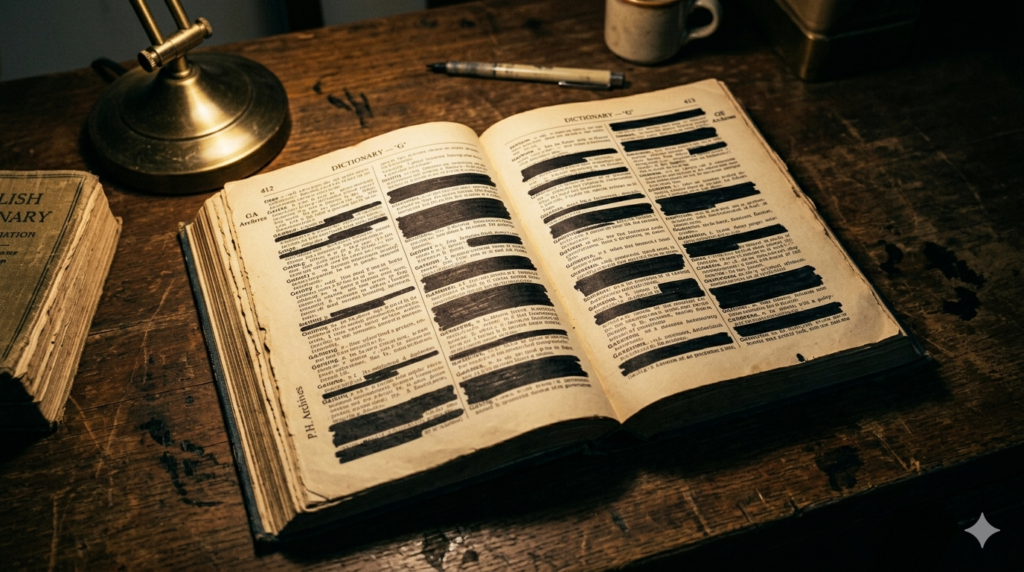
Newspeak is the Party’s project to shrink the English language down to a vocabulary small enough that certain ideas can no longer be expressed in it. Not banned. Not punished. Unspeakable — in the most literal sense. If there’s no word for freedom, you cannot demand freedom. You cannot rally others to freedom. You cannot, eventually, even miss freedom, because the shape of the thing you would miss has been planed off the inside of your skull.
The genius of Newspeak isn’t that it lies. It’s that it makes the truth grammatically impossible. You don’t ban dissent. You delete the words dissent is built from. And once enough vocabulary is gone, the population doesn’t need to be controlled anymore. The control is in their mouths.
This is the part most readers nod along to without really stopping. Read it again. Slowly.
A weapon that makes certain ideas impossible to think.
Now ask yourself how many of those you’ve already been handed this week.
Why Language Is Worse Than Any Bomb
Bombs kill people. Language kills categories of thought. The difference matters more than we usually admit.
A bomb makes you mourn. Language makes you forget there was anything to mourn. A bomb produces survivors. Language produces a population that doesn’t remember the question. A bomb has a half-life. Language has a half-life of generations, and it compounds.
Think about how often the most consequential battles of any era are won not by force but by who gets to name things. A war becomes a “police action.” A massacre becomes an “incident.” A worker becomes “human capital.” A citizen becomes a “consumer.”
A drone strike becomes a “targeted operation.” A famine becomes a “supply chain disruption.” A purge becomes a “restructuring.” Each of these substitutions does the same quiet work: it takes a thing that should make you flinch and rewrites it into a thing you scroll past.
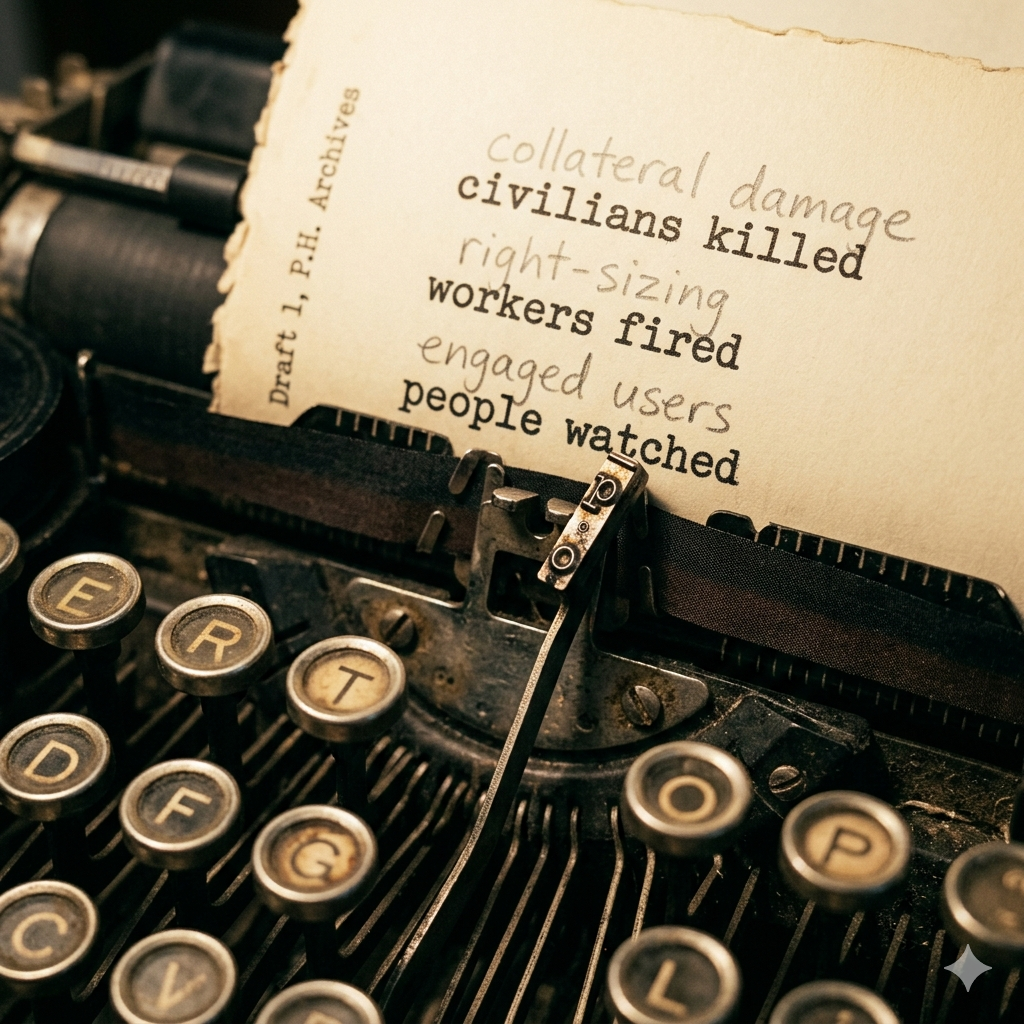
This is Newspeak. Not a future invention. A daily practice.
And once you start noticing it, you can’t stop. The euphemism isn’t a stylistic choice. The euphemism is the weapon.
Three Examples That Should Bother You
The word “engagement.” In the language of social media, “engagement” is the metric that measures how long you stayed, how much you clicked, how angry or aroused or anxious you became. The word sounds civic. It sounds like a wedding. What it actually measures is the success of a system designed to hold your attention against your will. If we called it “captivity time,” we would talk about it differently. We would legislate it differently. The word is doing political work, and it’s doing it for free.
The word “content.” A poem is content. A war crime is content. A child’s birthday is content. A confession is content. By collapsing every kind of human expression into one flat noun, we’ve quietly accepted that there’s no meaningful difference between them — they’re all just things to be scrolled, ranked, monetised, served. Orwell would have recognised this immediately. It is a textbook Newspeak move: take a hundred distinct ideas and replace them with one word that performs the same job for all of them. The richness of the original vocabulary becomes inaccessible. The thoughts that depended on that richness become harder to think.
The word “user.” You are a user. Your grandmother is a user. A nine-year-old child is a user. A person being radicalised by an algorithm is a user. The word strips away every quality that might oblige a company to treat you with care — citizen, customer, person, patient — and replaces it with a noun borrowed, fittingly, from the language of drug dealers. We’ve got two million users. Say that out loud and listen to what it would have meant in 1985. Say it again now and notice that it doesn’t even register. That’s the weapon working.
These aren’t accidents. They’re not just bad word choices that happened to spread. They’re the result of language being shaped by the people who benefit from certain ideas becoming hard to articulate. Every era has its Newspeak. We’re swimming in ours, and most of us are too busy “engaging with content” to notice.
The Quiet Genius of the Weapon
Here’s what makes language more dangerous than any explosive ever built: the targets help deploy it.
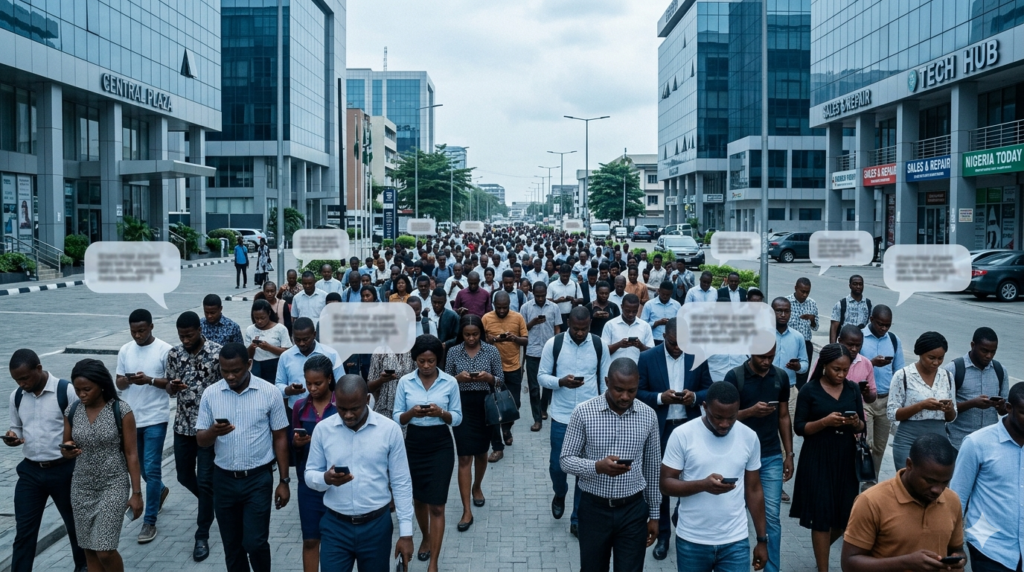
A bomb requires a bomber. Language requires only that you keep speaking. Once a piece of engineered vocabulary enters circulation — once “collateral damage” replaces “civilians we killed,” once “right-sizing” replaces “firing people,” once “content moderation” replaces “deciding what a billion people are allowed to say” — the population spreads it for free. They use it in conversation. They use it in headlines. They use it in their own minds when they’re alone, which is the part Orwell understood that nobody else quite did.
You cannot resist a weapon you’ve been trained to think with.
This is why Orwell ends 1984 not with Winston being killed, but with Winston thinking in the Party’s words. By the final pages, his interior monologue has the same texture as Party slogans. The torture worked, but the deeper victory was earlier. The deeper victory was the moment Winston stopped having sentences of his own.
That’s the moment most readers skip past. It’s the moment that matters.
Why This Should Frighten You More Than the Bomb
Nuclear weapons are terrible, but they are at least visible. Treaties exist. Counts exist. There are people whose entire jobs are to keep an eye on them, and we mostly know who has one.
Language has no inspectors. No counts. No treaties. It moves through children’s classrooms and morning emails and group chats and ad copy and policy white papers and song lyrics, and it shapes the inside of every skull it touches without anyone signing for the delivery. By the time you notice a word has changed meaning, the new meaning has already had children, and the children have moved into your nervous system.
This is why dystopian fiction, the best of it, almost always returns to language. Orwell with Newspeak. Atwood with the renaming of women in The Handmaid’s Tale — Offred, Ofglen, possession written into the very name. Burgess with the engineered slang of A Clockwork Orange. Ogawa with the disappearing nouns of The Memory Police. The great dystopians understood that you don’t need an army if you have the dictionary.
And once you have the dictionary, the army works for free, because everyone in it has agreed to call the things they’re doing by the names you’ve given them.
Reading Between the Lines
Here’s the uncomfortable thing about all of this. It’s tempting to read a piece like this and feel clever — yes, of course, language is power, I see through it now. But the trap is that you don’t, and you can’t, ever fully see through it. Your mind was built in a language you didn’t choose. The very sentences you use to resist the weapon are made from the weapon. There is no clean room to step into.
What you can do is slow down. Notice the words that do too much smiling. Notice the nouns that sand off the edges of things that should have edges. Notice when something violent has been re-described as something administrative. Notice when a person has been redefined as a number, a resource, a click, a market. Notice when a feeling you used to have a word for is harder to name now.
The Party didn’t need to invent Newspeak in a basement laboratory. Newspeak was already being invented, all around Orwell, in the slogans of his century. It is being invented, all around us, in the slogans of ours. Every era hands its citizens a starter pack of engineered vocabulary and tells them this is just how people talk now.
The most dangerous weapon ever invented isn’t the one that ends a city. It’s the one that ends the sentence you would have needed to describe what just happened.
It has been deployed against you, in small doses, every day of your life.
You are reading it now.