The Blind Spot At The Heart Of Orwell’s Masterpiece
1984 is one of the most carefully constructed novels of the twentieth century. Almost every line is doing work. The pacing of Winston’s collapse is mathematical. The political theory is so tight it has its own appendix. Even the love story, often dismissed as undercooked, turns out on a reread to be exactly the temperature the rest of the book needs.
And then there are the proles.
If you have read 1984 recently, you may already feel a small flinch at that word. The proles are the eighty-five percent of Oceania’s population that the novel forgets about for long stretches at a time. They are the working class. They live outside the Party.
They are not watched closely, not indoctrinated heavily, not subjected to the relentless surveillance that defines Winston’s life. They drink, they sing, they fight, they have sex, they bet on the lottery, they raise children. They are, in Orwell’s own framing, the only group in Oceania that is still free in any meaningful sense.
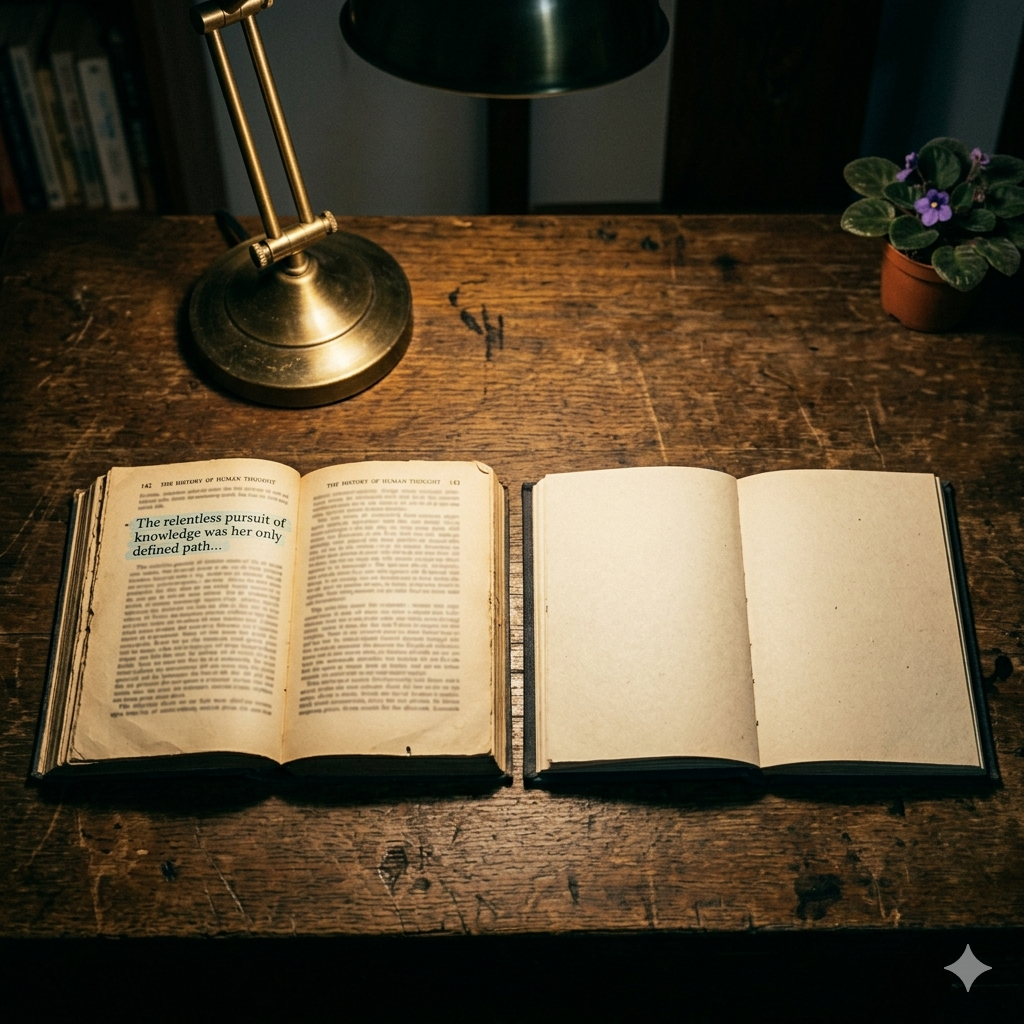
Winston writes in his diary: If there is hope, it lies in the proles. The line is famous. It’s quoted on essay covers and university syllabi. It is, on its face, the most politically important sentence in the entire novel.
And it is also where the book quietly breaks.
Because everywhere else Orwell shows us the proles — and he shows us several times, in close detail — they are not depicted as a source of hope. They are depicted as drunk, distractible, sentimental, easily manipulated, swept up in cheap entertainments, more interested in lottery numbers than in their own oppression.
Winston watches a prole woman in a courtyard hanging laundry and finds her almost beautiful, but the beauty is mute and bovine. He watches proles brawl over saucepans. He sees them roar with laughter at a film of a refugee boat being bombed. The novel keeps telling us they are the future. The novel keeps showing us they cannot be.
This is the blind spot. Not a missing detail. A structural contradiction that sits at the centre of the book and that Orwell, for all his brilliance, could not quite resolve.
And the longer you look at it, the more interesting it becomes.
What the Contradiction Actually Is
Strip the politics back to the bone. The Party, as Orwell describes it, has total control of the Inner and Outer Party — the fifteen percent of the population that knows it is being watched. The proles, the remaining eighty-five percent, are not under that control. They are, in Winston’s own analysis, free in the simple, ordinary, human ways — free to feel, to argue, to remember, to love their children, to sing old songs that haven’t been Newspeaked out of them.
Logically, this means one of two things must be true.
Either the proles, being free, will eventually become the engine of resistance — in which case the novel ought to take them seriously as political agents, give them at least one named character, show us their interior life, treat them as people whose minds matter to the future.
Or the proles, being free and yet incapable of revolution, prove something terrible: that freedom alone is not enough. That a population can be left almost entirely unmonitored and still produce no rebellion. That the absence of surveillance does not, by itself, produce political consciousness.
Orwell flinches from both. He gives us the first as a slogan and the second as a description, and he never makes the two argue with each other. The book leaves the contradiction sitting there, on the table, like a piece of evidence the author has decided not to admit.
This is the blind spot. It isn’t that Orwell ignores the proles. It’s that he assigns them a role the rest of his novel makes impossible.
Why the Blind Spot Is So Revealing
Most great novels have a soft spot somewhere. A character the author can’t quite see, a relationship the author can’t quite write, a question the author keeps almost asking and then pulling away from. The interesting ones aren’t accidents. They’re maps of where the author’s imagination ends.
Orwell’s imagination ends with the proles.
You can feel him try. The scene of the prole woman singing as she hangs laundry is one of the most tender passages he ever wrote — Winston watches her and is briefly overcome, almost shaken, by the sense that her body and her song and her unselfconscious continuity are doing something the Party cannot touch. There is a real and aching reverence in that scene. Orwell knows there is something there. He knows the proles are the answer.
He just can’t show us what they think.
Read carefully and you’ll notice: in 300-odd pages of one of the most psychologically interior novels of the twentieth century, no prole gets an interior life. Not one. We never sit inside a prole head. We never hear a prole think. We are given prole bodies, prole voices, prole songs, prole laughter, prole tears — but never the inside of a prole mind. The novel that contains the most famous interior monologue in dystopian fiction simply does not enter the consciousness of the eighty-five percent of the population it claims is the future.
This isn’t a small omission. This is the whole game.
Orwell, a man who spent years writing about poverty in Down and Out in Paris and London, who lived among the working poor in The Road to Wigan Pier, who fought alongside ordinary Spanish workers in Homage to Catalonia, who was as politically committed to the working class as any English writer of his century — that Orwell, when he comes to write his great novel about hope, cannot quite imagine what the inside of a working-class mind looks like in real time.
He admires it. He longs for it. He believes in it. He cannot write it.
What This Reveals About 1984
Once you see the blind spot, the rest of the book starts looking different.
The Party in 1984 is described, repeatedly, as a small minority — fifteen percent of the population — that maintains absolute power over the other eighty-five. The novel treats this as an iron cage. Total. Inescapable. The conditions for revolution can never assemble.
But the novel can only treat this as iron because it has quietly excluded the eighty-five percent from the story. The proles aren’t a sleeping giant the Party has cleverly subdued. They’re a sleeping giant the novel has politely declined to wake up. We don’t see them organise because we don’t see them think. We don’t see them rebel because we never enter their houses. The Party’s totality is partly a function of Orwell’s narrative camera — a camera that points relentlessly at the fifteen percent who are watched, and looks past the eighty-five percent who aren’t.
This is why 1984 feels so airless. The world is sealed because the parts of it where air could come in are kept off-camera.
And this is also why the book’s pessimism, on a close read, is partly architectural rather than political. Orwell isn’t just describing a society that cannot be changed. He’s writing a novel that cannot contain the people who would change it. The proles are too large, too varied, too alive for the book’s tight, surveilling lens. So they stay outside the frame. And from outside the frame, they cannot help Winston, because they cannot help anyone Orwell hasn’t given a name.
What This Reveals About Orwell
Here’s where this gets interesting beyond the novel itself.
Orwell’s blind spot isn’t unique to him. It’s a blind spot a great many radical and progressive writers of his century shared, and that a great many still share now. The pattern is recognisable: passionately politically committed to a group, intellectually convinced they are the engine of history, unable to write them as fully interior people on the page.
The working class in Orwell. The colonised in many of his contemporaries. Women in countless mid-century men. Rural people in countless urban writers. There is a strange disconnect, very common in serious literature, between believing in a group politically and being able to render that group novelistically — to give them the same inward density the author gives their narrator.
Orwell believed in the proles. He fought for them in real life. He died believing they were the future. But on the page, in his most important book, they remained, finally, a symbol — the laundry-hanging woman, the brawling crowd, the singing voice in the courtyard — rather than a set of minds. He couldn’t quite cross the last bridge. He couldn’t quite be one of them long enough to write from inside.
And so the most politically committed dystopian novel of the twentieth century ends up making a quietly conservative argument almost by accident: that the great mass of ordinary people are real, and free, and full of feeling, and not yet able to imagine themselves as political agents. That hope lies in them, but they cannot be shown to be hoping.
This is not, in the end, a description of the proles. It is a description of what Orwell could and could not write.
Why This Matters for How We Read the Book
It’s tempting, having spotted this, to use it as a stick to beat 1984 with. Look — even Orwell couldn’t escape his class blind spots. Even his great anti-totalitarian novel quietly disenfranchises the very people it claims as the future. That’s a real critique and it isn’t wrong.
But it’s also too easy.
The more interesting move is to take the blind spot as a gift. Because the blind spot is honest. It is, in its accidental way, more truthful than any number of polished political tracts. Orwell did not pretend to see what he couldn’t see. He didn’t fake the prole interior. He didn’t invent a working-class hero to flatter his own politics. He left the gap visible. He let the contradiction sit there. If there is hope, it lies in the proles — and then a novel that cannot show us proles thinking.
This is part of what makes 1984 a book that keeps generating new readings rather than collapsing into a single one. The masterpiece is not airtight. The masterpiece has a hole in it the size of eighty-five percent of the population, and the hole is exactly where the question of the future ought to be. Different generations of readers look into that hole and see different things. Some see Orwell’s class limits. Some see a warning about the limits of intellectual rebellion. Some see the seeds of an argument Orwell himself didn’t quite make — that the people who eventually free societies are precisely the people the surveillance apparatus considers beneath attention.
The blind spot doesn’t ruin the book. The blind spot is part of the book.
Reading Between the Lines
Here is the deeper truth. Every great novel about politics has a blind spot, because every novelist has one. The question isn’t whether the writer saw everything. No one does. The question is whether the gaps in the book are productive gaps — whether they generate thought in the reader rather than closing it down.
Orwell’s gap is productive. It hands the reader a problem he could not solve, and it does so with so much sincerity that the reader cannot help but try to solve it themselves. If the proles are the hope, what would it take to write them as the hope? That question has been answered, in pieces, by writers Orwell never lived to read — by Toni Morrison, by Alice Walker, by Ousmane Sembène, by Yvonne Vera, by Tsitsi Dangarembga, by Mia Couto. Each of these writers does, for their own communities, exactly what Orwell could not do for his: enter the interior. Render the inside of the mind that the dominant culture has refused to take seriously. Let the eighty-five percent speak.
In a strange and indirect way, 1984 is part of what made that later work necessary. Orwell pointed, with one trembling hand, at the people the future would belong to. He could not draw them. But he was honest enough to point.
The masterpiece isn’t airtight. The masterpiece has a door it could not open.
Reading between the lines means noticing that door — not to dismiss the book that left it shut, but to ask what’s on the other side, and which writers have since walked through.
That’s what makes 1984 still worth reading, seventy years on. Not because it answered every question about power. Because it left one of the most important questions wide open, and let us know, by the shape of its silence, that the question was there.