1984’s Most Disturbing Truth About Control
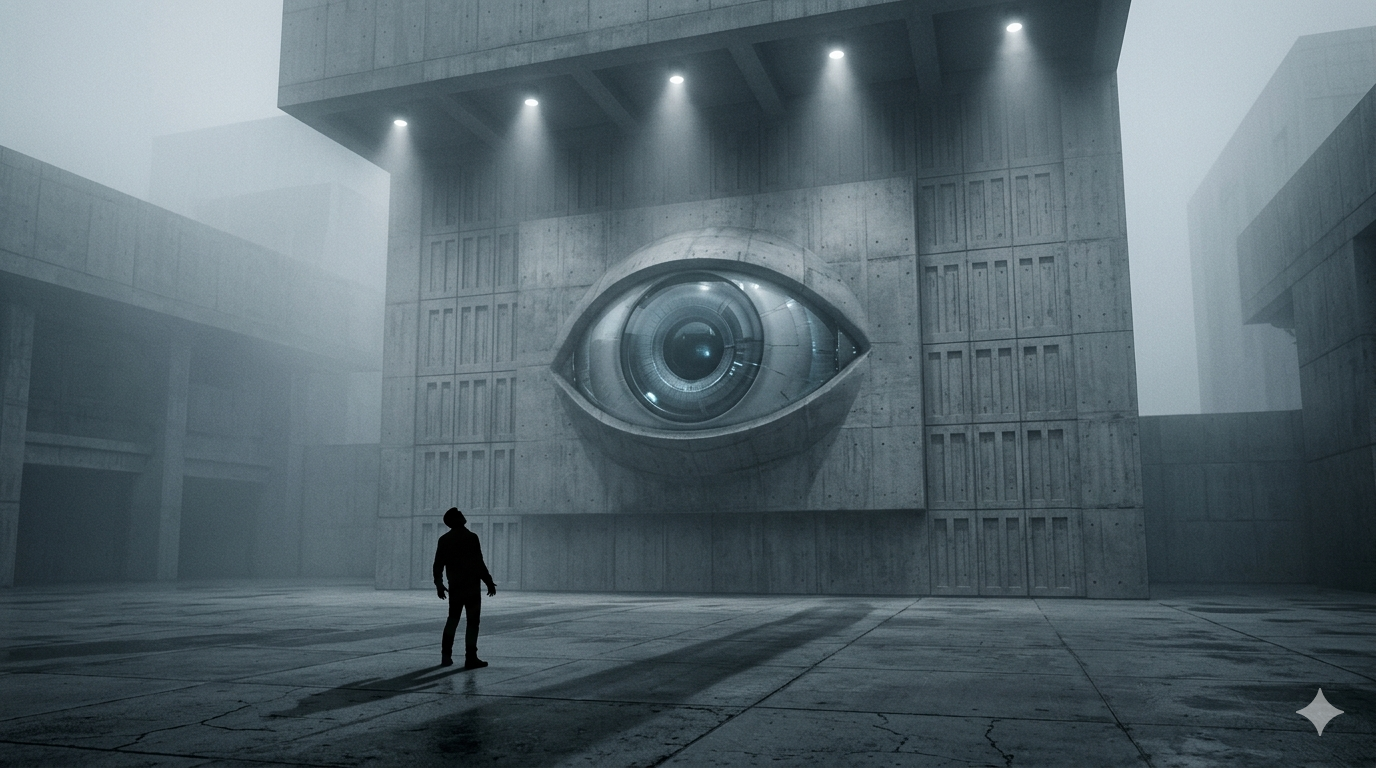
Most people remember 1984 for the surveillance. The telescreens watching every room. The Thought Police. Big Brother’s face on every poster. And those things are unsettling, sure. But they’re not what makes the book genuinely terrifying. They’re not even close.

The truly disturbing idea in 1984, the one that should keep you up at night long after you’ve closed the book, is this: the Party isn’t trying to make people obey. It’s trying to make them believe.
That distinction matters more than it sounds.
Tyrannies throughout history have wanted compliance. Do what you’re told, don’t make trouble, and we’ll leave you alone. You can hate the regime in private as long as you cheer it in public.
That’s the bargain most authoritarian states actually offer. It’s grim, but it leaves something intact: your inner life. Your own thoughts. The quiet certainty that you know what’s real, even when you can’t say so out loud.
The Party in 1984 finds this unacceptable.
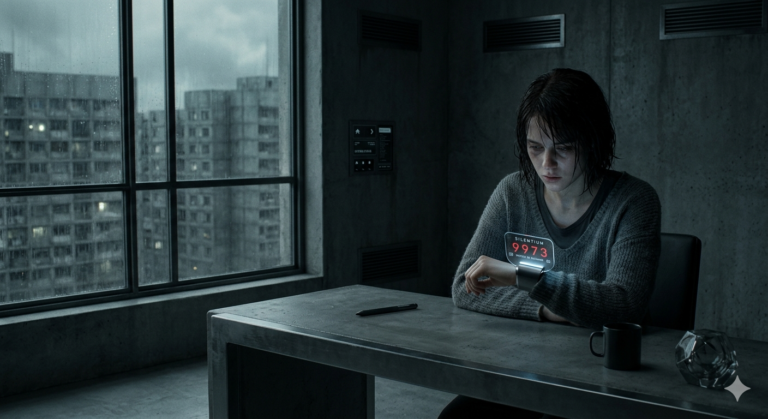
When O’Brien finally has Winston in the Ministry of Love, breaking him piece by piece, he isn’t just trying to stop the rebellion. He doesn’t even want Winston to say he loves Big Brother while secretly hating him. That would be a kind of victory for Winston. A small one, but real. As long as you can hate them silently, you’re still you.

O’Brien wants more than that. The torture isn’t punishment. It isn’t even, primarily, about extracting a confession. It’s about reaching into Winston’s mind and rearranging it until he genuinely sees what the Party wants him to see. Until 2+2=5 isn’t a lie he’s forced to recite, but something he actually perceives.
The famous “how many fingers” scene is the heart of this. O’Brien holds up four fingers and asks how many there are. Winston says four. He gets shocked. The point isn’t to make him say five out of pain — anyone will say anything under torture, and O’Brien knows it. The point is to keep going until Winston actually sees five. Until reality itself bends inside his head.
This is what sets 1984 apart from almost every other dystopia. The Party isn’t satisfied with controlling what you do, what you say, or even what you can safely think. They want to control what is. And since reality, for any given person, is filtered through their own mind, controlling that mind means controlling reality.
There’s a moment early in the book where Winston writes in his diary that freedom is the freedom to say that two and two make four. If that’s granted, everything else follows. He’s right. And the Party knows he’s right, which is exactly why they refuse to grant it.
Look at what they do with the past. They don’t just censor inconvenient history. They actively rewrite it, over and over, and then destroy the old versions. Winston’s whole job at the Ministry of Truth is exactly this.
Yesterday’s newspaper said the chocolate ration was being raised? Today it says the ration was lowered, and yesterday’s paper never existed. People are made into “unpersons,” not just killed but retroactively erased, as if they had never lived at all.
Why bother? It would be far easier to just suppress dissent. The reason is that the Party doesn’t want a population that grudgingly accepts official lies. It wants a population that has nothing else to compare them against. If there’s no stable past, there’s no benchmark for reality. Your memory becomes unreliable. Eventually you stop trusting it. You trust the Party instead.

This is doublethink: the ability to hold two contradictory beliefs at the same time and accept both. Not as cynicism, not as performance, but as a genuine mental state. The Party member who chants that Oceania has always been at war with Eastasia while also remembering, somewhere, that it used to be at war with Eurasia. Both true. Both believed. The contradiction simply doesn’t register.
You can see why a regime would want this. A population capable of doublethink is a population that can’t be destabilized by facts, because facts have no purchase. Show them evidence the regime is lying and they’ll process it without breaking. They’ll believe the evidence and the lie simultaneously, and accept whichever one the Party tells them to.
This is total control. Not over bodies, not over speech, but over the very faculty by which a person knows anything at all.
And then there’s the ending.
I don’t think people fully sit with the ending. Winston, broken, sitting alone in the Chestnut Tree Café, drinking gin. The final image. He looks up at the poster of Big Brother and feels — what? Resentment? Hatred? Resignation?
No. He loves him.
The book closes with that line: “He loved Big Brother.” Four words. They’re the most devastating ending in twentieth-century fiction, and they mean exactly what they say. Winston isn’t pretending. He hasn’t been beaten into sullen compliance. He’s been rebuilt.
The Party has won, and they didn’t win by killing him or silencing him. They won by changing what he is on the inside until he genuinely loves the thing that destroyed him.
That’s the disturbing truth about control. Old-fashioned tyranny says: behave or we’ll hurt you. The Party says: we will keep going until you love us. Until you want what we want. Until there is nothing of you left that isn’t us.
Orwell wasn’t predicting any specific regime. He was identifying a possible direction, a logic that any sufficiently committed totalitarian project would eventually follow if it had the technology and the will.
Control of behavior is the floor. Control of speech is the next step. Control of thought is the ceiling. And once you have that, you don’t need to enforce anything anymore. Your subjects enforce it on themselves, gladly.
Reading 1984 today, with everything we now know about how easily attention can be steered, how readily memory can be reshaped by the steady drip of curated information, how much of what we call “knowing” is really just trusting some source we’ve decided to trust — the book hits differently than it used to. It’s not that we live in Oceania.
We don’t. But the mechanism Orwell described — the idea that power isn’t really power until it owns the inside of your head — feels less like dystopian fantasy and more like a permanent risk. The kind that has to be actively resisted, generation after generation, because the temptation to seize it never quite goes away.
That’s why the book still matters. Not because of the surveillance. Not because of the torture. Because of what comes after the torture, when the prisoner walks out into the sun, and smiles, and means it.