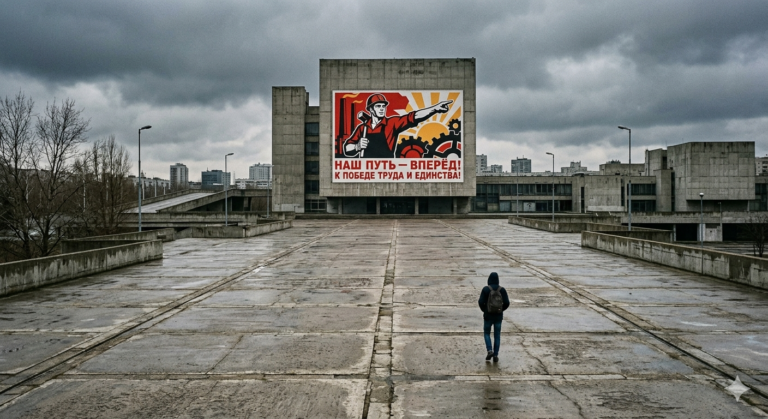
5 Novels That Explain What 1984 Left Unsaid
1984 is one of those books that feels complete until you start asking it real questions. What happens to children in a world like Oceania? What does the Party look like from the inside, not from Winston’s small clerk-level view? What about the people who actually like the system? What happens when the regime ends — does anyone heal? And what about everywhere that isn’t London?
Orwell, for all his brilliance, was writing one man’s nightmare from one corner of a city. The novel is intentionally narrow. That’s part of its power. But it means he left huge territory unexplored — and other writers, before and after him, walked into that territory and made it their own.
Here are five novels that fill in the silences in 1984. Each one answers a question Orwell raised but didn’t get to.
1. We by Yevgeny Zamyatin — the book Orwell was answering
Start here, because almost no one does. We was written in 1921, more than two decades before 1984, and Orwell openly admitted it influenced him. In some places he borrowed entire ideas wholesale. Reading We after 1984 is uncanny — like finding the rough draft of a song you’ve known your whole life.
Zamyatin’s One State is a glass city of mathematical perfection. Citizens are called by numbers, not names. Sex is rationed by appointment. Buildings are transparent. Reason is god. The narrator, D-503, is a happy and patriotic engineer building a spaceship to spread the One State’s perfection to other worlds — until he meets a woman who introduces him to the appalling concept of an interior life.

What We gives you that 1984 doesn’t: the dystopia of happiness. Zamyatin’s citizens aren’t beaten down. They’re genuinely fulfilled. They love their cages. They find Western-style freedom not just frightening but disgusting, the way most of us would find living in a sewer. Orwell’s Oceania runs on fear. Zamyatin’s One State runs on contentment, which is — if you sit with it long enough — far more terrifying.
If 1984 asks what does tyranny look like?, We asks what if tyranny felt like peace?
2. Brave New World by Aldous Huxley — the other half of the warning
Most readers know to put Huxley and Orwell in the same sentence, but they often don’t realise how directly the two books argue with each other. Huxley’s Brave New World came out in 1932; Orwell’s 1984 in 1949.
Huxley actually wrote Orwell a letter after 1984 was published — politely, but firmly — saying he thought Orwell had the future wrong. Tyranny, Huxley argued, wouldn’t need boots and torture. It would just need pleasure.
His World State runs on engineered contentment. Genetically designed castes. Casual sex. A drug called soma that erases anything resembling existential discomfort. Babies conditioned in bottles to love their station.
There’s no Big Brother because no one feels the urge to rebel — and the few who do are quietly shipped off to islands where they won’t disturb anyone.

What Brave New World gives you that 1984 doesn’t: the dystopia of consumption. Orwell’s citizens are deprived. Huxley’s are overfed. Orwell’s are watched.
Huxley’s are entertained. And honestly — if you live in a country with infinite scrollable content, prescription numbing, and a politics that increasingly feels like a livestream — you already know whose prediction is winning.
1984 asks what will they do to us? Brave New World asks what will we ask them to do to us?
3. The Handmaid’s Tale by Margaret Atwood — the receipt for everything Orwell left out about gender
1984 has Julia, and Julia is interesting, but Orwell was not particularly interested in writing about women. He was interested in Winston, and Julia is mostly a counterpoint to him — earthy where he’s cerebral, sexual where he’s repressed, willing to live in the cracks of the system where he wants to detonate it. She matters, but she’s not the lens.
Atwood took the lens and turned it sideways.
The Handmaid’s Tale asks a question Orwell either couldn’t or wouldn’t: what does totalitarianism look like specifically for women? Gilead isn’t a far-future invention. It’s stitched together from things that have already happened — Puritan New England, 1980s evangelical politics, Romania under Ceaușescu, scripture quoted with surgical selectivity. Atwood famously said she put nothing in the book that hadn’t already been done somewhere by some regime to some woman. The receipts are real.
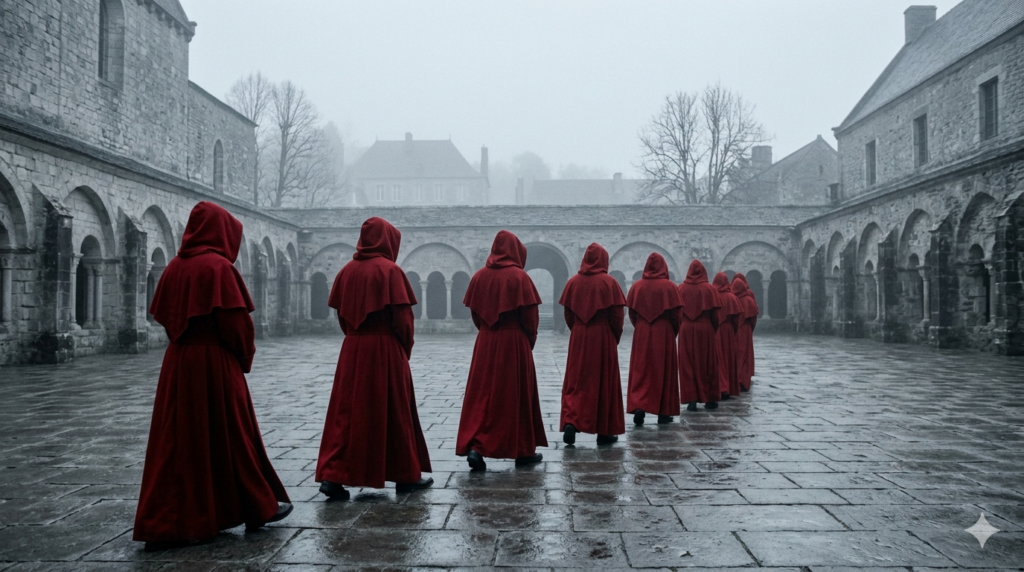
What The Handmaid’s Tale gives you that 1984 doesn’t: the texture of life under a regime that controls bodies before it controls thoughts. The way reproductive control, dress, naming, and movement become the architecture of oppression long before anything as dramatic as the Thought Police is needed.
1984 asks what is freedom of mind? The Handmaid’s Tale asks what is freedom of body, and what happens when a society decides certain people don’t get any?
4. Never Let Me Go by Kazuo Ishiguro — the dystopia you don’t notice you’re in
This is the one most people don’t think of as a dystopian novel, which is exactly why it belongs on this list.
Ishiguro’s England is gentle. Pastoral. Ordinary. The students at Hailsham have art class and crushes and minor schoolyard dramas. There’s no Party, no slogans, no boot. There is, however, a quiet and unquestioned arrangement: these children exist to grow up and donate their organs until they die. Everyone knows. Nobody really talks about it. Life continues.
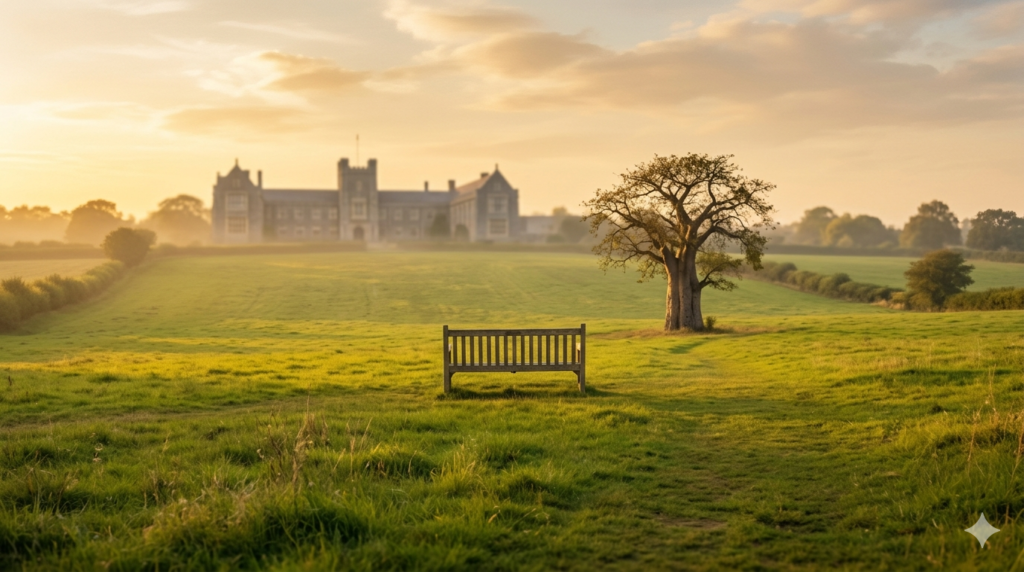
The horror of Never Let Me Go is that there is no horror, exactly. There’s just acceptance. The characters don’t rebel because rebellion has never been part of their world. They simply live, love, mourn, and proceed gracefully to their own dismantling.
What Never Let Me Go gives you that 1984 doesn’t: a dystopia without villains. No Big Brother. No O’Brien. No moment of revelation. Just a society that decided some people don’t fully count, and a generation that grew up inside that decision and never thought to question it.
1984 asks what does it look like when a regime crushes you? Never Let Me Go asks what does it look like when a regime never has to, because you were raised not to imagine any other life?
5. The Memory Police by Yoko Ogawa — what Orwell’s “memory hole” actually feels like from the inside
Orwell gave us the memory hole — the chute where inconvenient history is dropped and burned. But he showed it mostly from the perspective of the man feeding it. We never really feel what it’s like to be the person whose memories are vanishing.
Ogawa does.
On her unnamed island, things simply disappear. Not destroyed — disappeared, from the world and from people’s minds. One day it’s hats. Then birds. Then roses. Then ferries.
The Memory Police make sure no trace remains, but most of the work is done by the citizens themselves, who wake up unable to remember what was lost. A few people are born with the inconvenient condition of being able to remember everything, and they have to be hidden, or eventually hunted.
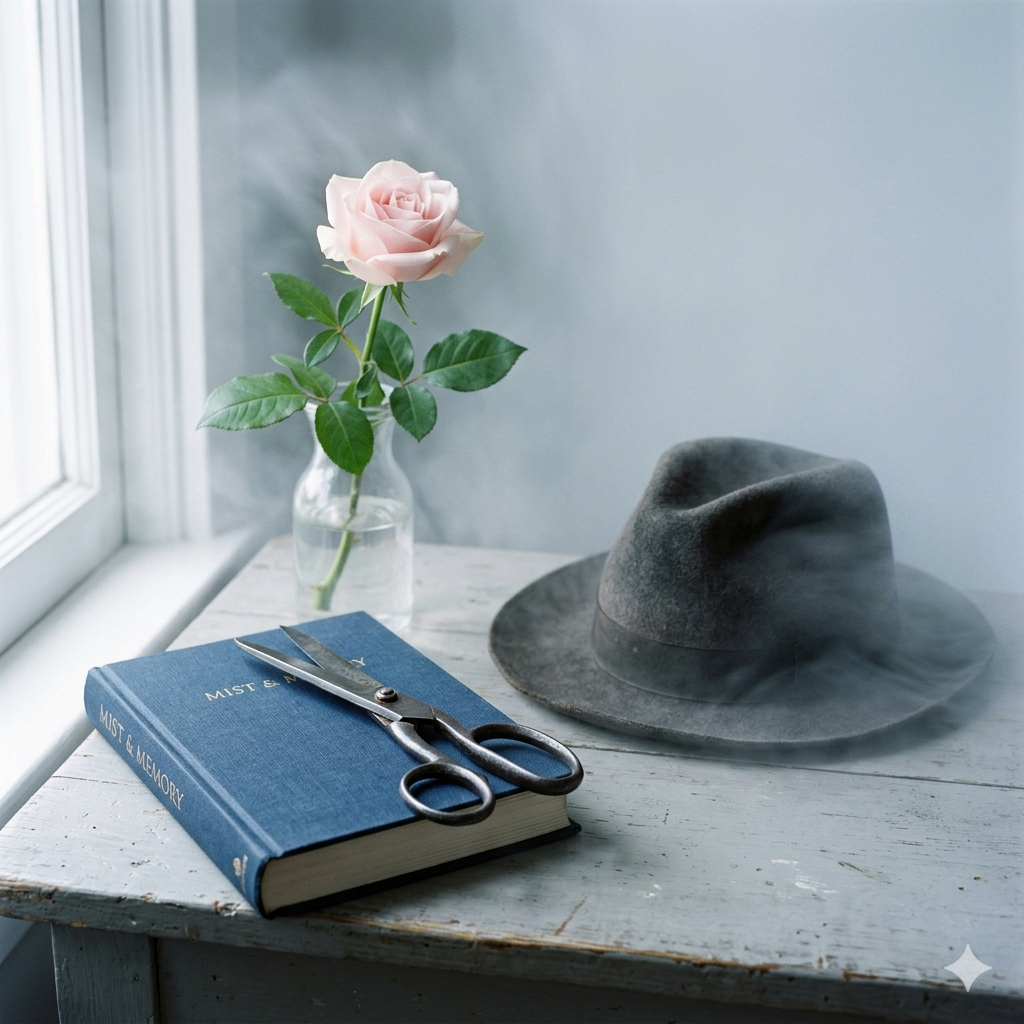
What The Memory Police gives you that 1984 doesn’t: the interior experience of erasure. Orwell tells you that the Party rewrites history. Ogawa makes you feel what it’s like when reality itself thins out. Page by page, the novel actually enacts what it’s describing — it gets quieter, sparer, more hollowed out. By the end, you’ve experienced something genuinely strange: a book where the world disappears around its own narrator while you’re reading.
1984 asks what if they could control the past? The Memory Police asks what if the past simply slipped out of you, day by day, and nobody could remember enough to mourn it?
Reading Between the Lines
These five novels don’t replace 1984. They surround it. They’re the conversation Orwell started without quite finishing.
We gives you the dystopia of contentment. Brave New World gives you the dystopia of pleasure. The Handmaid’s Tale gives you the dystopia of the body. Never Let Me Go gives you the dystopia you don’t notice. The Memory Police gives you the dystopia of forgetting.
Read all five and Orwell’s novel actually grows. You start to see 1984 less as a singular vision and more as one room in a much larger house — the house where modern writers have been arguing, for nearly a century, about what exactly we should be afraid of, and from which direction it’s most likely to come.
The unsettling part, if you’re paying attention, is that none of these writers were really predicting one future. They were each describing a piece of the present, slightly rotated. And between them, they’ve covered most of the angles.
The question now isn’t which of them was right.
It’s which of them you’re currently living in.