What You Missed in 1984: Three Objects That Destroy the Entire Narrative
Most people remember 1984 for its big moments. Room 101. The rats. Two plus two equals five. Big Brother on the wall. These are the scenes that get quoted, parodied, tattooed on people’s forearms in moments of poor judgement.
But Orwell wasn’t really writing through scenes. He was writing through objects.
The book is full of small, ordinary things — a paperweight, a diary, a nursery rhyme — and they’re doing far more than decorating the room. Each one is a kind of trapdoor. Stand on it long enough and the floor of the novel falls out from under you.
Here are three of them. Once you see what they’re actually doing, you can’t read 1984 the same way again.
1. The Glass Paperweight
Winston buys it from an antique shop in the prole quarter. A small dome of glass with a piece of pink coral sealed inside it. He thinks it’s beautiful. He thinks it’s useless. He thinks that’s the point.
Most readers file the paperweight under “nice detail” and move on. But look at what Orwell actually does with it.

The paperweight is the only object in Winston’s entire life that has no function in the Party’s world. It produces nothing. It serves no slogan. It can’t be turned into a tool, a weapon, or a piece of propaganda. It exists purely because someone, a long time ago, thought it was lovely. That’s it. That’s the whole crime.
When Winston looks into it, he imagines himself and Julia inside the glass — preserved, untouchable, somewhere outside time. The paperweight becomes a tiny private universe. A pocket of beauty the Party hasn’t gotten to yet.
And then, in the scene where they’re arrested, the paperweight is smashed on the floor.
Not broken. Smashed. Deliberately. By a boot.
Because that’s what the Party actually exists to destroy. Not rebellion. Not even thought. Beauty for its own sake. Anything that says: this matters because it’s lovely, not because it’s useful. The paperweight isn’t a symbol of Winston and Julia’s love. It’s a symbol of every part of human life that refuses to justify itself in the Party’s language.
When it breaks, the novel is essentially over. The torture is just paperwork.
2. The Diary
Everyone remembers that Winston keeps a diary. Fewer people stop to ask the obvious question: why does Orwell open the entire novel with him buying it?
The diary is the first object Winston interacts with in the book. Before we meet Julia, before we meet O’Brien, before we even meet Big Brother properly — we meet a man buying a blank notebook from a junk shop and being terrified of it.
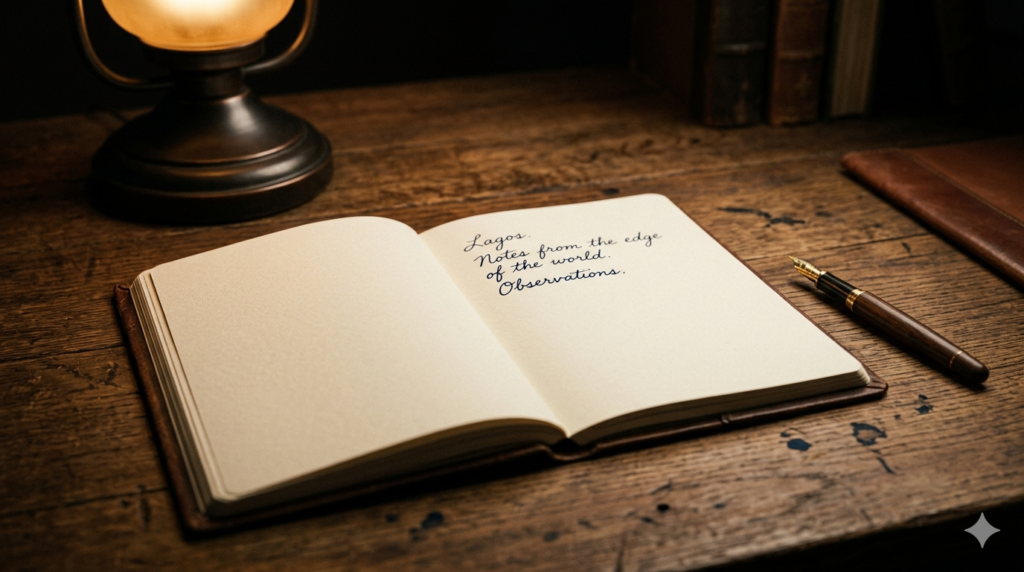
Read that opening again and you’ll notice something: Winston doesn’t really know what to write. He sits there with the pen hovering. He scribbles the date. He panics. Eventually he writes “DOWN WITH BIG BROTHER” over and over, like a child trying to summon courage.
The diary isn’t a record of Winston’s rebellion. The diary is the rebellion. The act of writing — privately, for an unknown future reader, in your own words, in your own handwriting — is the thing the Party cannot survive. Not because of what you might say. Because of what writing is.
Writing assumes a future. Writing assumes someone, someday, will read this and care. Writing assumes that you — your specific mind, your specific sentences — are worth preserving. Every one of those assumptions is heresy in Oceania, where the past is rewritten daily and individual consciousness is supposed to dissolve into the collective.
This is why Winston’s diary entries get more confident as the book goes on, and why the Party’s victory at the end isn’t really sealed by torture. It’s sealed by the moment Winston stops being someone who would ever write again. By the final pages, his thoughts have the same texture as Party slogans. There’s no diary left in him. There’s no him left in him.
Orwell didn’t put the diary at the start of the book by accident. He was telling us: watch this object. When it dies, the man is gone.
3. The Nursery Rhyme
This one slips past almost everyone. There’s a small, half-remembered rhyme that drifts through the novel — Oranges and lemons, say the bells of St Clement’s. Different characters know different fragments of it. Mr. Charrington knows a verse. The prole woman in the courtyard hums it. Julia knows part. O’Brien, devastatingly, knows the ending.
It looks like background music. It isn’t.
The rhyme is a piece of England that exists before the Party. Before Oceania. Before Newspeak. It’s a fragment of a world where children sang about church bells in real cities with real names. And every character who knows a piece of it carries, without realising, a shard of that older world inside them.
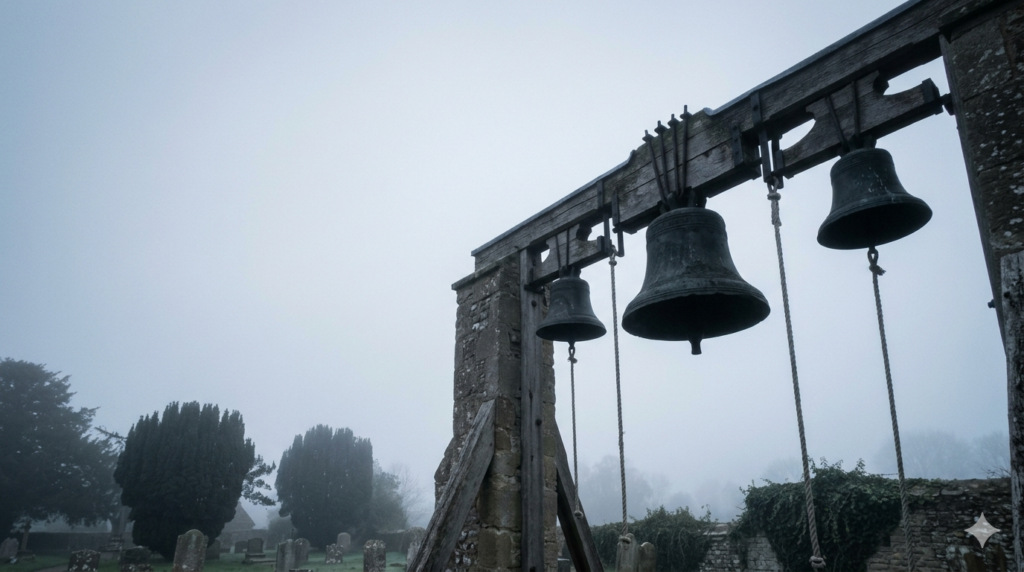
When O’Brien completes the rhyme during Winston’s interrogation, it isn’t a gentle moment. It’s the most chilling beat in the book. Because what he’s showing Winston is this: we know about that world too. We’ve always known. We let you find your fragments. We let you think they were yours. The whole rebellion you imagined — the secret history, the lost England, the songs from before — we own that as well.
The nursery rhyme isn’t a relic of resistance. It’s bait.
And once you see that, you have to reread the whole novel with a sicker feeling, because it forces a question Orwell wants you to sit with: how much of Winston’s rebellion was ever really his? The diary he bought in a shop the Party probably watched. The room above the shop, rented from a man who turned out to be Thought Police. The book by Goldstein, which O’Brien casually admits he helped write. The rhyme that O’Brien finishes for him.
1984 is often described as a book about a man who tries to rebel and fails. But the objects tell a different story. They suggest the rebellion was a stage set. That Winston was being walked, gently, lovingly, through a script the Party had written for him long before he picked up the pen.
The horror isn’t that he loses. The horror is that he was never really playing.
Reading Between the Lines
This is what Orwell does that the surveillance-camera reading of 1984 completely misses. He doesn’t tell you the Party is total. He shows you, through objects, through small ordinary things that you almost don’t notice — a glass dome, a notebook, a half-remembered song.
The novel’s most devastating arguments aren’t in its speeches. They’re in its props.
So if you’ve only ever read 1984 for the plot, you’ve essentially read the trailer. The film is in the things Winston touches. The paperweight that shouldn’t exist. The diary that opens a future no one will read. The rhyme that turns out to belong to the people who are killing him.
Read them again. Slowly. They’re trying to tell you something the rats never could.