Who Fears Death Is the Dystopia the West Has Refused to Write
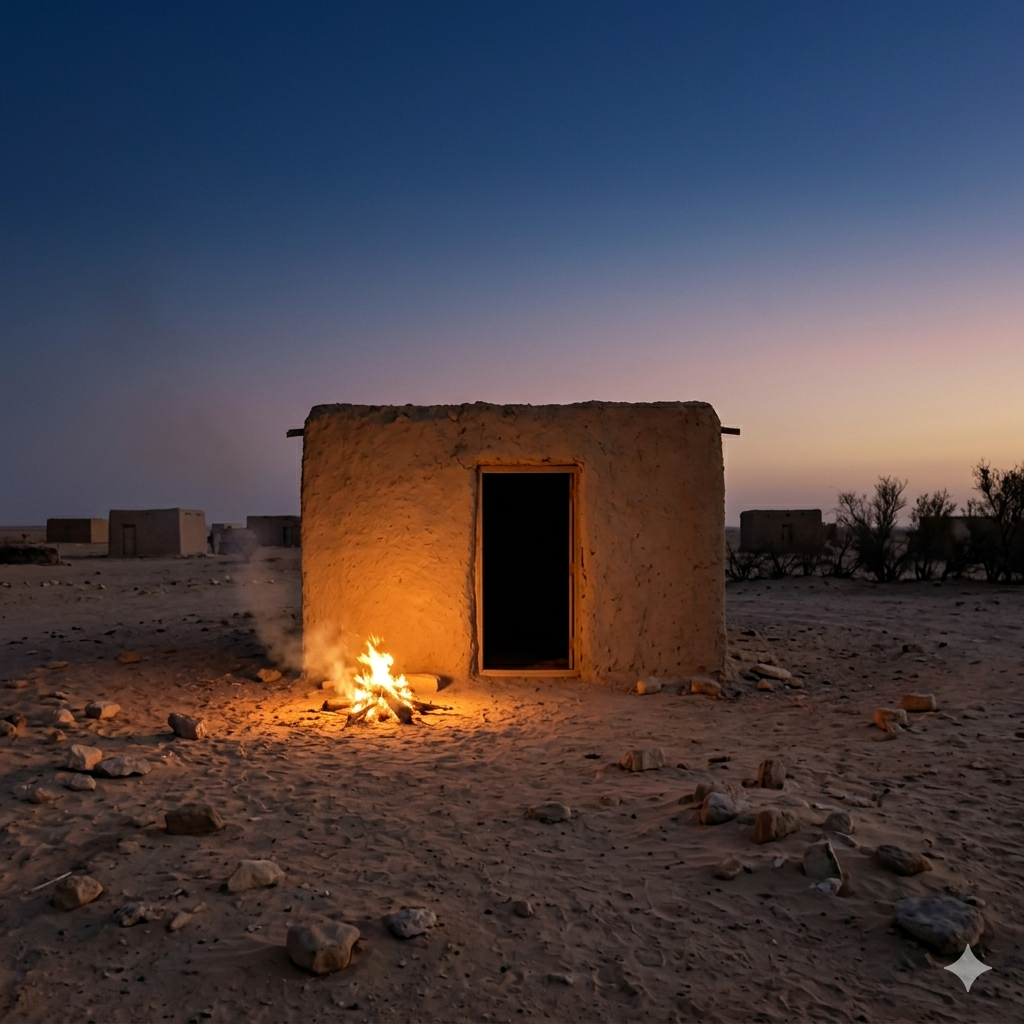
There is a scene early in Nnedi Okorafor’s 2010 novel Who Fears Death in which the protagonist, a young woman named Onyesonwu, undergoes the ritual practice that the novel calls the Eleventh Rite. Four girls, including Onyesonwu, are taken at night to a hut at the edge of their town. There they are circumcised, with a small scalpel, by an elderly woman who has performed the rite for decades.
The scene is two pages long. It is described with clinical precision. The girls are awake. They have agreed to the procedure, in the limited sense that an eleven-year-old can agree to anything her culture has prepared her to want. They bleed. They lie afterward in the same hut, holding each other, while the older woman tends to them.
Most Western readers, encountering this scene, react in one of two ways. They flinch and read past it as quickly as they can, registering it as a piece of cultural anthropology rather than as part of the novel’s argument. Or they react with the kind of horror that is not quite horror at the scene itself but horror at the culture the scene seems to indict, which is a very different kind of response and a far more comfortable one.
Both reactions miss what Okorafor is doing. The scene is not an indictment of a culture. The scene is an opening move in a novel-length argument about what kind of dystopia the West has been unable to imagine, because the West has never been required to imagine it.
This is the dystopia of the female body under engineered violence. It is the territory the canonical dystopias of the twentieth century have stayed away from. It is the territory Okorafor walks into in the first thirty pages of her novel and does not leave for the remaining four hundred. And it is the reason Who Fears Death belongs on every serious dystopian reading list in the world, and is on almost none of them.
This post is an argument for reading the book that way.
The Book in Brief
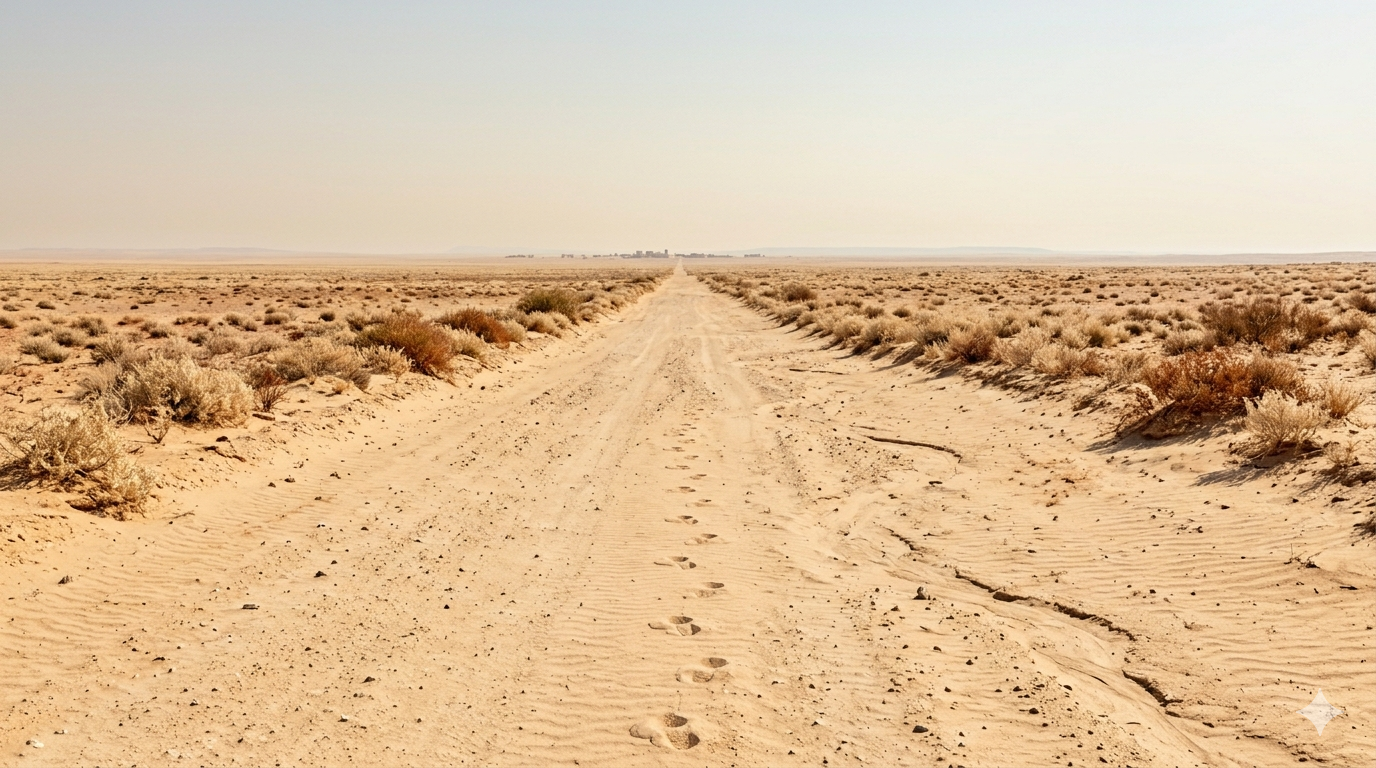
Who Fears Death was published in 2010. It is set in a post-apocalyptic Sudan, in a future in which a series of unspecified catastrophes have reduced the technological civilisation of the present to a sparse network of desert settlements connected by old roads. The protagonist, Onyesonwu, whose name means Who Fears Death, is the child of a wartime rape.
Her mother was raped by a man of the Nuru ethnic group during a genocidal campaign against the Okeke, to whom her mother belongs. Onyesonwu is therefore biologically half Nuru and half Okeke, and she is born with the pale skin and reddish-brown features that mark her, in this society, as Ewu, the child of violation, neither one ethnic group nor the other and welcome in neither.
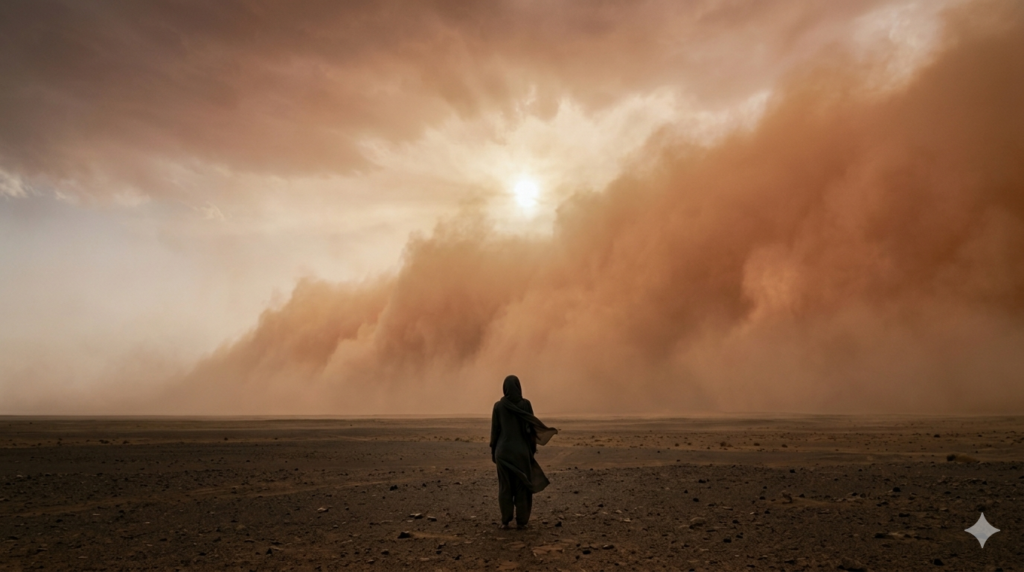
Onyesonwu develops magical powers. She can shape-shift. She can heal. She can, eventually, undo the genocide her father is still conducting in the west. The novel follows her as she travels across the desert with a small group of companions, including her lover, to confront the man who fathered her and to end the war he is running.
That is the surface. Beneath it, the novel is doing four things that Western dystopian fiction has, with rare exceptions, refused to do.
What the Novel Knows: Four Arguments
First: that genocide is not metaphorical.
When Western dystopian fiction approaches genocide, it tends to approach it as backdrop, allegory, or distant fact. Orwell mentions atrocities in Eurasia without describing them. Atwood collects historical receipts of various regimes’ crimes against women and stitches them into Gilead, but Gilead is presented at a slight literary remove, as a parable. McCarthy’s The Road shows the aftermath of an unnamed apocalypse without specifying its political mechanism. Bradbury, Huxley, and Vonnegut all gesture at mass violence without sitting inside it.
Okorafor refuses this remove. The genocide in Who Fears Death is named, located, and specific. The Nuru are killing the Okeke. The killing involves systematic sexual violence as a tool of demographic warfare. Children are conceived in mass rape camps deliberately, as part of an explicit policy of making the next generation of Okeke women bear visibly Nuru-marked children. The novel knows the difference between rape as a violation of an individual and rape as a state instrument, deployed at scale, with logistics and command structures.
This is not invented for fiction. This is exactly what was happening in Darfur in the years Okorafor was writing the novel. The Janjaweed militias, with the support of the Sudanese government, were conducting a genocide against the non-Arab populations of Darfur, and the systematic rape of Darfuri women was one of the central tools of that campaign. The international community knew. The international community largely did not act. The novel was written into the silence of that non-action.
To call the genocide in Who Fears Death speculative is to misunderstand what speculative fiction is. Speculative fiction extrapolates. It takes a present-day reality and imagines its future consequences. Okorafor’s novel takes a present-day reality, which is the genocide in Darfur, and writes it into a slightly displaced setting in order to be able to describe it more honestly than the literary realism of the moment would have permitted. The displacement is the technique. The content is the reportage.
This is what Western dystopia has, with the partial exception of Atwood, refused to do. It has refused to write the regime that is currently operating, in the present tense, on the bodies of real women, in places the reader could find on a map.
Second: that the female body is a site of political engineering.
I mentioned the Eleventh Rite. Let me return to it now that the broader frame is in place.
The rite, in the novel, is a coming-of-age ceremony involving the surgical removal of a small piece of tissue from each girl. The girls are told it will help them become better wives. The rite is presented as a cultural practice, with deep history, performed by women, for women. It is also a piece of social technology. The girls who undergo it are physically marked, internally and externally, in a way that organises their future sexual lives around the regime’s requirements. They are less likely to experience pleasure. They are more likely to remain faithful to a husband who will eventually be chosen for them. They are less likely to act on their own desires. The rite produces, with surgical precision, the kind of woman the society needs.
Okorafor does not call this dystopian engineering. She does not have to. She describes the rite, describes its effects, describes the girls’ acquiescence, describes the ways in which the rite is enforced through social pressure rather than through formal violence, and lets the reader draw the conclusion. The conclusion is that the regime in Who Fears Death has been operating on the female body as a piece of political infrastructure for generations, in the same way other regimes have operated on language or on labour.
This is a category of dystopia the Western canon has almost entirely missed. Atwood, again, approaches it in The Handmaid’s Tale, where Gilead’s regime is built around the explicit instrumentalisation of female fertility. But Atwood’s Gilead is presented as a future imposition on a population that previously lived under different rules. The horror of The Handmaid’s Tale is the horror of a freedom recently lost.
Okorafor’s novel does not have this consolation. The regime in Who Fears Death has been operating, on the bodies of women, for as long as anyone in the novel can remember. There is no previous era of freedom to look back on. The girls who undergo the Eleventh Rite are not aware they are being engineered. They are aware they are being honoured.
This is a deeper political insight than The Handmaid’s Tale permits itself, and it is one that female-bodied readers around the world recognise immediately, because most of the rituals that have been performed on female bodies, throughout history and in the present, have been performed under the description of honour rather than under the description of control. The regime never tells you it is engineering you. The regime tells you it is loving you. Okorafor knows this. The novel is built around it.
Third: that magical realism is the most accurate possible reporting of certain kinds of political reality.
I have written, in another post, about the way Western reviewers tend to file African novels under magical realism whenever they include any element of the non-rational. The filing is a category error. It treats elements that are, within the novel’s world, real and serious, as if they were literary flourishes.
Who Fears Death includes shape-shifting, prophecy, healing magic, and a final confrontation in which Onyesonwu undoes her father’s genocidal campaign through magical means. A reader trained on realist fiction will read these elements as fantasy. A reader trained on Western literary categories will file the book under magical realism and consider it placed.
This is wrong. The magic in Who Fears Death is not a literary technique. It is a piece of political reporting in a register the Western canon does not have access to. Okorafor is writing about a situation in which the rational, technological, internationally-recognised mechanisms for stopping a genocide have failed. The United Nations has not stopped the killing. The international community has not intervened. The realist account of how the killing might end has, by the historical moment of the novel’s writing, been exhausted. There is no realist mechanism by which Darfur is going to be saved.
In the absence of a realist mechanism, the only honest way to write about how the killing might end is to write about a mechanism that does not exist. The magic in the novel is not escapism. It is the marker of how desperate the situation has become. Onyesonwu has to be magical because nothing non-magical is working. The novel uses fantasy not to flee reality but to mark the precise place where reality has stopped offering any path forward.
This is a literary move the Western dystopian canon has not learned how to make. Western dystopia tends to end either in defeat, as in 1984, or in plausible escape, as in The Handmaid’s Tale. Okorafor offers a third option, which is magical victory, and she offers it not because she is naive about politics but because she is precise about them. She is writing into a moment when the political situation is so bad that only magic can describe a way out, and she has the courage to write the magic rather than pretend the realist mechanisms still work.
The reader who files this as magical realism has not understood the book. The magic is what the genocide has done to the form of the novel. The form has had to break in order to bear the content. Okorafor lets it break.
Fourth: that the dystopia is not what is being imagined; the dystopia is what is being remembered.
This is the deepest argument in Who Fears Death, and it is the argument that most clearly distinguishes the African dystopian tradition from the Western one.
Western dystopia is, almost without exception, future-oriented. The regime is something that has not yet happened, or has just begun, or might happen if certain trends continue. The reader is being warned. The novel is a warning.
Who Fears Death is not a warning. The regime in the novel has already done its work. The catastrophes that produced the world of the novel are already in the past. The genocide is ongoing, but the genocide is also old, embedded in generations of practice, normalised in cultural ritual, accepted by both the perpetrators and many of the victims. The novel is not warning the reader about a future. The novel is describing the texture of a present that has been built out of multiple completed pasts.
This is the structural difference between African and Western dystopia, and it is a difference that almost no canonical reading list has noticed. The Western tradition asks, what if this happened? The African tradition, in many of its strongest texts, asks, what does it feel like to live inside what has already happened? The questions produce different novels. The Western question produces 1984. The African question produces Who Fears Death.
The reader who comes to Okorafor expecting a Western-style warning will be confused by the novel. There is no warning. The disaster has occurred. The protagonist’s task is not to prevent the regime but to survive inside it long enough to do one specific thing that might, magically, undo a small part of its damage. The political horizon of the novel is much smaller, and much more honest, than the political horizon of most Western dystopias. It does not imagine a return to freedom. It imagines a single redemptive act, performed by a single woman, in a world that has already lost most of what was worth fighting for.
This is what a dystopia looks like when it is written by someone who knows that the disaster has already happened. Who Fears Death is that novel. The Western canon does not know how to read it because the Western canon has not yet had to write it.
What the Canon Has Done With This Book
Who Fears Death won the World Fantasy Award for Best Novel in 2011. It has been widely reviewed. It has been optioned for television. Okorafor is one of the most decorated speculative-fiction writers of her generation.
It is almost never taught as dystopian fiction.
It is taught as Africanfuturism, a term Okorafor herself prefers and has done important work to develop. It is taught as Afrofuturism. It is taught as fantasy. It is taught as feminist speculative fiction. It is taught as African literature. All of these are accurate. None of them, on its own, is the full picture. The full picture includes the recognition that the book is, structurally, doing what the dystopian tradition does. It is depicting a regime that has reshaped the lives of its subjects at the level of the body and the social ritual, and it is asking what survival under such a regime looks like.
The failure to read the book as dystopia is part of the same pattern I have been writing about across this vertical. The genre category has been racialised. The dystopian shelf is for Western writers. African writers, however precisely they are doing the work the genre demands, are filed under terms that signal not quite dystopia, even when the work is more rigorously dystopian than most of what the canonical shelf holds.
The cost of this misfiling is the cost I have named in earlier posts. A reader who has been trained on Orwell, Huxley, and Atwood, and who has not read Okorafor, has a thinner understanding of what dystopia can do than the genre permits. They think dystopia is about imagined futures. Okorafor teaches them that dystopia can be about reported presents. They think dystopia is about the regime imposing itself from above. Okorafor teaches them that dystopia can be about the regime being held in place by the very people it is destroying. They think dystopia is about the loss of freedom. Okorafor teaches them that dystopia can be about populations who never had freedom to begin with and who are doing the political work of trying to imagine it for the first time.
Reading Between the Lines
There is a way of reading Who Fears Death that treats it as a fantasy novel with political themes. The way is wrong, and the post you are reading is an argument against it.
Who Fears Death is a dystopian novel of unusual precision. It belongs on every serious dystopian reading list. It belongs in every conversation about Atwood, about Orwell, about the future of authoritarian fiction. It does things the canonical novels of the tradition cannot do, because Okorafor knows things the canonical novelists were not in a position to know. She knows what genocide does to the bodies of women across generations. She knows what cultural ritual looks like when it is doing political engineering. She knows what magical realism is for, which is for describing the moments at which the realist political vocabulary has failed. She knows what it is to write from inside a disaster the West has decided not to see.
The novel is dedicated, in part, to the women of Darfur. The dedication is not decorative. The novel is for them. The novel is also for every reader who has been taught that dystopia is a Western genre about Western fears, and who is willing to learn that the genre is larger than the shelf it has been kept on.
The dystopia in Who Fears Death is not coming. It has already arrived. It arrived a long time ago. The protagonist is not being warned. The protagonist is being asked, by the only kind of magic the situation will permit, to walk into the centre of what has already happened and do one impossible thing.
Most dystopian novels imagine the disaster.
This one reports it.
Read the book. It will explain why that distinction matters more than any other distinction the genre permits.