What The Handmaid’s Tale Looks Like When You Read It After African Dystopia
Here’s the post. Five posts into the African and diasporic dystopia vertical, the right move is to pivot once more. Not another writer deep-dive and not another structural argument inside the African tradition. The post that does the most work now is one that turns the argument outward, takes everything the vertical has established about how the African tradition operates, and uses it to read a canonical Western novel back. That kind of post is what makes a critical voice. It says, I have given you a new lens. Now watch what the lens does to a book you thought you understood.
The strongest target is The Handmaid’s Tale. Atwood is the closest the Western tradition has come to the territory the African writers occupy, and the proximity makes the differences more visible, not less. The post can do what the Blind Spot essay did with Orwell, but with sharper tools, because the vertical now has four posts of preparation behind it.
What The Handmaid’s Tale Looks Like When You Read It After African Dystopia
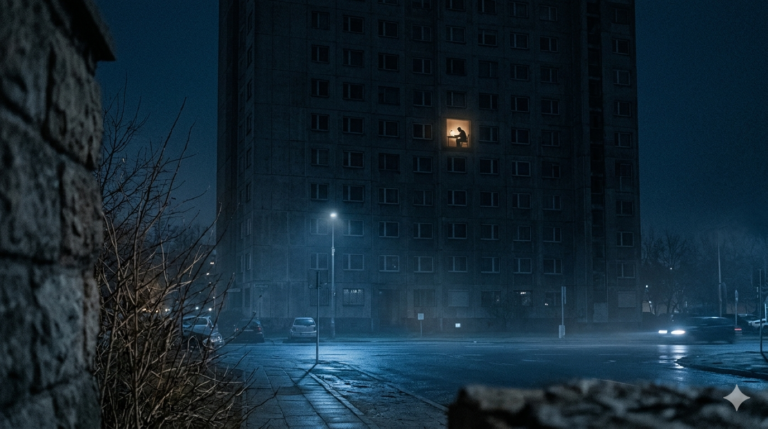
Margaret Atwood’s The Handmaid’s Tale is, by almost any reasonable measure, the most successful piece of dystopian fiction by a woman in the twentieth century. It has been continuously in print since 1985. It has spawned a major television adaptation, a sequel, an opera, a ballet, a graphic novel, and an entire decade of political iconography. The handmaid’s red robe and white bonnet have become a visual shorthand for resistance to authoritarian misogyny that protesters use, on actual streets, in actual countries, against actual regimes. By any measure of cultural reach, Atwood has done what dystopian writers dream of. The book has left the page and entered the world.
It is also, when you read it after the African dystopian tradition I have been writing about in this vertical, a strangely thin novel.
This is not an easy thing to say, and I want to say it carefully. The Handmaid’s Tale is not a failed book. It is, on its own terms, a brilliantly executed one. The prose is precise. The world-building is rigorous. The political analysis is sharp. The collected receipts of actual historical regimes that Atwood famously stitches into Gilead are, individually, devastating. Generations of readers have had their political imaginations sharpened by it, and the book deserves the reputation it has earned.
But its limitations are not random. They are the limitations of the tradition it belongs to, and they become visible in a particular way when you read it next to Wizard of the Crow, Nervous Conditions, and Who Fears Death. The African tradition, taken seriously as criticism, exposes things in Atwood’s book that the Western dystopian tradition cannot see on its own terms.
This post is an attempt to read The Handmaid’s Tale through the lens the African dystopian tradition provides, and to name what becomes visible.
What Atwood Did Right
Let me be precise about what Atwood gets right, because the criticism that follows is meaningless without it.
Atwood understood, in 1985, that misogynistic authoritarianism is not an exotic future possibility. She understood that the regime she was describing did not need to be invented, because every element of Gilead had been done somewhere by some regime to some woman within recent historical memory. She built her novel by collecting documented practices from real authoritarian states and assembling them into a single coherent system. The forced surrogacy. The colour-coded female castes. The renaming of women after their owners. The ritualised public executions. The biblical justification. The control of reading. All of these have happened. Atwood made the assemblage feel inevitable.
She also understood that the regime would not need to act on every woman the same way. Gilead is a class society. The Wives have one role, the Marthas another, the Handmaids another, the Aunts another, the Unwomen another. Atwood was writing about the way authoritarian regimes manage women not by oppressing them uniformly but by organising them into hierarchies that produce internal complicity. The Wives despise the Handmaids. The Aunts police the Handmaids. The Marthas resent the Handmaids. The regime survives partly because it has distributed its violence across a structure that keeps the affected populations turned against each other.
This is a sophisticated piece of political analysis, and it is one of the reasons the novel has aged well. It anticipated, by decades, a great deal of the literature on how patriarchal systems sustain themselves through the participation of the women they harm.
Atwood also got the prose right. The voice of Offred is one of the great achievements of modern English-language fiction. The fragmented, ironic, half-suppressed interiority of a woman who is not allowed to think freely but cannot stop thinking is rendered with such precision that the novel functions, on a sentence level, as a model of how to write consciousness under conditions of constraint.
These are real achievements. The book deserves the praise.
What the African Tradition Reveals
Read The Handmaid’s Tale after the African dystopian tradition, however, and several things become visible that are difficult to see when reading it in isolation. None of these things makes the book less good. All of them make it more visibly Western, which is to say, more visibly the product of a tradition with specific blind spots that the African writers have been illuminating from outside.
First: the novel assumes a prior freedom that was real.
I wrote, in the previous post in this vertical, about how the Western dystopian tradition is structured around mourning a freedom that has been lost, while the African tradition is structured around imagining a freedom that has never been.
The Handmaid’s Tale is the cleanest illustration of the Western structure. Offred’s interior life is organised almost entirely around her memories of life before Gilead. She remembers her husband. She remembers her daughter. She remembers her job. She remembers a world in which she could walk into a coffee shop, pay with a card she controlled, walk home unmolested. The novel’s emotional engine is her grief for this prior life, and the reader’s engine is the parallel grief for the freedom they themselves possess and might lose.
This works powerfully for a reader who shares Offred’s prior life. It works, that is, for a Western, middle-class, white, educated reader of the period in which the novel was written. The freedom Offred has lost is the freedom that reader still has, and the novel’s argument is that this freedom is more precarious than the reader assumes. Hold the freedom carefully. It can be taken.
But notice what this structure assumes. It assumes that the freedom Offred had before Gilead was, in fact, freedom. The novel does not interrogate the prior world. It does not ask whether the world that produced Gilead was itself already a regime, in some less visible form, that had been operating on the bodies and minds of women in different ways for centuries. It treats the pre-Gilead world as the baseline state, the loss of which is the political horror of the novel.
The African dystopian tradition does not have this option. Dangarembga cannot treat the pre-colonial world as a baseline freedom Tambu could remember and grieve, because that world has been gone for generations before Tambu was born.
Ngũgĩ cannot treat the pre-dictatorship era as a recoverable freedom, because for most of the citizens of Aburĩria there is no such era within memory. Okorafor cannot treat the pre-genocide era as a baseline, because the genocide is older than the protagonist and its conditions are embedded in cultural ritual.
The Western reader, returning to The Handmaid’s Tale after the African tradition, notices for the first time that Offred’s grief is a consolation the novel grants her. She has a prior world to mourn.
The novel has given her one. Many of the women the novel is implicitly drawing on, the women whose historical experiences Atwood stitched into Gilead, did not have such a prior world. They were born into the regime, lived in the regime, and died in the regime, with no Offred-style memory of a pre-regime life to organise their inner experience around.

This is not a flaw in Atwood’s novel. It is a feature of the Western tradition the novel belongs to. But it becomes visible only when you read the novel next to a tradition that has not granted itself this consolation.
Second: the novel has an outside.
In Atwood’s Gilead, the regime is geographically bounded. Canada exists. The Mayday underground exists. The closing pages of the novel reveal a future academic conference at which Gilead is being studied as completed history, which means that Gilead has, by the time of the framing narrative, ended.
The reader is given two forms of outside. There is a spatial outside, which is the rest of the world that Gilead has not absorbed. And there is a temporal outside, which is the post-Gilead future from which the documents of the novel are being studied.
These outsides are not incidental. They are what makes the closing van scene work. Offred steps into the van because there is somewhere for the van to go. The plausible-escape ending depends on the existence of an outside, and the novel has carefully constructed both kinds.
The African dystopian tradition refuses both of these outsides. Ngũgĩ’s Aburĩria is implicitly continental. The Global Bank is part of the regime, not its outside. The international financial system is what enables the regime to continue.
There is no foreign power that will rescue the citizens of Aburĩria from their dictator, because the foreign powers are funding him. Dangarembga’s Rhodesia is part of a global colonial system. There is no outside to flee to, because the world that produced the regime is the same world that maintains it. Okorafor’s post-apocalyptic Sudan is, by its very setting, a place from which there is no extraction. The international community that might have rescued the women of Darfur did not rescue them. The novel writes from inside that non-rescue.
When you return to The Handmaid’s Tale from these novels, the existence of Canada in Atwood’s geography is no longer a neutral world-building detail. It is a political assumption. The novel assumes that for an authoritarian regime to be plausible, there must be somewhere it has not reached.
The African tradition has spent decades writing about regimes that have reached everywhere, that have no outside, that cannot be escaped because the escape route is part of the regime. The Western imagination has not had to grapple with this. The Western imagination has always had a Canada.
This too is not Atwood’s failure. It is the structural inheritance of the tradition she is writing in. But once you have read the African tradition, the Canada in The Handmaid’s Tale starts to look less like a setting and more like a psychological necessity of Western dystopian fiction. The Western reader cannot bear a dystopia without an outside. The African reader has been bearing it for half a century.
Third: the regime is recent.
Gilead is new. The novel makes this explicit. Offred remembers the years immediately before Gilead’s establishment. She remembers the political events that led to it. She remembers the day she lost her job. She remembers the day her bank account was frozen. The regime, in the novel’s chronology, is no more than a few years old. Its rituals are still being established. Its enforcers are still figuring out what they are doing. The Aunts are inventing their training programmes in real time. The regime is not yet smooth.
This recentness is crucial to how the novel works. It allows the reader to feel the strangeness of the regime alongside Offred, who is herself still adapting. The horror of the novel is partly the horror of newness, of practices that have not yet become invisible to those who live under them.
The African dystopian tradition does not have this recentness available. The regimes in Ngũgĩ, Dangarembga, and Okorafor have been operating for generations. Their rituals are smooth. Their enforcers have inherited their roles from their parents. The strangeness has long since been ritualised into normality.
The horror of the African novels is not the horror of newness but the horror of embeddedness. The regime is so old that no one in the novel can remember it being installed. It is the air. It is the water. It cannot be unseen as strange because it has never been seen as strange by anyone now living.

This is a different kind of dystopian horror, and it produces a different kind of novel. The Western reader, returning to The Handmaid’s Tale from the African tradition, notices that Offred’s ability to register Gilead as strange is itself a product of the regime’s youth. The novel is set in the first generation of Gilead. The second generation, the ones the Aunts are training, will not have Offred’s resources of comparison. They will have grown up inside the regime. They will not find it strange.
Atwood gestures at this. She has Offred think about her daughter, who is being raised by a Wife somewhere in Gilead, and worry that the daughter will not remember her. But the novel is not centrally interested in the daughter’s perspective. It is centred on the perspective that can still register the strangeness, because the strangeness is what produces the dystopian effect for the reader.
The African tradition has been writing the daughter’s perspective for fifty years.
Fourth: the resistance is moral, not imaginative.
The resistance in Gilead, embodied in the Mayday network, is fundamentally a resistance of concealment and exfiltration. It hides people. It moves people. It collects documents. It gets women out. The resistance is not, in the African sense, imaginative. It is not trying to imagine a different kind of social organisation that has never existed. It is trying to restore something that was lost a few years ago.
This is what resistance looks like under a recent regime with an outside. You hide, you flee, you preserve the documents, you wait for the regime to end, you rebuild what was there before.
The African dystopian tradition has been writing about resistance under different conditions, and its resistance looks different. The Wizard of the Crow cures people of their fear. This is not concealment. It is not exfiltration. It is the slow generative work of producing a new psychological condition in a population that has never had it.
Tambu, by the end of Nervous Conditions, is beginning to imagine a kind of selfhood that has not existed in her family for generations. This is not restoration. It is invention. Onyesonwu, in Who Fears Death, performs an act of magic that has no precedent in the novel’s world. The act is not the recovery of a lost capacity. It is the generation of a new one.
The African resistance is imaginative because the regime is too old to be merely escaped. There is nothing to escape to. The resistance has to build what was never built, not flee toward what was lost.
When you read the Mayday network after the African resistance, you notice how thin it is. Atwood gives Offred a few documents, a few hidden people, a few safe houses, a van. This is sufficient for a regime that is young and bounded. It would be wholly insufficient for a regime that is old and total. The African tradition’s resistances are more demanding because the situations they are resisting are more demanding. The Mayday network is a resistance designed for a regime that can plausibly be expected to end.
What This Reading Does for the Novel
Let me be precise about what this reading does, and what it does not do.
It does not reduce The Handmaid’s Tale to a Western limitation. The novel does what it does well. Within the tradition it belongs to, it is one of the great achievements. The criticism here is not that Atwood failed at writing the African dystopia. She was not trying to. She was writing the Western dystopia, with full mastery of its conventions.
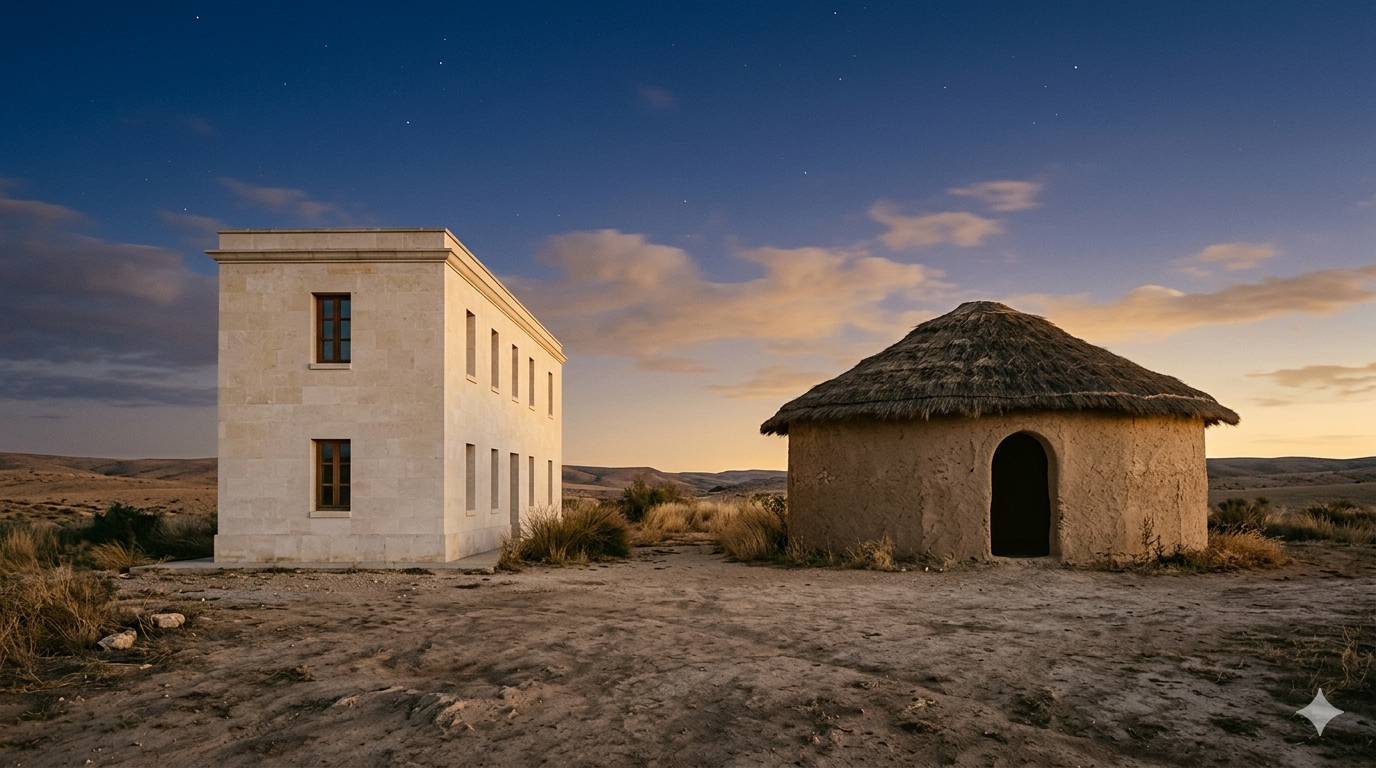
What the reading does is contextualise the novel. It shows the reader that The Handmaid’s Tale is one of two major possibilities the genre permits, and that the other possibility, the one the African tradition has been working in, produces different kinds of novels with different kinds of insights. The two traditions are not rivals. They are mutually illuminating. The Western tradition shows you what dystopian fiction looks like when the regime is recent, the freedom is recent, the outside exists, and the resistance is restoration. The African tradition shows you what dystopian fiction looks like when the regime is generational, the freedom has never been, the outside is gone, and the resistance is imagination.
A reader who has read both traditions is a different kind of reader than one who has read only one. The two-tradition reader can see what each tradition takes for granted, what each tradition assumes is universal, what each tradition is unable to imagine. The two-tradition reader has a fuller picture of what the genre can do.
The single-tradition reader, especially the single-Western-tradition reader, does not know what they are missing. They think The Handmaid’s Tale is what dystopian fiction looks like when it is done right. They are partly correct. They are also missing half the genre.
Reading Between the Lines
The point of this post is not to demote Atwood. The point is to argue that the African dystopian tradition is not, as the canon has implied, a regional speciality with limited relevance to the main genre. It is one of the two halves of the genre.
The Western canon has been operating as though dystopian fiction is what the Western tradition does, with everything else as a footnote. The argument I have been building across this vertical is that the African tradition is doing the other half of the genre’s work, and that the failure to recognise this has impoverished how dystopia is taught, read, and written.
The clearest evidence is what happens to a novel like The Handmaid’s Tale when you read it through the African lens. It does not disappear. It does not become a worse novel. But its assumptions become visible. Its consolations become visible.
The outside it grants its protagonist becomes visible. The recentness of its regime becomes visible. The thinness of its resistance becomes visible. These were always there. They became invisible because nothing in the Western tradition’s critical vocabulary required the reader to see them.
The African tradition supplies the critical vocabulary the Western tradition has lacked.
You read Atwood after Ngũgĩ, after Dangarembga, after Okorafor, and the book is the same book it always was. But you are not the same reader you were. You can see the architecture now. You can see what the novel chose to do, and what it could not see itself choosing not to do.
This is what reading across traditions does. It does not replace one reading with another. It thickens the reading. It gives you the architecture.
The Western dystopia has been operating for a century without its architecture being visible to itself.
The African dystopia has been pointing at the architecture for half that time.
Read both. The novels you thought you knew will reveal what they were always partly hiding. vidIQ
vidIQ
Opus 4.7
Adaptive