Africa Has Been Writing Dystopia All Along — You Just Weren’t Told
There is a quiet exam most readers have already failed, and they don’t know they took it.
Ask the average literate person to name five dystopian novels. They will give you 1984, Brave New World, The Handmaid’s Tale, Fahrenheit 451, and, if they’re under thirty, The Hunger Games. All five are by Western writers. Four are by white men. The most recent of them was published nearly twenty years ago.
Now ask the same person to name a single African dystopian novel.
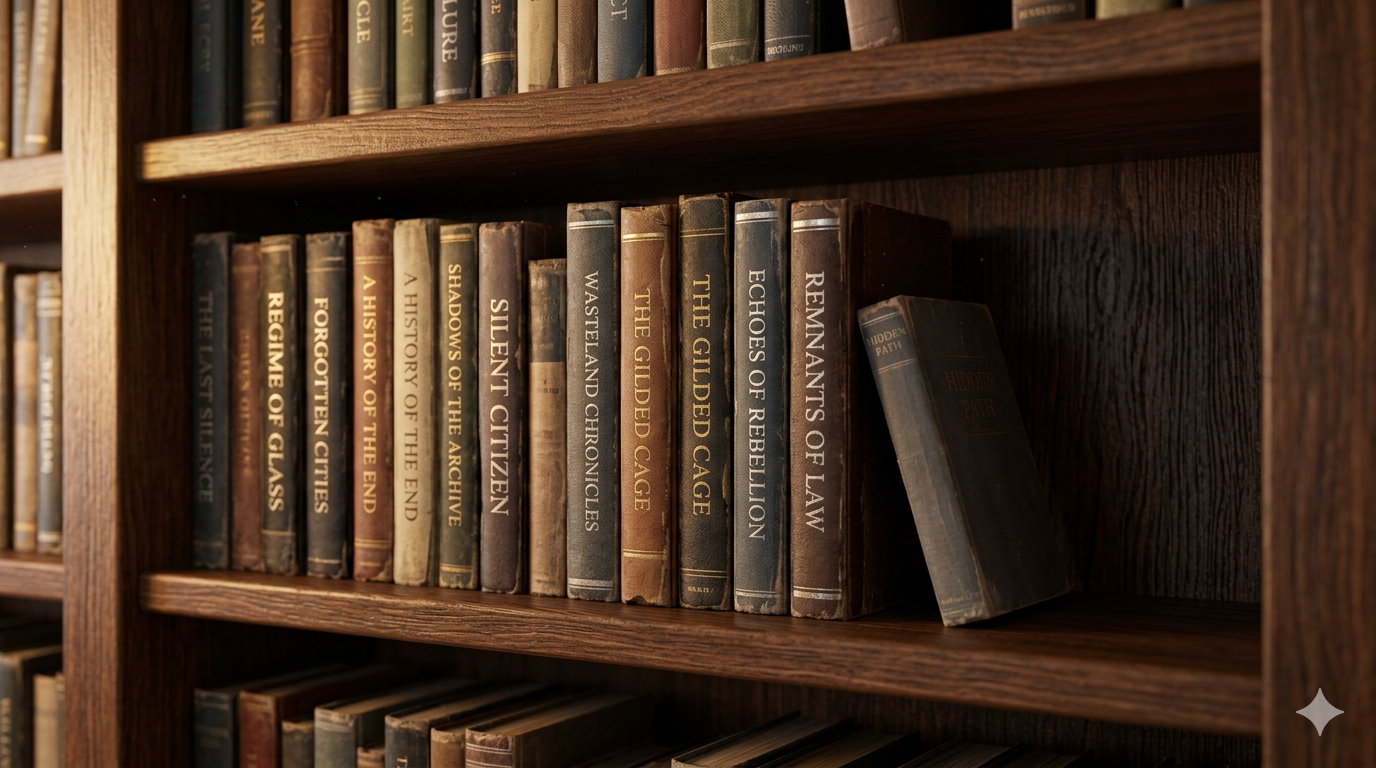
The silence that follows is not the reader’s fault. It is the result of a hundred years of curatorial work — by publishers, by syllabi, by literary prize panels, by the small group of editors who decide what the word dystopia is allowed to mean.
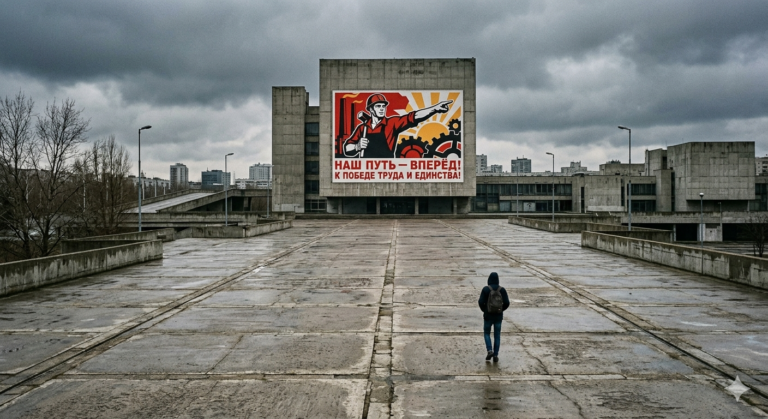
That curatorial work has produced an extraordinary illusion: that the great twentieth-century anxieties about authoritarianism, surveillance, language control, environmental collapse, mass conformity, and the engineered destruction of inner life have been the literary property of London, New York, and a few translated Russians.
They have not.
African writers have been working in this terrain for as long as the Western canon has, and in many cases longer. They have done it with first-hand knowledge that Orwell could only imagine — knowledge of colonial states designed explicitly as surveillance regimes, of populations whose languages were being engineered out of existence, of resource extraction at scales that make the Party’s grey shortages look quaint.
The dystopia did not arrive in Africa as a literary import from the West. The dystopia, in the Western sense, was exported from Europe to Africa in the late nineteenth century and run for the better part of a hundred years as an open-air laboratory of the very mechanisms Orwell would later sit in a Hampstead flat and imagine.
This post is about five African novels that read like dystopian fiction from a tradition the canon never told you existed. They are not exotic side dishes to 1984. They are, in several cases, doing things 1984 doesn’t know how to do. They deserve to be read on their own terms.
1. Nervous Conditions by Tsitsi Dangarembga — the dystopia of the colonised mind
Start here. Dangarembga’s 1988 novel is set in 1960s and 70s Rhodesia, in the years before Zimbabwean independence, and on its surface it is a coming-of-age story about a girl named Tambu who is given the chance to attend a mission school. On its surface, this is not a dystopia at all.
Read it again with Orwell in your hand.
The Rhodesia of Nervous Conditions is a society in which the colonised population has been engineered, over generations, into a state of psychological self-policing that the Party would have envied.
Tambu’s cousin Nyasha, raised partly in England, returns to Rhodesia with an English accent and an English education and slowly comes apart — not because of any external violence, but because the interior architecture of her selfhood has been colonised at the level of language, body, hunger, and desire. She develops an eating disorder. She fights with her father. She breaks down.
The novel ends with her in a state of profound psychological collapse, having tried to be both colonial and African and discovering that the regime inside her has made the combination impossible.
This is, as a piece of political analysis, more sophisticated than anything in 1984. Orwell shows you the Party rewriting a man. Dangarembga shows you a regime that has been rewriting a people for a hundred years, generation by generation, until the rewriting is so internalised that the colonised do most of the work of their own subjugation. There is no Big Brother in Nervous Conditions. There doesn’t need to be. The Big Brother is inside the body. The body has been taught to police itself.
What Orwell wrote as a thought experiment, Dangarembga wrote as a memoir of what she had seen happen to people she loved.
2. The Beautyful Ones Are Not Yet Born by Ayi Kwei Armah — the dystopia of post-colonial decay
Armah’s 1968 novel is set in newly independent Ghana, in the years just after Kwame Nkrumah’s overthrow, and it is one of the bleakest pieces of writing in modern African literature.
The narrator — known only as “the man” — works as a railway clerk in a society where every institution is rotting from corruption, every relationship is poisoned by transactional calculation, and the very air smells of decay. The novel is famous, in the canon that knows it, for its imagery of literal physical filth. Vomit. Excrement. The body of the state, leaking.
What makes it dystopian rather than merely pessimistic is its structural argument. Armah is not describing a society that has fallen on hard times. He is describing a society that has been handed the apparatus of a modern state — the offices, the rituals, the language of governance, the imported European institutions — and is using that apparatus to do the only thing the apparatus was ever really designed to do: extract value and concentrate it upward. The colonial structure has been retained; only the colour of the man behind the desk has changed.
This is a category of dystopia Orwell could not have written, because Orwell never lived through the specific horror of decolonisation. Orwell imagined a future in which a totalitarian state would crush an honest man. Armah lived through a present in which the totalitarian state had simply been renamed, the same machinery operating under a new flag, the same hunger flowing in the same direction.
The novel’s title is the closest thing African literature has to a Newspeak slogan. The beautyful ones are not yet born. The promised generation has not arrived. The promised future has not arrived. What has arrived is the same machine, painted a different colour, and it is grinding the same people.
If you have read 1984 and felt that something about the political analysis felt slightly thin — slightly British, slightly removed from the texture of how power actually feels when it is on top of you — Armah is the corrective. He had been on the bottom of the machine. He wrote from there.
3. Wizard of the Crow by Ngũgĩ wa Thiong’o — the dystopia they refuse to call one
Ngũgĩ’s 2006 novel is, by any measure, one of the great dystopian works of the twenty-first century. It runs to over seven hundred pages. It is set in the fictional Free Republic of Aburĩria, ruled by a paranoid dictator known only as the Ruler, whose mood determines the weather, whose voice is replaced by the voice of a robot, whose body inflates with the rage of his sycophants. The country is bankrupt.
The state is preparing to build a monument so large it will be visible from outer space — a tower called Marching to Heaven — to be financed by a desperate loan from the Global Bank. The opposition has been driven underground. A folk magician calling himself the Wizard of the Crow develops the unexpected power to heal the regime’s enemies of their fear, which the regime treats as the gravest threat in its history.
If this sounds like dystopian fiction by the standards of any reasonable canon, that is because it is. The novel borrows from Gabriel García Márquez’s The Autumn of the Patriarch, from Bulgakov’s The Master and Margarita, from Soyinka’s plays, from Kenyan oral storytelling, from the Old Testament prophets, from Orwell himself. It is sprawling, satirical, magical-realist, deeply political, and unsparing.
It is almost never taught as dystopia.
When Wizard of the Crow appears on university syllabi at all, it appears under headings like African Literature, Postcolonial Fiction, World Literature in Translation. It does not appear on dystopian-literature reading lists. Why? Not because of any literary criterion. Because the canonisation of dystopia happens in the West, and the West has decided that the genre is a Western property whose African instances are something else — magical realism, perhaps, or political satire, or postcolonial allegory.
Anything but the simple, accurate description: this is a novel about a tyrannical regime, a population terrified into compliance, a megaproject built on borrowed money, an opposition driven underground, and a state of cultural Newspeak in which words are quietly drained of meaning.
If that isn’t dystopia, the word means nothing. And the fact that the canon refuses the label is itself an example of the kind of curatorial gatekeeping the post you are reading is trying to expose.
4. Who Fears Death by Nnedi Okorafor — the dystopia of the very near future
Okorafor’s 2010 novel is set in a post-apocalyptic Sudan and follows a young woman named Onyesonwu — who fears death — born of a wartime rape, marked from birth as Other by the colour of her skin and the circumstances of her conception, growing up in a society where her existence is forbidden by both political decree and cultural taboo.
Onyesonwu develops magical powers. She sets out to find her biological father, who is also the architect of an ongoing genocide. The novel ends in apocalypse, and not the kind of apocalypse Western dystopia usually offers — clean, distant, scientifically tidy. The kind that smells of blood and women’s bodies, because the regime in this book uses systematic sexual violence as a tool of demographic warfare.
This is a category of dystopia that almost no Western dystopian novel has the courage or knowledge to write. Atwood approaches it in The Handmaid’s Tale, but Atwood’s Gilead is, by its author’s own description, a collage of historical regimes seen at a remove. Okorafor’s setting is not a collage. It is a slightly fictionalised account of things that were happening, in real life, on the continent of Africa, at the moment of the novel’s writing. The Janjaweed, the genocide in Darfur, the systematic use of rape as a weapon of war, the eraser of populations through sexual violence. These are not Atwood’s historical receipts. These are Okorafor’s daily news.
A reader trained on Western dystopia will recognise the architecture — engineered scarcity, regime-sanctioned violence, the protagonist who comes to forbidden power — but will be disoriented by the texture. The texture is not metaphorical.
The texture is reported. This is what makes Who Fears Death so important and so under-read. It does not extrapolate a frightening future from present-day comforts. It writes a present-day catastrophe in the genre of dystopia, because nothing else in the literary vocabulary is honest enough to contain it.
5. The Memory of Love by Aminatta Forna — the dystopia of the aftermath
This last one is a quiet recommendation, and the one most likely to be rejected as not-quite-dystopia by a Western reader. Forna’s 2010 novel is set in post-war Sierra Leone, in the years after the civil war that produced Blood Diamond and a generation of amputee children. It follows three men — an old retired professor, a young surgeon, and a visiting English psychologist — whose lives intersect in a Freetown that is rebuilding itself out of catastrophe.
There is no totalitarian regime in the novel’s present. There is no Big Brother. The regime is the past. The regime is what the war did to every person now trying to live an ordinary life inside the country it left behind. The regime is the silence that has been agreed on, by mutual unspoken treaty, in order for daily existence to continue.
The regime is the way each character keeps, inside himself, a private archive of things that cannot be said aloud, because to say them aloud would be to make the present unworkable.
This is dystopia as memory. As trauma. As the political residue that settles into the soft tissue of a population that has lived through something the world did not intervene to stop. It is, in a particular way, the most realistic dystopian novel on this list, because it does not project a frightening future. It describes a frightening present in which the future has already happened and the question now is what people do with the parts of themselves the future has destroyed.
Forna’s novel is not on any dystopian syllabus you will encounter. It is filed under Literary Fiction, African Literature, Trauma Studies. The reasons for this are the same reasons the rest of this list is invisible. The genre has been gatekept. The receipts are inadmissible. The dystopia has to look a certain way to be granted the name.
Why None of These Books Are on the Lists
There is no single villain here, and the point is not to find one. The marginalisation of African dystopia is a structural fact about how literary canons form, and it has several visible mechanisms.
The first is the taxonomic move. When an African writer produces a novel that does exactly what Orwell did — analyses a totalitarian regime, traces the engineering of language, examines the psychology of compliance — the novel is filed under African Literature, not under dystopia. The same book, written by a British author, would be filed under both. The genre category, in other words, is racialised. The dystopian shelf is a shelf for Western writers. The African shelf is for everyone else, regardless of what their books are actually doing.
The second is the receipts problem. Western dystopia gets to be speculative. Orwell does not have to defend the existence of the Ministry of Truth, because the Ministry of Truth is imaginary. African writers writing about regimes that actually exist or recently existed are read as journalists, as memoirists, as ethnographers — but rarely as dystopian novelists. The implicit rule of the canon is that to be a dystopia, the horror has to be invented. If the horror happened, the book is reportage, and reportage is a different shelf.
The third is the Cold War residue. Twentieth-century dystopia was canonised during a period in which the West was running a global ideological project that needed certain stories told and certain other stories not told. Stories about Soviet totalitarianism were promoted enthusiastically.
Stories about Western-backed dictatorships in newly independent African states were not. This is not a conspiracy theory. It is the visible history of which dystopian novels got translated, which got reviewed in major newspapers, which got into university syllabi, which got onto the shelves of major bookshops. The Cold War decided which dystopias the educated reader was expected to know. It decided wrong, and we are still living inside the decision.
The fourth is simply who edits. The major prize panels, the major publishing houses, the major review pages, the major university courses on dystopian fiction are, with rare exceptions, run by people whose mental map of the genre was formed by the books they read as undergraduates. Those books were Orwell, Huxley, Bradbury, Atwood. The map self-reproduces. New books that fit the map get added. New books that don’t fit the map get filed elsewhere. The map never updates.
This is what canon formation actually looks like. Not a conspiracy. A self-reproducing pattern of attention. And the pattern has, for a century, been pointed away from a continent that has been writing some of the most urgent dystopian literature on earth.
Reading Between the Lines
Here is the part most readers will resist. The argument of this post is not that African dystopia should be read in addition to the Western canon. The argument is that the Western canon, read by itself, is misleading. It produces a reader who believes dystopian fiction is fundamentally about imagined futures, when in fact dystopian fiction has always been, at its best, about describing what is happening now in language clear enough to make it visible. Africa has been doing that, in the dystopian register, for the better part of seventy years. The fact that the books are not on the lists means that the lists are wrong, not that the books are missing.
If you have read 1984 five times and never read Wizard of the Crow, you have read a thin version of dystopia. If you have read The Handmaid’s Tale with reverence and never read Who Fears Death, you have learned to take Atwood’s collage seriously while ignoring Okorafor’s reporting. If you have argued about Newspeak at dinner parties without having read Dangarembga on the engineered colonisation of an African girl’s interior life, you have argued about a model of linguistic control that someone else lived through and wrote about with more precision than your model contains.
The canon is not the truth about the genre. The canon is one room in a much larger house, and the house has been here all along.
The doors are open. They have been open. The library is sitting on a continent.
You just weren’t told.