The Memory of Love Is the Dystopian Novel No One Recognises as One
There is a kind of dystopian novel that the Western canon has been particularly unprepared to read.
It does not have a regime. It does not have a leader. It does not have surveillance. It does not have ration cards or coloured uniforms or a Ministry of anything. It is set in a country that has, on paper, a functioning government, a free press, and a recovering economy. The streets are not patrolled. The houses are not bugged. The conversations are not monitored.
And yet, on every page, the reader can feel the weight of a political situation that has reshaped every life in the novel beyond the possibility of return. The characters are not in danger. They are in aftermath. And the aftermath, the novel quietly insists, is itself a dystopia, of a kind the canonical tradition does not know how to name.
The novel is Aminatta Forna’s The Memory of Love, published in 2010, set in Freetown, Sierra Leone, in the years following the civil war that ended in 2002. It is not on most dystopian reading lists. It is filed under Literary Fiction, African Literature, Trauma Studies. It is taught in courses on post-conflict reconstruction and on women’s writing from the global South.
It is also, when read with the apparatus the African dystopian tradition has been quietly developing, one of the most important dystopian novels of the twenty-first century. It does the genre’s work in a register so quiet that almost no reader thinks to call it dystopia. Naming it as dystopia is the work of this post.
The Book in Brief
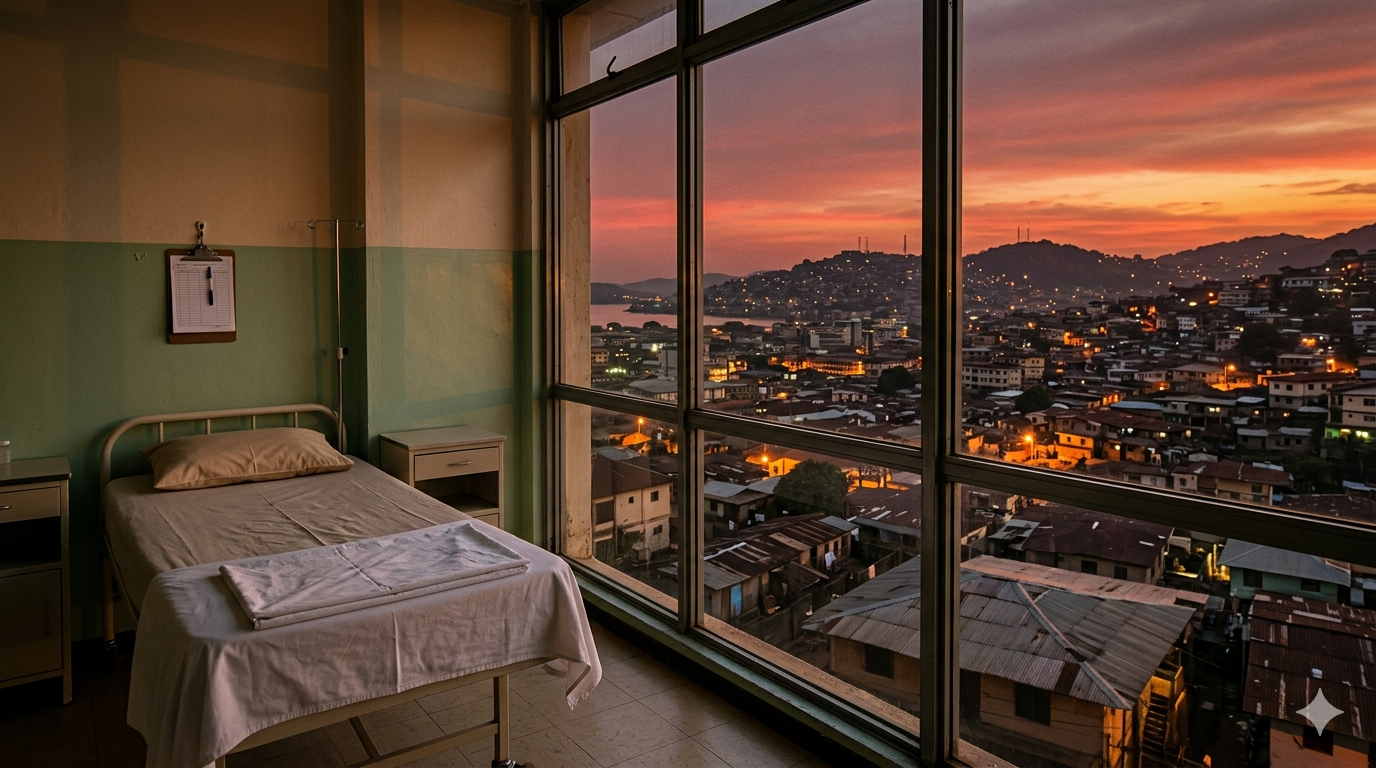
The Memory of Love follows three men whose lives intersect in Freetown in the years after the war. Adrian Lockheart is a British psychologist who has come to Sierra Leone to study the long-term psychological effects of conflict. He has left a wife and a daughter in England. He does not fully know why he has come. Kai Mansaray is a young Sierra Leonean orthopaedic surgeon, the most talented in the country, who works extraordinary hours at the city’s main hospital, mostly amputating, mostly children. Elias Cole is an elderly retired professor who is dying in the hospital where Kai works, and who has chosen Adrian as the audience for a slow, deliberate, and unreliable account of his own past, an account that gradually reveals the moral compromises by which Elias enabled the regime that preceded the war.
The three storylines unfold in parallel. Adrian conducts therapy with patients whose memories have made daily life almost impossible. Kai operates, and tries not to think, and occasionally drinks, and considers leaving for America. Elias narrates his version of the past from a hospital bed, slowly, with omissions, while Adrian listens.
That is the surface. Beneath it, the novel is doing five things that no Western dystopia has fully done.
What the Novel Knows: Five Arguments
First: that the regime ends but the regime does not end.
This is the central argument of the novel, and it is the argument the Western dystopian tradition has the most difficulty seeing.
In the canonical dystopian novel, the regime is present. It is the antagonist. The protagonist’s task is to survive it or to die under it. The novel ends when the regime ends, or when the protagonist’s relationship to the regime is resolved one way or another.
Forna’s novel begins after the regime has ended. The civil war is over. The dictator before the civil war is dead. The current government is, by regional standards, functional. The international community has declared the situation resolved enough to begin withdrawing aid. By every external measure, the political crisis has passed.
The novel argues, with extraordinary patience, that this is not true. The crisis has not passed. It has migrated. It has moved from the streets into the bodies and minds of the people who lived through it. The regime has become interior. It is no longer operating from the presidential palace. It is operating from inside the nervous system of every person who survived. Kai cannot sleep. Adrian’s patients cannot speak. Elias cannot stop lying. The civil war is over and the civil war is everywhere.
This is dystopian fiction in a register the Western canon does not have. The dystopia is not the regime. The dystopia is what the regime left behind, distributed across the population, encoded in symptoms that the country’s institutions do not have the resources to address. There is no Big Brother. The Big Brother has died, and the Big Brother is still inside everyone.

A reader trained on Orwell will read The Memory of Love and ask, where is the dystopia? The dystopia is what the reader is looking at. The reader has been trained not to recognise it because the reader has been trained to look for surface features. Forna has written the dystopia of texture, of aftermath, of the regime that has gone underground into the soft tissue of a population.
Second: that silence is the regime’s most successful technique.
Forna’s Freetown is a city in which an enormous amount of recent experience is, by mutual unspoken agreement, not spoken about.
The characters know what happened. They lived through it. Many of them participated in some way, on some side, however passively. They saw things, did things, lost people, betrayed people. The country is small enough that almost everyone in the novel has crossed paths with almost everyone else’s losses. The information is in the air.
It is not, however, in the language. The characters do not speak about it. When they speak about it, they speak around it. When they speak around it, they speak with such studied generality that the listener cannot quite tell what has been said. The silence is not the silence of taboo. It is the silence of operational necessity. To speak about the war honestly would make daily life unworkable. Too many of the people you encounter every day would have to be reconsidered. Too many friendships would have to be reexamined. Too many compromises would have to be named. The silence is what allows the country to continue functioning at all.
This is the regime’s deepest victory, and it is one Forna names with terrible clarity. The regime has trained the population, through the experience of the war itself, to handle its memory through silence. The silence is voluntary in a strict sense, no one is being arrested for speaking. The silence is also total, because everyone has agreed to it for reasons each person considers reasonable. The result is a country in which the past is everywhere and nowhere, present in every nervous system and absent from every conversation.
Ngũgĩ described the saturation of public language with state speech. Forna describes the opposite. The withdrawal of public language from anything that matters. Both are techniques of the same political problem. The Western dystopian tradition has not described either of them, because the Western dystopian tradition has not had to.
Third: that the colonial outsider is also part of the regime.
Adrian Lockheart is, by the standards of the novel, a good man. He is kind. He is competent. He listens. He cares about his patients. He has come to Sierra Leone because he genuinely wants to help, and he is, within the limits of his training, helping.
Forna is uninterested in his goodness. She is interested in what his presence means in a country that has just survived a war the international community failed to stop.
The novel does not condemn Adrian. It is more devastating than that. It quietly observes him. It watches him conduct therapy in a country whose psychological resources have been hollowed out, with techniques developed for populations the country’s patients do not resemble, on a budget paid by an international community that arrived too late and is already preparing to leave. It watches him fall in love with a woman whose history he does not fully understand. It watches him misread, again and again, what is in front of him, because his training has prepared him to read different situations.
Adrian is the figure of the well-meaning outsider, and Forna’s analysis of him is one of the most precise pieces of writing on this figure in modern African literature. The outsider is not the regime. The outsider does not want to be the regime. The outsider is, nonetheless, continuous with the regime, because the outsider’s arrival is made possible by the same international order that allowed the regime to flourish and fall. The outsider is part of the political situation the novel is describing, not standing outside it.
This is another move the Western dystopian tradition has not learned how to make. The Western dystopia has often included an outside observer, a figure who arrives from a free society to witness the regime. The outside observer is usually morally clarifying. They are the reader’s surrogate. The African dystopian tradition, and Forna in particular, complicates this figure. The outsider is not clarifying. The outsider is part of what produced the situation. Their gaze is not innocent. Their help is not free. Their love affair, the novel quietly suggests, will not survive the gap between what they think they are doing and what their presence actually means.
Fourth: that the unreliable narrator is the political form of post-war life.
Elias Cole is one of the great unreliable narrators in modern fiction. He tells Adrian the story of his life across the long arc of the novel, and the story he tells is, on the surface, the story of a man who lived through difficult times with as much moral compromise as the times required and no more.
The reader, gradually, comes to understand that this is not true. Elias was not a passive observer of his country’s collapse. He was a small but real participant in the regime that produced the collapse. He betrayed friends. He benefited from the betrayals. He has spent his retirement constructing an interior version of his life in which these betrayals are absent, or recast as something else, or attributed to circumstances beyond his control.
Forna does not flatly expose Elias. She lets him narrate. She lets the reader catch the omissions, the rephrasings, the strategic forgettings. By the end of the novel, the reader understands what Elias has done, but the understanding has been earned slowly, through hundreds of pages of close attention.
What makes this dystopian rather than merely literary is the argument the novel is making about why Elias narrates this way. He is not unique. He is representative. He is one of millions of people in a post-conflict society who must construct interior versions of their pasts compatible with their continued daily functioning. The country is full of Eliases. The country is, in some sense, built out of Eliases. The unreliable narrator is not a literary device in this novel. It is the standard psychological form that survival requires.
This is what dystopia looks like when it has gone fully interior. The regime no longer needs to falsify the public record. The population, in order to continue existing, is falsifying its own private records, one nervous system at a time. The aggregate of these private falsifications is a country whose collective memory has been rewritten not by the state but by the necessity of going on. Forna writes this with a precision the Western dystopian tradition has not approached.
Fifth: that the body holds what the language refuses to.
I have written before, in the Dangarembga post, about the way the body in African dystopian fiction holds what the colonised mind has been forbidden to acknowledge. Forna extends this in a direction Dangarembga did not need to go. In The Memory of Love, the body holds what the whole society has agreed not to acknowledge.
Adrian’s patients cannot speak about what happened to them. They can, however, be unable to walk. They can lose the ability to eat solid food. They can develop seizures. They can stop sleeping. They can begin, in the late stages, to speak in voices that are not their own.
These are not metaphorical. They are clinical. Forna, who is the daughter of a doctor and writes with medical precision, describes them as the actual presentations Adrian’s patients arrive with. The body is generating, through its symptoms, the testimony the language has been forbidden to produce. The seizure is the sentence the country cannot say.
This is one of the most extraordinary insights in modern African literature, and it is the insight that finally makes clear what kind of dystopian novel The Memory of Love is. The novel is a body of evidence. The bodies of Adrian’s patients are the documents. The country has falsified its language. The country cannot falsify its nervous systems. The dystopia is being recorded, in real time, in the muscle tone and reflex arcs of a generation of survivors who do not have the words for what was done to them and to them and so are saying it with their bodies instead.
What the Canon Has Done With This Book
The Memory of Love won the Commonwealth Writers’ Prize in 2011. It was longlisted for the Orange Prize. Forna is widely regarded as one of the most important Anglophone African novelists writing today.
The novel is almost never taught as dystopian fiction.
It is taught as post-conflict literature, trauma fiction, African women’s writing, literary fiction, Sierra Leonean studies. It appears on syllabi about the long aftermath of war, about post-colonial recovery, about the ethics of international intervention. It does not appear on syllabi about dystopia. The genre category, again, has been closed to it.
This is the most precise case in this entire vertical of the gatekeeping I have been describing. The Memory of Love does almost everything a dystopian novel does. It describes a society reshaped by a political catastrophe. It examines the operation of fear, silence, and engineered memory across a population. It traces the way the political situation has become embedded in the bodies and psyches of its subjects. It refuses the consolation of an ending in which the situation is resolved.
The only thing it lacks is the surface features. The uniforms. The slogans. The Big Brother. And because the Western critical apparatus is calibrated to recognise dystopia by its surface features, the novel slips through the apparatus and is filed elsewhere.
The cost of this misfiling is significant. Readers who would benefit from Forna’s analysis, readers who are themselves living in societies that are entering long aftermaths of political crisis without having undergone formal authoritarian regimes, are not being directed to the book by the category systems that organise their reading. They are being directed to books with surface features. They are not being directed to the book that would teach them how to recognise the texture of what is happening to them.
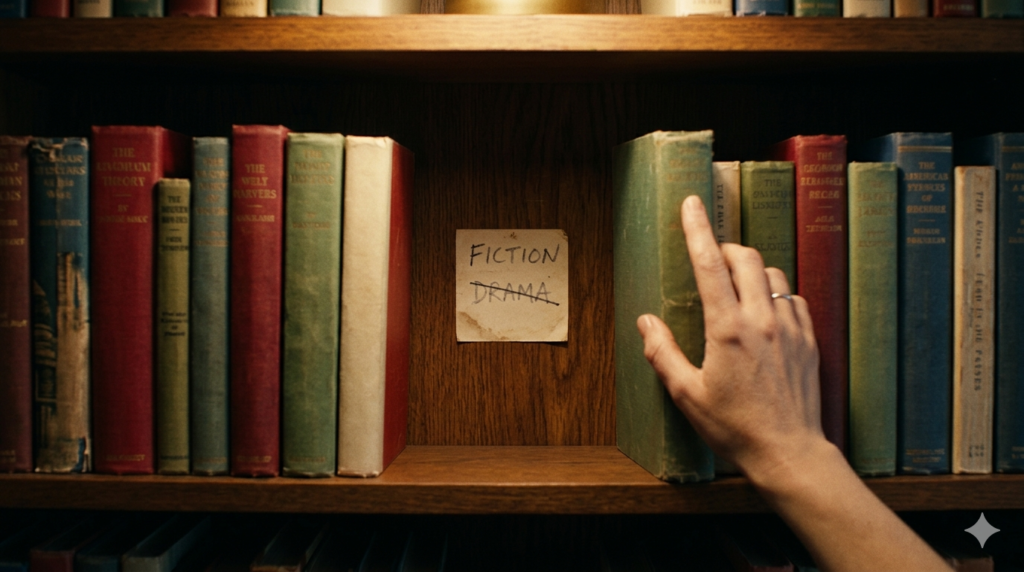
This is what canon failure looks like in practice. Not the suppression of an author but the misdirection of readers. The book is on the shelf. The shelf has been mislabelled. The readers who need the book do not know where to find it.
Reading Between the Lines
The Memory of Love is the novel that proves, more clearly than any other in this vertical, that the African dystopian tradition has been doing something the Western tradition has not.
The Western tradition cannot write the dystopia of aftermath, because the Western tradition’s apparatus requires the regime to be present and visible. The African tradition can write it, because the African tradition’s apparatus is calibrated to the texture of political situations rather than to their surface features. The African tradition has been writing aftermath dystopias for decades, in countries that have lived through them. The Western tradition is only now, hesitantly, beginning to attempt them, as Western societies enter their own slow aftermaths of crises they have not yet fully named.
Forna’s novel is one of the most rigorous accounts of aftermath available in modern literature. It is set in Sierra Leone, but it is not about Sierra Leone alone. It is about what happens to a society after a political situation has reshaped its members beyond the possibility of return, and after the rest of the world has declared the situation resolved enough to move on. This is a condition that is becoming general. The novel that describes it most precisely is one the canonical tradition has filed away from the genre to which it most obviously belongs.
The novel is on the shelf. It has always been on the shelf.
It is filed under Literary Fiction, African Literature, Trauma Studies.
It belongs on the dystopia shelf.
Move it there. The shelf the canon built will not move it for you. You will have to do it yourself, one bookcase at a time, one reader at a time, until enough readers have done it that the canon catches up. The canon has been wrong about this novel for sixteen years.
It is not too late to be right about it now.