Wizard of the Crow Is the Dystopian Novel Orwell Could Not Have Written
There is a moment about three hundred pages into Ngũgĩ wa Thiong’o’s Wizard of the Crow in which the Ruler of the fictional Free Republic of Aburĩria begins, quite literally, to inflate. His body swells. His clothes split. His advisers panic.
The cause, eventually diagnosed by a desperate medical team, is a condition that has no precedent in the literature. The Ruler has been so engorged by the constant flattery of his ministers, so swollen by his own importance, that his body has begun to expand into the physical space his ego has been occupying for decades.
Most Western reviewers, when they encountered this scene, called it magical realism.
It is not magical realism. It is the most accurate piece of political reporting in the novel. Anyone who has lived under an African dictatorship of the late twentieth century recognises immediately what Ngũgĩ is doing. He is not breaking the realism of his book. He is extending the realism past the point at which Western political fiction stops, into a territory where the body of the leader and the body of the state have become the same body, and where the consequences of that fusion are, finally and absurdly, physical.
This is one of dozens of moments in Wizard of the Crow that mark it out as a dystopian novel of a kind Orwell could not have written. Not because Orwell was less talented, but because the regime Orwell was imagining was a tidier and more European thing than the regimes Ngũgĩ had spent his life surviving.
Orwell wrote about a totalitarian state from the outside, as a thought experiment. Ngũgĩ wrote about one from the inside, as a witness. The two books are doing different work, and the difference matters more than the canon has been willing to admit.
This post is an attempt to take Wizard of the Crow seriously as dystopian fiction, on its own terms, and to ask what the novel knows that the canonical dystopias of the twentieth century do not.
The Book in Brief
Wizard of the Crow was published in Gikuyu in 2004 and in English, in Ngũgĩ’s own translation, in 2006. It runs to roughly seven hundred and fifty pages. It is, by length alone, the most ambitious dystopian novel of the twenty-first century.
The setting is the Free Republic of Aburĩria, a fictional African state ruled by a paranoid dictator known only as the Ruler. Aburĩria is bankrupt. Its primary economic activity is begging from the Global Bank, whose Western representatives arrive periodically to deliver lectures on austerity and structural adjustment.
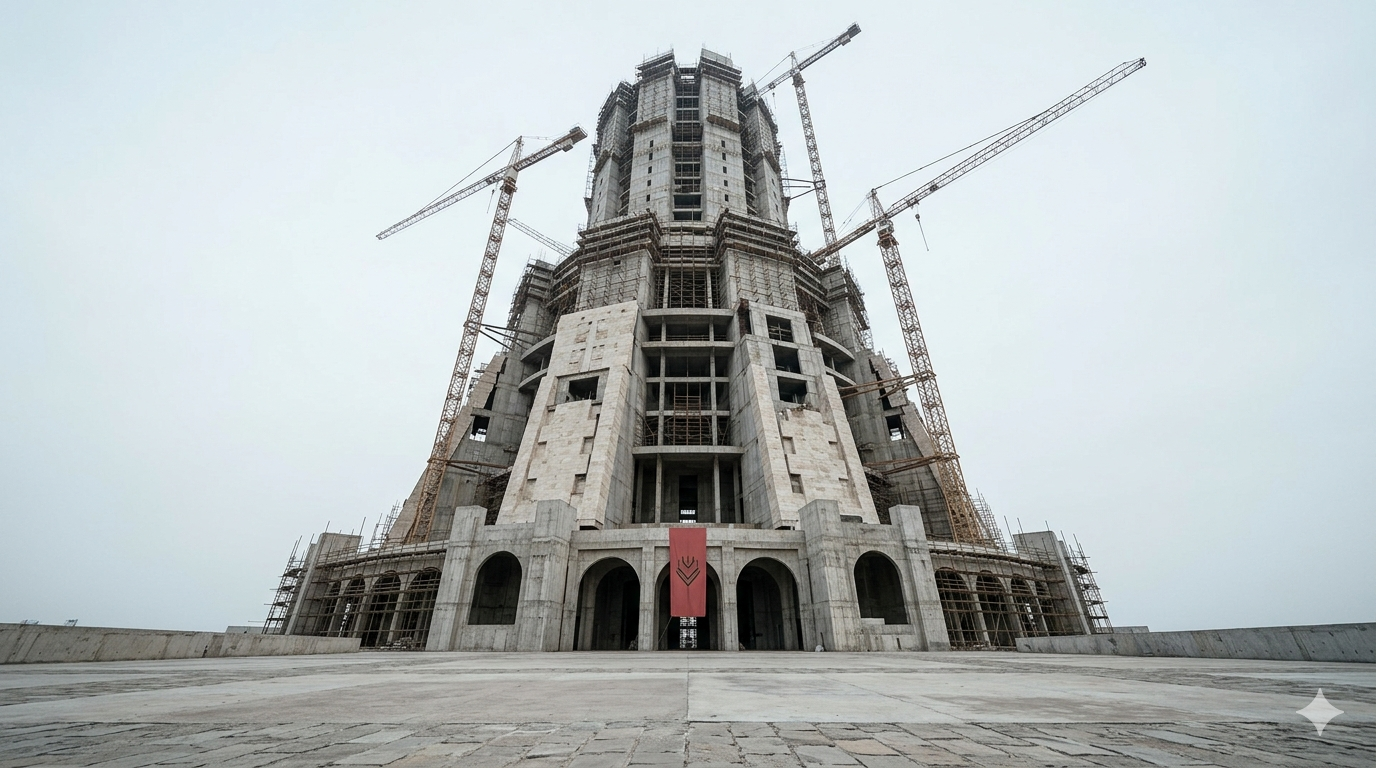
The Ruler, in response to this humiliation, conceives a project to build a tower so tall it will reach heaven itself, a megaproject called Marching to Heaven, to be financed by foreign debt and built on the bodies of the population.

The opposition has been driven underground. The state’s intelligence apparatus consists of two competing ministers, each trying to undermine the other while terrorising the citizenry. A folk healer who calls himself the Wizard of the Crow develops the unexpected power to cure the regime’s enemies of their fear, which the regime treats as the greatest threat in its history.
That is the surface. Beneath it, the novel does five things that Western dystopia, with very few exceptions, does not do.
What the Novel Knows: Five Arguments
First: that dictatorship is a comedy before it is a tragedy.
Orwell’s Oceania is grey, cold, joyless. The horror is unrelieved. The reader is meant to feel the weight of the regime as oppressive at every page.
Ngũgĩ’s Aburĩria is funny. Genuinely funny. The ministers have had their bodies surgically modified to please the Ruler. One has had his eyes enlarged so he can see corruption everywhere. Another has had his ears enlarged so he can hear conspiracies in the air. A third has had his tongue lengthened so he can lick the Ruler’s boots more efficiently. These are not metaphors. They are described as actual surgical procedures, performed by complicit doctors, with recovery times and complications.
This is satire of the kind Swift would have recognised, and it lands harder than Orwell’s bleakness, because anyone who has lived under a real dictatorship knows that the regime is, on most days, ridiculous before it is terrifying. The ministers are buffoons. The slogans are absurd. The leader’s birthday is a national holiday celebrated with mandatory dancing. The seriousness of the regime is precisely what makes its absurdity unbearable. Ngũgĩ understands this in a way that Orwell, whose Britain had never produced this specific texture of state stupidity, did not.
The argument the novel is making with its humour is simple and corrosive. A regime that has to enforce its own importance through fear is a regime that already knows, at some level, that it is ridiculous. The laughter of the citizens is what the regime fears most, because the laughter is correct. Ngũgĩ writes the laughter into the book. He gives the reader permission to laugh at the Ruler before the regime has finished its work of teaching everyone not to.
Second: that the body of the leader is the body of the state.
I mentioned the Ruler’s inflation. It is the central image of the novel and it is doing real political work. The Ruler is not metaphorically swollen with his own importance. He is literally swollen, and the doctors of his court are trying to find a cure, and the rest of the country is suffering the consequences of his physical instability.
Orwell understood that the Party demanded the worship of Big Brother. He did not understand, because he had not seen it up close, that under a personalist dictatorship the leader’s actual body becomes a piece of state machinery. The leader’s health is a state secret. The leader’s moods determine policy. The leader’s appetites determine which cities have electricity. The state is not run from the leader’s office. The state is run from the leader’s nervous system.
Ngũgĩ knows this in his bones. He had watched Daniel arap Moi’s Kenya in real time. He had been imprisoned by Moi’s regime. He had written from inside it. The Ruler in Wizard of the Crow is not a portrait of Moi, but he is a portrait of a certain kind of African autocrat who emerged in the long aftermath of independence, a leader whose body and the state had melted into a single organism.
The inflation scene is not whimsy. It is the most accurate way Ngũgĩ could find to render the political truth that the country was being held hostage by one man’s psychology, expressed through one man’s flesh.
Western dystopia gives you Big Brother as a face on a poster. African dystopia gives you the body itself, swelling, bleeding, decaying, demanding daily medical attention from a state that has no medicine left for anyone else.
Third: that language is a weapon, but not the only weapon, and not always the cleverest one.
Orwell’s Newspeak is, deservedly, one of the most influential ideas in dystopian fiction. The notion that a regime can shrink the vocabulary of its citizens until certain thoughts become impossible to think is brilliant, and Orwell deserves every page of credit he gets for it.
But Newspeak is, finally, a clever weapon. It assumes a regime sophisticated enough to engineer a language. Most real dictatorships are not that sophisticated. Most real dictatorships do not bother to redesign the language. They simply flood it. They produce so much state speech, so many slogans, so many ceremonies, so many forced public expressions of love for the leader, that the actual content of language drains away from sheer exhaustion.
Ngũgĩ shows you this directly. The Ruler’s regime is constantly producing language. Speeches, anthems, slogans, prayers, mandatory praise-songs, broadcast eulogies, state-sanctioned gossip. The citizens are not deprived of words. They are buried in them. By the time anyone tries to say something true, the words have been so used up by the regime that no clean ones remain. This is not Newspeak. This is what you might call Maxspeak, the saturation of public discourse with so much state-issued meaning that meaning itself stops working.
Anyone who has lived under a regime of this kind, or who has spent significant time on the internet of the last five years, will recognise the technique. The difference between Orwell’s vision and Ngũgĩ’s is the difference between a regime that engineers language and a regime that drowns it. Both work. The second is cheaper, and far more common.
Fourth: that the megaproject is the regime.
I have written before, in another post, about why totalitarian regimes build massive monuments while their people starve. Wizard of the Crow makes that argument in fictional form, and it makes it more fully than any other novel I know of.

Marching to Heaven, the tower the regime intends to build, is not an embellishment of the plot. It is the engine of the plot. Every major character orbits the project. The Global Bank’s loans are tied to it. The ministers’ careers depend on it. The opposition organises against it. The Wizard of the Crow’s prophecies concern it. The novel is structured around the construction of a tower that, like the Tower of Babel it deliberately echoes, exists primarily so that its construction can perform the existence of the regime.
The novel knows that the tower is never going to be finished, and it knows that the never-finishing is the point. The regime needs the tower to be perpetually under construction, because as long as it is under construction, the regime is producing visible evidence of its own future. The day the cranes stop moving is the day the regime ends. Ngũgĩ understands this, and he plays it out across hundreds of pages with a slow and terrible patience.
No Western dystopia has fully understood this. Orwell gives us the Ministry of Truth as a finished pyramid in the sky. The pyramid is. It does not need to be built. Ngũgĩ corrects this. The pyramid in the real world is not standing. The pyramid is being built, daily, by hungry men, on borrowed money, and the building is the regime, and the regime is the building.
Fifth: that the opposite of fear is not freedom but its own kind of magic.
The Wizard of the Crow develops a power that the regime cannot fight. He cures people of their fear. Not their hunger, not their poverty, not their political subjugation. Just their fear.
This is the novel’s most original political insight, and it is one that Western dystopia, which tends to treat fear as a symptom rather than a structure, has trouble grasping. Orwell’s Winston is afraid throughout 1984, but his fear is understood as a response to the Party’s surveillance. Cure the surveillance, you cure the fear. Ngũgĩ argues the opposite. Cure the fear, and the surveillance no longer works, because the surveillance was always being processed by the citizens themselves, in their own nervous systems, into compliance.
The regime in Aburĩria does not collapse when the truth is told. The regime collapses, slowly, when the citizens stop being afraid. This is a quieter and more accurate model of how dictatorships actually end. They do not end because dissidents publish manifestos. They end because, one ordinary morning, ordinary people discover that they have run out of fear, and the soldiers in the street notice this, and the noticing spreads, and within months the regime is gone and no one can quite explain where it went.
Ngũgĩ understands this from having lived through the end of more than one regime. He wrote it into his novel as the deepest piece of political knowledge he had to offer. The Wizard of the Crow is not a magician in the supernatural sense. He is a man who can perform, on demand, the most politically subversive act available under authoritarianism. He can make a fellow citizen, for a moment, unafraid.
That is what magic actually is, in this novel. The withdrawal of consent from the regime’s central transaction. The regime gives you fear. You stop accepting it. The regime, deprived of the only currency it has, slowly bankrupts itself.
What the Canon Has Done With This Book
I have written, recently, about how African dystopia has been quietly kept off the dystopia shelf. Wizard of the Crow is the cleanest case study available.
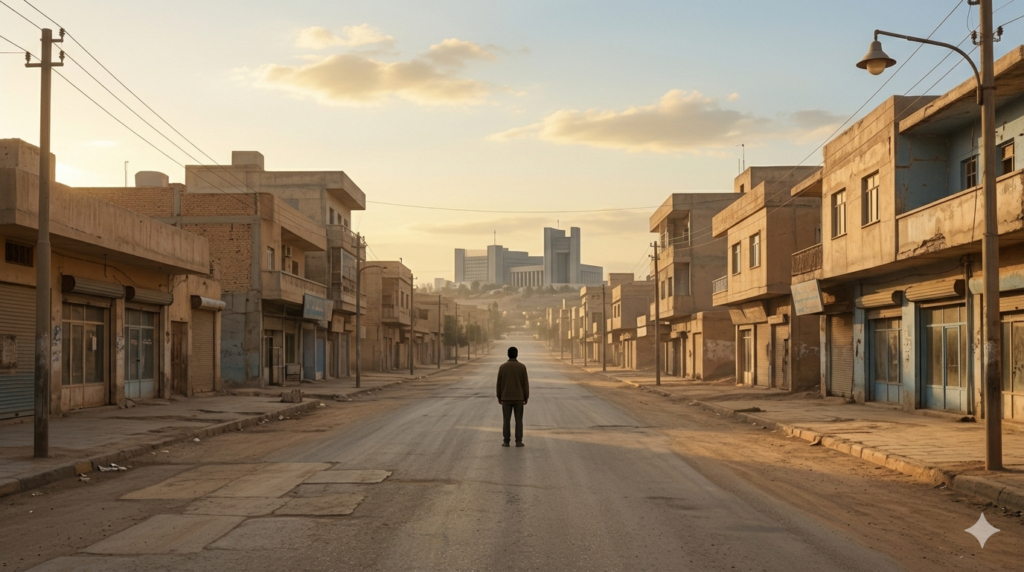
The novel meets every criterion of canonical dystopian fiction. It depicts a totalitarian regime. It examines the engineering of language. It traces the psychology of compliance. It uses a speculative future setting to comment on present-day political realities. It is long, ambitious, formally innovative, and written by one of the most important novelists alive. By any normal application of the genre’s standards, Wizard of the Crow belongs on the shelf next to 1984, Brave New World, and The Handmaid’s Tale.
It is not on that shelf.
It is on the African Literature shelf, or the Postcolonial Fiction shelf, or the World Literature in Translation shelf. The genre category, again, has been racialised. The shelf for dystopia is the shelf for Western writers. The shelf for non-Western writers is the shelf marked with their geography. Ngũgĩ’s novel, which is by any reasonable measure one of the greatest dystopian novels of its century, is filed away from the genre to which it most obviously belongs.
The cost of this is not symbolic. It is intellectual. A reader who has been trained on Orwell, Huxley, and Atwood, and who has never read Ngũgĩ, has a thinner understanding of what dystopia can do than the genre actually permits. They think dystopia is about imagined futures. Ngũgĩ teaches them that dystopia can be about realised presents. They think dystopia is grim.
Ngũgĩ teaches them that dystopia can be funny. They think dystopia is about surveillance. Ngũgĩ teaches them that dystopia is about the body of the leader and the body of the state and the slow management of fear. They think dystopia is European. Ngũgĩ teaches them that dystopia is wherever the regime is, and the regime is in many places, and some of the most important novels about it have been written in Gikuyu.
Reading Between the Lines
There is a way of reading Wizard of the Crow that treats it as a curiosity. An interesting African novel. A long satire. A magical-realist experiment.
That reading is wrong, and the post you are reading is an argument against it. Wizard of the Crow is one of the great dystopian novels of the twenty-first century. It belongs on every dystopia syllabus in the world. It belongs in every conversation about Orwell, about Atwood, about the future of authoritarian fiction. The fact that it is not in those conversations is a fact about the conversations, not about the novel.
Read it. It is long, and it is strange, and it is not always easy, and it will reward you in ways the Western canon cannot. It will give you a model of dictatorship that includes laughter and bodies and saturation and towers and fear, in the proportions in which those things actually occur in real authoritarian states. It will leave you, by the end, unable to read 1984 the same way. Not because 1984 will seem worse. Because it will seem smaller. Cleaner. More European. More like the carefully constructed thought experiment it always was.
Ngũgĩ did not write a thought experiment. He wrote what he had seen, in the language he had been forbidden to write in, about regimes he had survived. That is a different category of literature than anything in the Western canon, and it is time the canon admitted it.
The wizard cures people of their fear.
The novel cures readers of their canon.
Both are political acts, and both are the same act, performed at different scales by the same writer.