
What Never Let Me Go Is Actually Doing in the Sentences
There is a particular kind of disappointment that some readers feel after finishing Kazuo Ishiguro’s Never Let Me Go.
They have heard the novel is devastating. They have been told it is one of the great novels of the twenty-first century. They sit down to read it and find, on the page, a quiet first-person narration by a young woman named Kathy H., who is describing her schooldays at a place called Hailsham.
The schooldays are pleasant. The friendships are ordinary. The crushes and rivalries are familiar from any boarding school novel. The narrator is mild, patient, and slightly long-winded. The reader waits for something to happen. The reader waits for the devastation.
Then the novel ends. The devastation has, in some unclear way, occurred. The reader closes the book with the sense that they have been moved, but they cannot quite say by what. The plot is sparse. The action is muted. The horror is barely visible.
The reader puts the novel back on the shelf and tells their friends it is sad.
This is a misreading, but it is an interesting misreading, because it is structurally encouraged by the novel itself. Never Let Me Go is doing almost all of its work at the level of voice, and the voice is calibrated to disguise what the novel is doing. A reader who reads at the level of plot will close the book with the sense that nothing much happened. A reader who reads at the level of voice will close the book having encountered one of the most rigorous dystopian arguments of the twenty-first century.
I want to read the novel here at the level of voice. The work is the kind of close reading the blog has been performing on other dystopian novels. The argument is that the novel’s quietness is not a tonal choice. It is the novel’s central political claim. The voice is the regime. Once you can hear the voice as the regime, the book becomes clear.
The Book in Brief
A short summary, for readers who have not read the novel or who have forgotten its specifics.
Kathy H., the narrator, is in her early thirties. She is what is called, in her world, a carer. She looks after donors. She has been a carer for almost twelve years.
The donors are people who, at intervals, donate their organs to the medical system. After the fourth donation, most donors die. The donors and the carers are all clones, raised from infancy in a small number of special institutions for the purpose of supplying organs to the general population.
Kathy was raised at Hailsham, which the novel implies is one of the better such institutions. The novel is her recollection of her time at Hailsham and the years afterwards, when she and her closest friends, Ruth and Tommy, gradually came to understand what they were and what would happen to them.
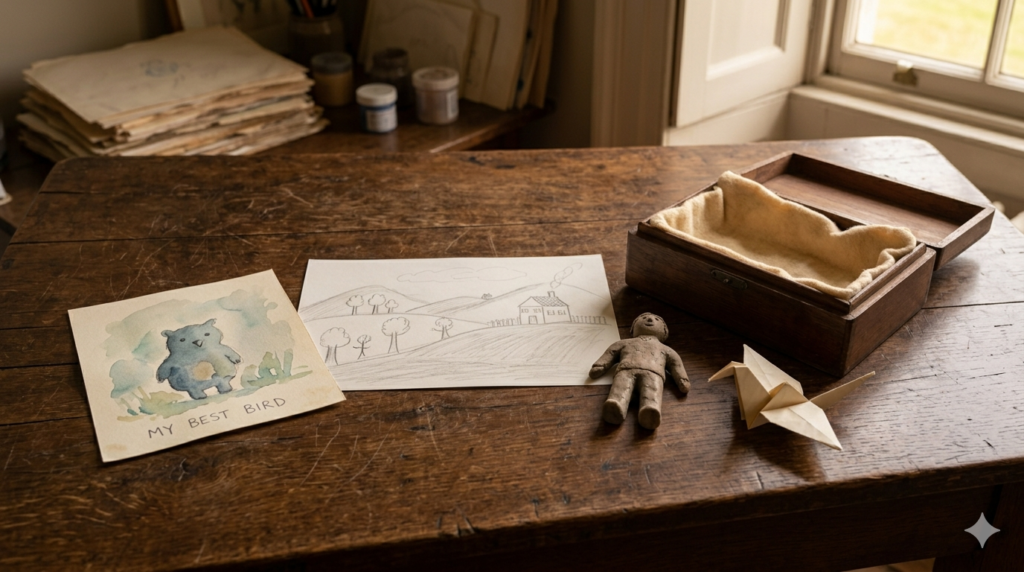
The plot, such as it is, follows the slow emergence of this understanding. The novel ends with Kathy alone, having lost both Ruth and Tommy to donations. She is preparing to become a donor herself.
That is the book at the level of plot. Anything I say about it from this point forward is at the level of voice.
The First Sentence
The novel opens with Kathy introducing herself, telling the reader her name and what she does for a living.
The sentence is unremarkable. It is the kind of sentence a friendly acquaintance might use to begin a long conversation. The voice is conversational. The tone is open. The reader is not, on the first page, alerted to anything unusual.
This is the first place where the novel is performing its argument.
A dystopian novel usually opens with some marker of the regime. A poster on the wall. A scheduled ritual. A surveillance device. A piece of bureaucratic language. The marker tells the reader, you are in a dystopia, the regime is operating here.
Never Let Me Go gives the reader none of this. The opening is a friendly young woman starting to tell her life story. The regime is not announced. The regime is, in fact, the very voice that is failing to announce it.
This is the novel’s most fundamental move. The dystopia is not depicted as something visible to the narrator. The dystopia is depicted as the conditions under which the narrator’s voice has been formed. The voice is what the regime has produced. The reader is not being told about the regime by someone outside it. The reader is being addressed by the regime’s most successful product.
A reader who does not register this will read the novel as a coming-of-age story with a sad twist at the end. A reader who registers it will hear, on every page, the soft pressure of the system that has produced this voice.
What the Voice Does Not Do
Kathy’s voice is calm. It is patient. It is friendly. It is willing to explain.
What the voice does not do is rage. It does not protest. It does not analyse the regime that produced it. It does not direct the reader’s attention to the injustice of what is being described.
This is the novel’s central technical achievement. Ishiguro has constructed a voice that is, by every measure of literary technique, placid, while the situation the voice is describing is, by any reasonable measure, an atrocity.
The placidity is not a failure of awareness. Kathy knows what she is. She knows what is going to happen to her. She knows what has happened to her friends. She is not in denial.

The placidity is, instead, the marker of how thoroughly the regime has done its work. Kathy has been raised inside a system that does not permit certain emotional responses. She has not been taught the vocabulary that would allow her to rage. She has not been given access to the comparative perspective that would allow her to see her situation as an injustice rather than as a fact.
The voice is calm because the voice has been engineered to be calm. The engineering is what the novel is depicting.
This is one of the deepest things any dystopian novel has done. Most dystopian novels show the reader a narrator who is, in some way, struggling against the regime. Winston rages. Offred remembers. Even D-503 begins to doubt. The narrator’s resistance, however limited, is the place where the reader’s sympathy can rest.
Kathy does not resist. The novel is not interested in showing the reader a resisting narrator. The novel is interested in showing the reader what the regime produces when it succeeds. Kathy is the success. She is what happens when a regime gets the conditioning right.
The Way She Talks About the Donations
Throughout the novel, Kathy refers to the medical process by which she and her friends will die as the donations.
This phrasing is one of the novel’s quiet horrors.
A donation is, in ordinary English, an act of generosity. A person who donates is giving something. The verb implies agency. The verb implies choice. The verb implies that the giver retains, even after the giving, their fundamental status as a person who is doing something rather than as a thing that is having something done to it.
Kathy does not have any of this. She has not chosen to give her organs. She has not consented to the schedule by which the organs will be removed. She will die from the process. The process is not, by any honest description, a donation.
But Kathy says donation. So does everyone else. So does the medical system. So does Ishiguro’s prose, which never corrects her.
This is one of the most precise pieces of political analysis in the novel. The regime has captured the language. Not by inventing new words, the way Orwell’s Party does with Newspeak. By capturing an existing word and bending it.
The capture is invisible because the word is familiar. Donation. Carer. Completion, which is the word used for what happens after the fourth donation. Possible, which is the word used for the original human from which a clone has been made.
Each of these is an ordinary English word. Each has been recruited to do work the ordinary English word was not designed for. The reader who hears the words without noticing the recruitment is in the same epistemic position as the characters who use the words. They are not lying. They are using the available vocabulary.
The vocabulary is the regime.
The Hailsham Chapters
The largest section of the novel is the memoir of Kathy’s schooldays at Hailsham.
A reader who reads the section at the level of plot will register it as a series of small events. A guardian who behaves strangely. A boy with anger problems. A theft from another student. A whispered conversation about what happens after Hailsham.
A reader who reads the section at the level of voice will register something else, which is the slow accumulation of small clues that the narrator herself does not consciously register.
The clues are everywhere. They are placed in the prose with extraordinary care.
The students collect their best artwork for a Madame who visits the school and takes the work away. They never know why. The novel does not, at the time of the Hailsham chapters, explain.
The students have a strict separation from the outside world. They are not allowed to leave. They have only minimal contact with anyone not at Hailsham. The novel does not, at the time of the Hailsham chapters, explain.
The students are given regular medical checkups. They are constantly monitored for health. The novel does not, at the time of the Hailsham chapters, explain.
Each of these details, on first reading, is part of the texture of an unusual school. On rereading, after the reader knows what the school is for, each detail becomes a piece of evidence that was sitting on the page the whole time.
This is one of the most demanding things the novel asks of its reader. The novel will reveal what Hailsham is. It will reveal it slowly. But it has placed the evidence, from the first chapters, in the narration. The reader who is paying attention will assemble it. The reader who is reading for plot will be ambushed by the eventual revelation.
The novel can be read either way. It is a more rigorous book on the second reading, when the reader can hear what Kathy is saying that Kathy herself cannot quite hear.
The Conversation with Miss Lucy
There is a scene roughly a third of the way through the novel in which one of the Hailsham guardians, Miss Lucy, attempts to tell the students directly what they are.
She gathers a group of them. She says that they have been told and not told about their future. She says that they need to understand that they will never have ordinary lives. That they will become donors. That they will not have careers or families or any of the futures the students have been imagining.
The students listen. The scene ends. Miss Lucy is, shortly afterwards, dismissed from the school.
The popular reading of this scene is that it is the moment of truth. The kind teacher tries to tell the children. The system removes her. The children remain in their pleasant ignorance.
The careful reading is more disturbing.
The students, in the scene, are not particularly surprised by what Miss Lucy says. They have already been told, in fragments, by other guardians. They have already absorbed the basic shape of their future. Miss Lucy is not giving them new information. She is giving them direct information about something they have, in various oblique ways, already learned.
The students’ reaction is not shock. It is mild discomfort. They do not want to hear it stated so directly. They prefer the oblique knowledge they have been accumulating. They are, in some sense, embarrassed for Miss Lucy, who is breaking a convention they did not know they had been taught.
This is one of the novel’s quietest and most devastating insights. The regime has not kept the truth from the students. The regime has trained the students to prefer not to know the truth directly, even when they know it indirectly. Miss Lucy’s directness is the violation. Her dismissal is not because she has told them something dangerous. It is because she has named something the social fabric of Hailsham has been built to leave unnamed.
The students themselves are complicit in this. They could press Miss Lucy for more. They do not. They could go to her later, ask her to repeat what she said, ask her to fill in the details. They do not. They prefer the silence that Hailsham has trained them to prefer.
This is what the regime has done. It has not silenced the truth. It has produced subjects who will silence the truth themselves, even when they have it.
The Drive Through the Countryside
Late in the novel, after Ruth has completed and only Kathy and Tommy are left, the two of them take a drive through the English countryside.
The drive is one of the most beautiful passages in the book. The fields. The hedges. The small villages. The quality of the light. The road that winds through a landscape that has, by this point, become unbearably precious to both characters because they know how little time is left.
A reader who reads the drive at the level of description will register it as a lyrical interlude. A reader who reads it at the level of argument will register what the drive is doing, which is performing the central question of the novel.
The countryside they are driving through is the country that has produced the system that is about to kill them. The fields are beautiful because someone has tended them. The villages are pleasant because someone has lived in them. The whole landscape is a working society, which functions in the way it functions partly because the donor system supplies the medical infrastructure that keeps that society healthy.
Kathy and Tommy are not separate from this society. They are products of it. They are, in some sense, the cost of its beauty.
The drive is the novel’s most direct statement of its political argument, and the statement is made through landscape rather than through analysis. The argument is that the comfortable society depicted in the novel is built on the engineered short lives of people like Kathy and Tommy, and the engineering is so efficient that the people themselves do not, by the end of their lives, fully register what has been done to them.
The reader is asked, by the drive, to hold both things at once. The beauty of the countryside and the cost of producing it. The novel does not direct the reader to either side of this. The novel simply describes the drive, and lets the reader feel the weight of the contradiction.
This is one of the most precise pieces of political fiction in twenty-first-century English literature, and it is conducted entirely through atmosphere.
The Final Scene
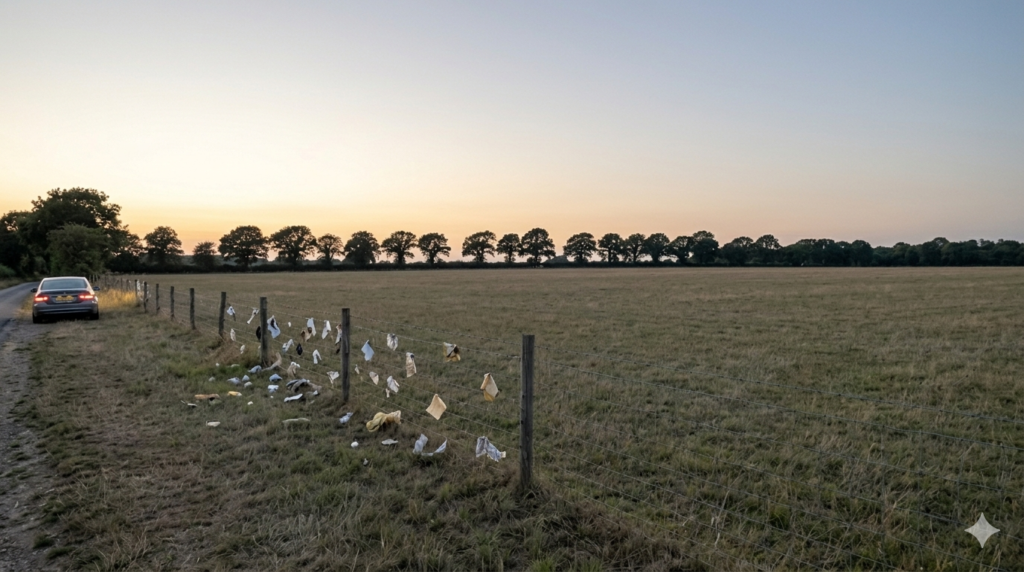
The novel ends with Kathy standing alone in a field. Tommy has completed. She is preparing to become a donor herself. She has driven to a place she remembers from her time at Hailsham. She stands in the field. She thinks about the people she has lost. She gets back in her car and drives away.
That is the ending.
The popular reading is that it is sad. The careful reading is more specific.
The ending is not a closing image of the kind canonical dystopias usually supply. There is no tragic submission. There is no plausible escape. There is no noble death. Kathy simply continues, into the life that is left for her, which she knows will be short.
This is the open ending the African dystopian tradition has been writing for decades, but Ishiguro has arrived at it from a different direction. The ending is open not because the political situation is unresolved but because Kathy is unresolved. She has not been transformed by the events of the novel. She has not arrived at any kind of clarity that was not available to her before. She is the same person at the end that she was at the beginning, slightly more tired, slightly more alone, still using the same vocabulary, still talking in the same calm voice.
The voice has not changed. This is the deepest thing the novel does. The voice that began the book is the voice that ends it. The regime has produced a person whose voice is stable across a lifetime of experiences that should, by any ordinary measure, have shattered it.
The stability of the voice is the regime’s success. The reader who has stayed with the voice for three hundred pages has heard the regime in action. The reader who has tried to read the novel as a coming-of-age story has missed what it is doing.
What the Novel Is About
I have been avoiding the question of what the novel is about, because the popular readings have answered this question in ways that are not quite right.
The popular reading is that the novel is about love. Kathy loves Tommy. Tommy loves Kathy. Ruth comes between them. They lose each other. The love survives in memory.
This is a reasonable thing to say about the novel, and it is true at the level of plot. But the novel is doing something more specific than this summary captures.
The novel is, more precisely, about the capacity for love under conditions designed to prevent its development. Kathy and Tommy have not been raised in circumstances that would normally produce a deep adult attachment. They have been raised as livestock. They have been kept in institutional settings. They have been given limited social training. They have been deprived of most of the conditions that, in ordinary human development, produce the ability to love.
And yet they love each other. The novel tracks the slow emergence of this love across the entire arc of their lives. The love is real. The love is not the regime’s product. The love is what has survived in spite of the regime.
This is what the novel is showing. Not that love conquers all. The love does not conquer. Tommy dies. Kathy dies soon. The regime wins, in the conventional sense.
But the love existed. The regime did not prevent it. The regime did not eliminate the capacity for it. The novel ends with Kathy alone in a field, remembering Tommy, and the remembering is itself evidence that something has happened that the regime could not engineer away.
This is the novel’s argument, conducted at the level of voice across three hundred pages of patient first-person narration. The argument is not stated. The argument is performed.
The reader who has stayed with the voice long enough to hear it has been receiving the argument the whole time.
Reading Between the Lines
The argument of this post is small and specific.
Never Let Me Go is doing almost all of its work at the level of voice. A reader who reads it at the level of plot will close the book with the sense that it was sad and quiet. A reader who reads it at the level of voice will close the book having received an argument about what regimes can engineer, what they cannot, and what survives in the small spaces between them.
The voice is the regime. The voice is also the resistance, in the small ways that resistance is possible in this kind of regime.
The novel is short. It can be reread in a long afternoon.
Read it again. Read the voice this time. Hear what Kathy says and what Kathy does not quite say. Hear the words she uses, and notice what those words have been doing while you were reading them.
The novel is on the shelf.
The careful reading is still available.
Read it as if you had never read it.
Most readers have not.

