
The Architecture of Surveillance: Reading the Stasi Archives as Found Fiction
The archives of East Germany’s Stasi are among the strangest literary objects of the twentieth century.
Not because they were intended as literature.
Quite the opposite.
They were built as instruments of control:
reports,
transcripts,
surveillance files,
informant testimonies,
psychological profiles,
intercepted letters,
recorded conversations,
and bureaucratic observations accumulated obsessively across decades.
Yet reading these documents today feels disturbingly similar to reading fragmented dystopian fiction.
Not polished fiction.
Not carefully structured narrative.
Found fiction.
A vast accidental novel assembled by a surveillance state attempting to document reality completely and instead revealing the terrifying instability of reality under constant observation.
The Stasi Tried to Turn Human Life Into Data
The Stasi did not merely investigate crimes.
It monitored ordinary existence.
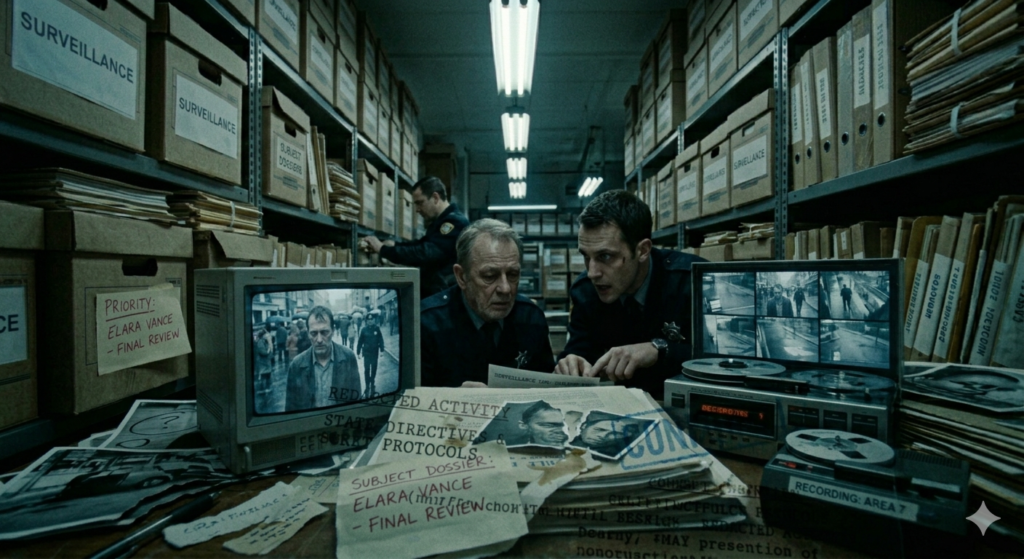
Citizens were watched at work,
at school,
inside relationships,
through friendships,
through family connections,
through private conversations,
through emotional behavior.
The scale becomes difficult to emotionally process.
Millions of documents accumulated because the East German state believed social reality itself needed continuous observation to remain politically manageable.
This is what makes the archives feel architecturally dystopian.
The files attempt to reduce human complexity into systems of classification:
suspicious tendencies,
behavioral patterns,
political reliability,
psychological vulnerability.
Every person becomes potentially legible to institutional power.
The Documents Read Like Fractured Narratives
One reason the archives feel literary is because they preserve people partially.
A sentence overheard.
A relationship summarized.
A gesture interpreted politically.
A friendship transformed into evidence.
Entire lives survive only in fragments.
Reading the files produces a strange emotional effect. People appear inside the archive suddenly and incompletely, almost like characters entering unfinished novels. A person exists for a few pages through bureaucratic description, then disappears again into silence.
The archive creates narrative without meaning to.
But it is distorted narrative:
cold,
administrative,
emotionally asymmetrical.
The state records details obsessively while understanding very little about the inner lives it monitors.
Surveillance Produces Fictional Versions of People
The Stasi archives reveal something deeply unsettling about surveillance systems.
Observation does not produce objective truth.
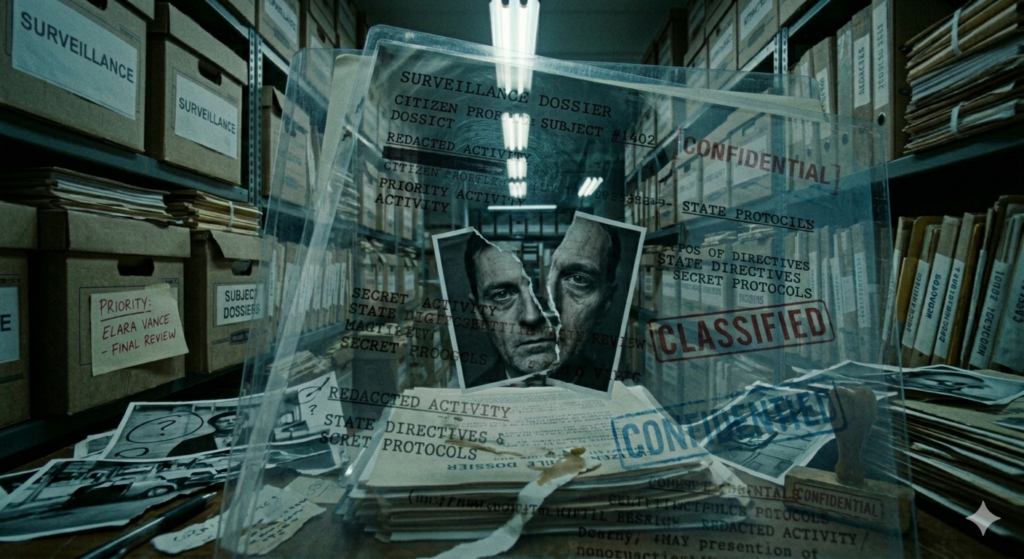
It produces constructed narratives.
Informants misinterpreted situations.
Agents projected ideological assumptions.
Ordinary actions became politically suspicious through bureaucratic framing.
The files therefore contain countless fictionalized versions of real people generated through institutional paranoia and interpretive distortion.
This is why reading the archives resembles reading fragmented psychological fiction. The state continuously narrates citizens into existence through reports and classifications.
A joke becomes disloyalty.
A friendship becomes conspiracy.
Emotional distance becomes political threat.
The surveillance apparatus transforms ambiguity into story.
Bureaucracy Becomes a Narrative Machine
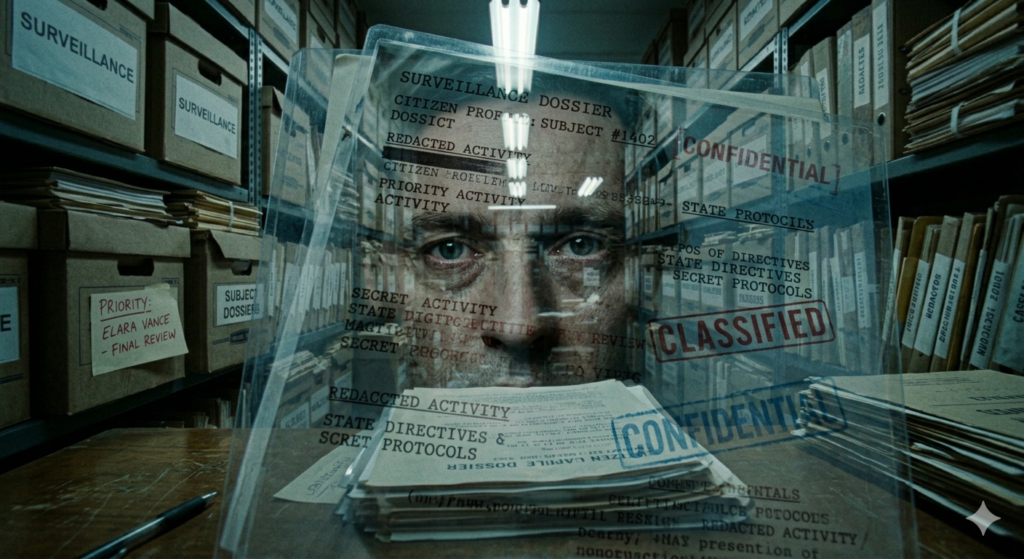
One of the most disturbing aspects of the archives is their tone.
The language often feels emotionally neutral,
procedural,
administrative.
Yet beneath this calm surface lies enormous human violence.
Careers destroyed.
Relationships manipulated.
Lives psychologically destabilized.
The bureaucracy records all this almost clinically.
This emotional disconnection creates the same unsettling effect found in many dystopian novels. Systems of control become terrifying partly because they normalize themselves linguistically.
The archive speaks in paperwork while quietly reorganizing human reality underneath.
Readers encounter sentences describing surveillance operations with bureaucratic calm even when those operations shattered people’s emotional lives completely.
That contrast feels chilling.
The Informants Create Moral Instability
Perhaps the most psychologically disturbing dimension of the Stasi archives involves informants.
Friends informed on friends.
Spouses informed on spouses.
Artists informed on colleagues.
Ordinary citizens became participants in surveillance systems surrounding them.
This creates moral fragmentation throughout the documents.
The archive becomes filled with divided identities:
people performing loyalty publicly while fearing exposure privately,
people participating in systems they distrusted,
people trapped between self-preservation and betrayal.
Reading the files now feels less like examining stable historical truth and more like entering a labyrinth of compromised narratives where certainty collapses repeatedly.
Nobody appears entirely innocent.
Nobody appears fully free.
That ambiguity gives the archive literary depth no novelist could easily invent.
The Architecture of Surveillance Is Psychological
The Stasi understood something modern surveillance systems still understand:
control works most effectively when people internalize observation.
Citizens did not need cameras watching every second constantly. The possibility of surveillance altered behavior psychologically.
People censored themselves.
Distrusted conversations.
Modified emotional expression.
Avoided uncertainty.
This transformed social life architecturally.
The system reorganized relationships internally.
The archive therefore documents not only political control, but the gradual redesign of emotional reality under conditions of suspicion.
Trust itself becomes unstable.
That may be the most dystopian aspect of all.
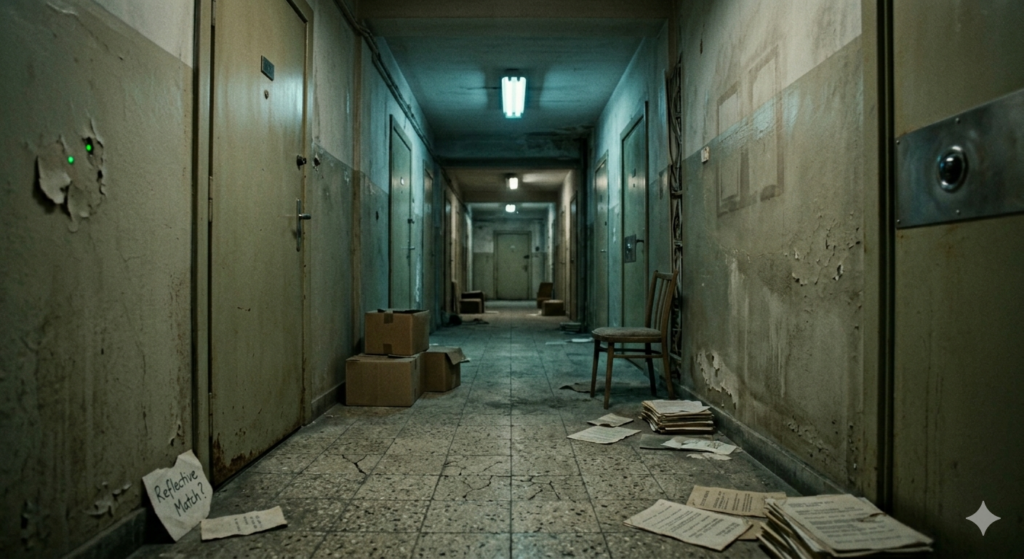
The Files Preserve Human Fragility Accidentally
Ironically, the archives preserve precisely what the system could never fully control:
human unpredictability.
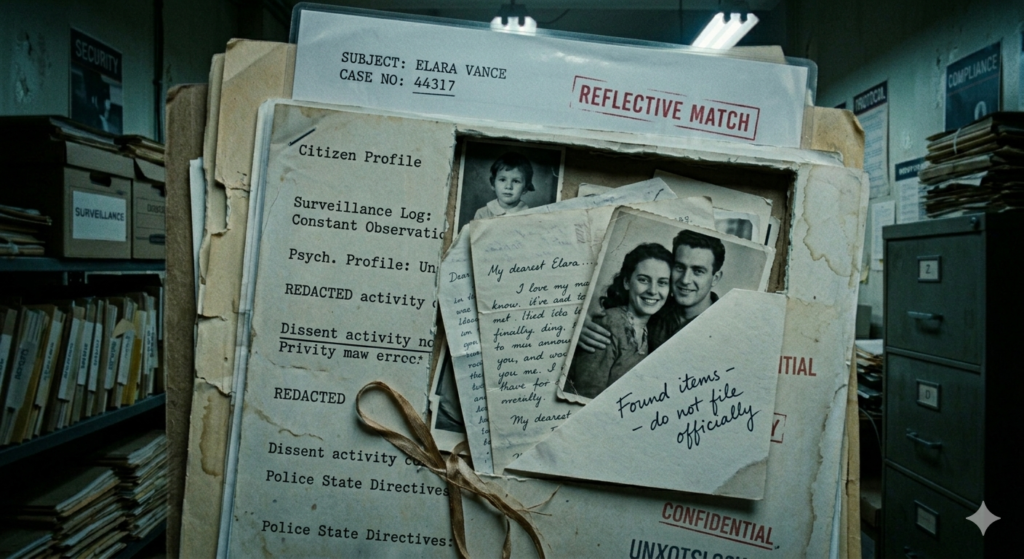
People continue loving secretly.
Writing privately.
Joking subversively.
Maintaining emotional complexity beyond institutional categories.
The documents therefore reveal the limits of surveillance even while demonstrating its terrifying reach.
The Stasi tried to create total legibility.
Instead, the archive becomes filled with partial misunderstandings, contradictions, and emotional residues escaping bureaucratic interpretation.
This accidental humanity makes the documents emotionally overwhelming to read.
The archive records repression constantly.
But it also records people remaining irreducibly human beneath it.
Why the Archives Feel So Modern
Reading the Stasi archives today feels disturbingly contemporary because modern societies increasingly generate similar systems of documentation:
digital tracking,
metadata,
behavioral profiling,
algorithmic categorization,
predictive analysis,
social monitoring.
The technologies differ.
The emotional logic often does not.
Contemporary systems also attempt to convert human life into analyzable data patterns. People increasingly exist inside institutional narratives generated through invisible systems observing behavior continuously.
The Stasi archives therefore feel less like historical relics and more like an early analog version of anxieties that now define digital life globally.
Found Fiction and Historical Horror
Calling the archives “found fiction” does not mean they are false.
It means they reveal how systems of power narrate reality.
The Stasi unintentionally produced one of the twentieth century’s largest fragmented narratives about fear, suspicion, intimacy, bureaucracy, and social fragmentation.
No single file explains the system fully.
No complete story exists.
Instead, readers move through endless partial perspectives, incomplete truths, distorted interpretations, and emotional absences.
The result resembles experimental literature almost accidentally.
Except the suffering inside it was real.
Final Thoughts
The Stasi archives remain terrifying because they reveal surveillance not merely as political technique, but as narrative architecture.
The system attempted to organize society by documenting it obsessively, turning ordinary lives into files, patterns, and institutional stories.
Yet the archive also exposes the impossibility of fully containing human complexity within systems of observation.
Reading these documents today feels like reading dystopian fiction written unintentionally by bureaucracy itself:
fragmented,
cold,
haunted,
and filled with traces of lives struggling to remain emotionally real beneath structures trying to classify them completely.
The horror lies not only in what the state recorded.
But in how easily recording itself became a form of power.


