Why Every Totalitarian Regime Eventually Builds a Television Studio
Power, on its own, is never quite enough. It can compel obedience, but it cannot guarantee belief. It can impose silence, but it cannot fill that silence with meaning. That gap, between what people are forced to accept and what they come to see as reality, is where media steps in.
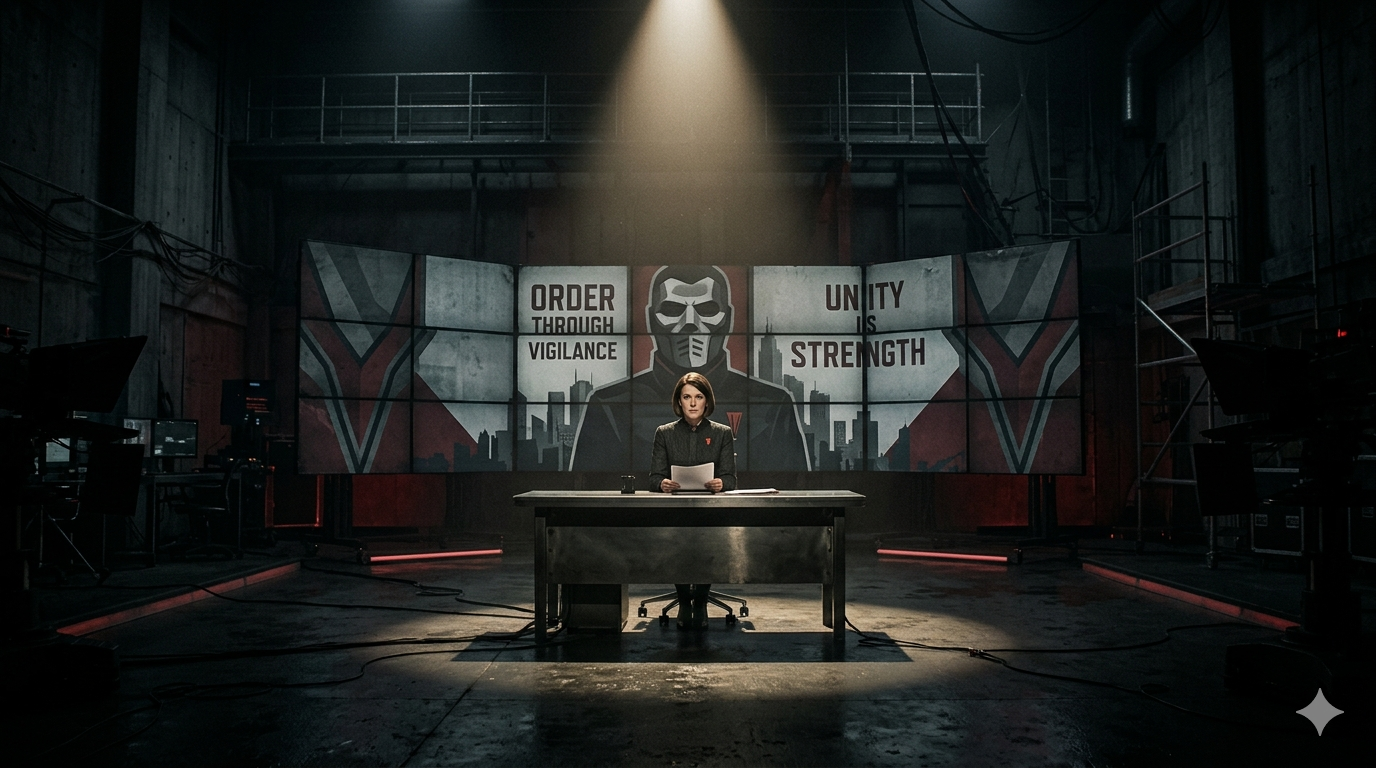
That is why, sooner or later, every totalitarian regime builds a television studio. Not just to broadcast information, but to manufacture a version of the world that feels coherent, stable, and unquestionable.
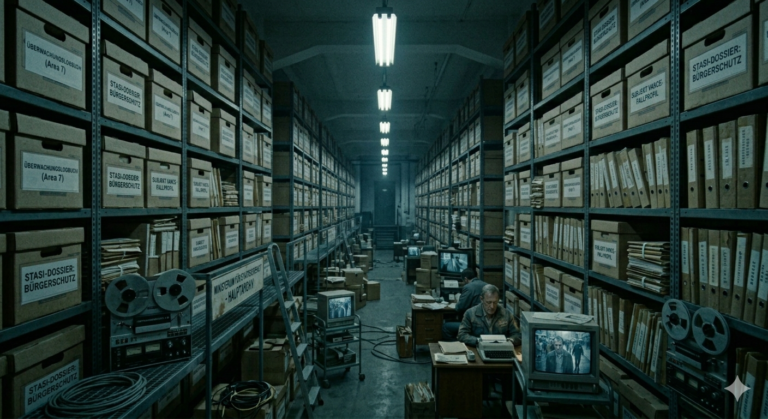
A prison can control bodies. A studio can shape minds.
From Force to Narrative
In the early stages of authoritarian rule, control is often direct. Arrests are visible. Opposition is openly suppressed. The system asserts itself through fear and immediacy.
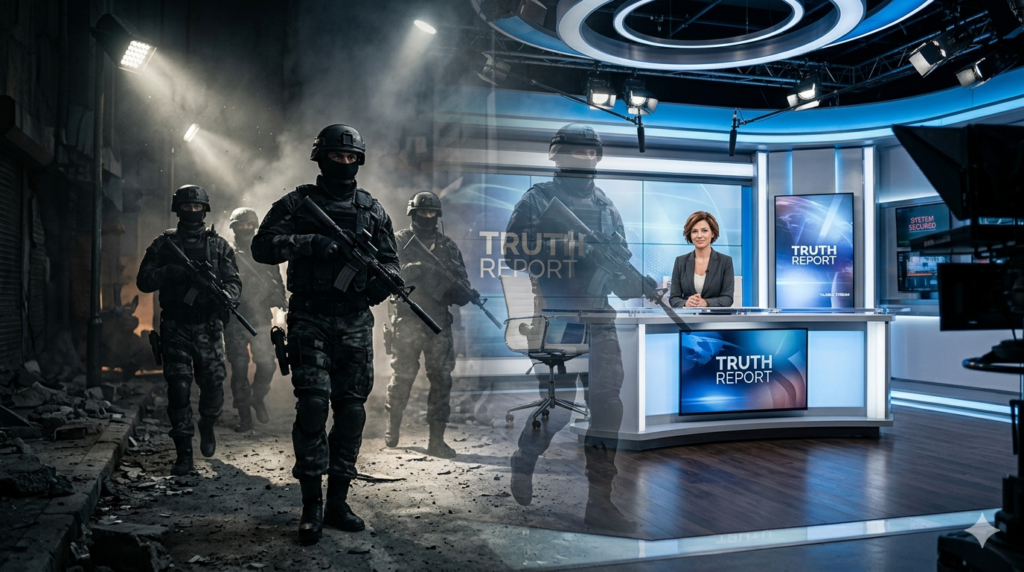
But this kind of control is exhausting to maintain. It requires constant vigilance and produces constant tension. A regime that relies only on force remains fragile, because it never fully secures consent, or even passive acceptance.
Narrative changes that equation.
Once a regime begins to tell a consistent story about itself, about its enemies, about its purpose, it reduces the need for overt force. People begin to internalize the logic of the system. They anticipate what is expected of them. In some cases, they even defend it.
The television studio becomes the engine of that narrative. It turns power into something that can be seen, heard, and repeated until it feels natural.
The Studio as Architecture of Reality
A television studio is often treated as a neutral space, a place where events are reported. In a totalitarian context, it functions very differently. It is closer to a factory.
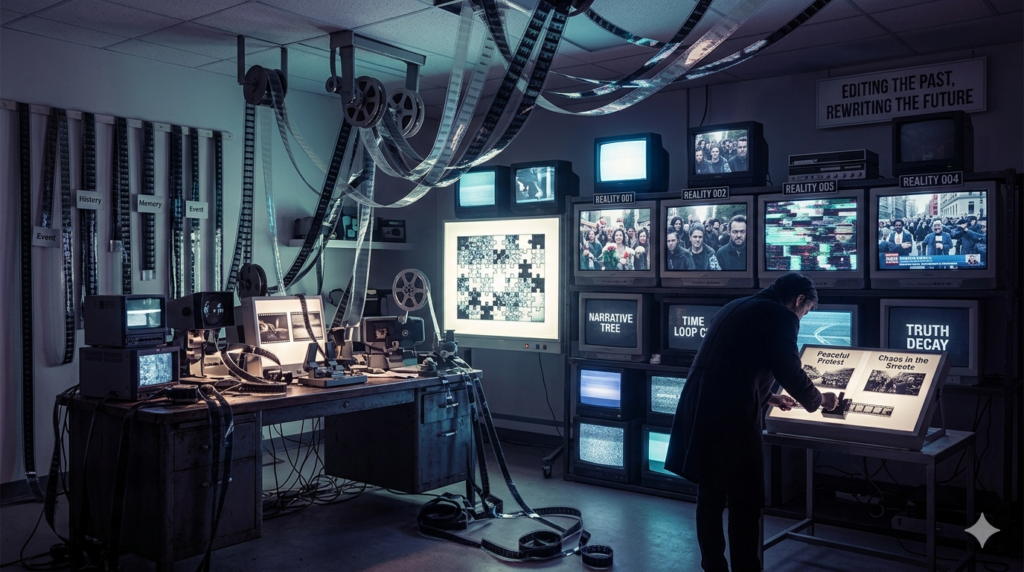
Inside it, reality is selected, arranged, and presented in a controlled sequence. Some events are highlighted. Others are ignored. Some are framed as victories. Others are reframed as necessary sacrifices or external threats.
Nothing is entirely fabricated. That would be too easy to dismiss. Instead, reality is curated.
This is what makes the system effective. It does not ask people to believe in a completely false world. It asks them to accept a carefully edited one.
The Ritual of Watching
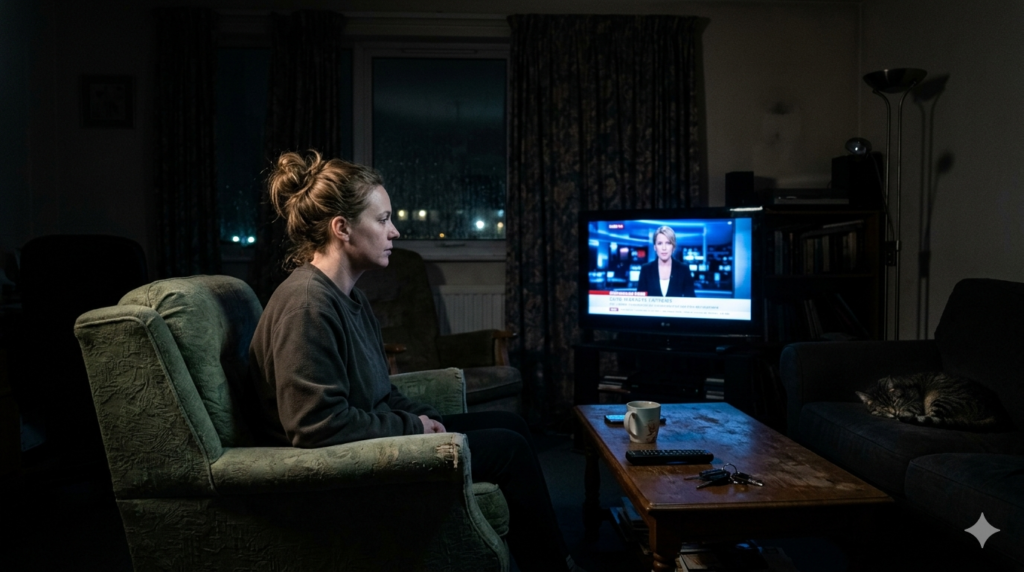
There is also something ritualistic about television. The act of tuning in at a certain time, hearing familiar music, seeing the same faces, creates a sense of continuity.
In uncertain environments, continuity is comforting.
Totalitarian regimes exploit this instinct. Regular broadcasts create a rhythm that structures daily life. News programs do not just inform. They reassure. They signal that the system is functioning, that someone is in control, that the world still makes sense.
Even when the content is questionable, the format itself carries authority.
This is why the aesthetics matter so much. The lighting, the graphics, the tone of voice. All of it contributes to the illusion of stability.
The Leader as Image
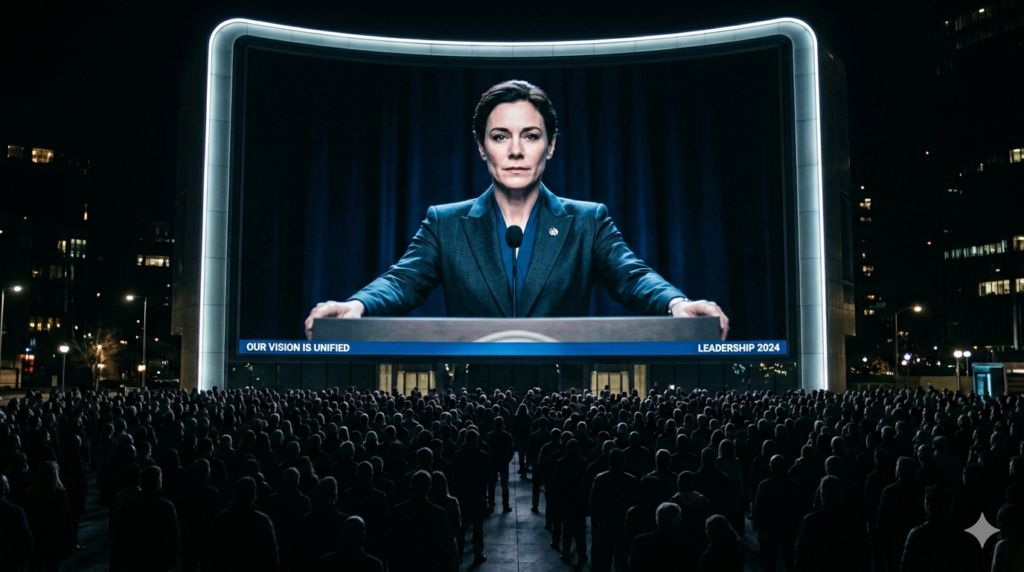
In many such regimes, the leader is not just a political figure but a constructed image. Television is essential to maintaining that image.
Appearances are controlled down to the smallest detail. The angle of the camera, the composition of the frame, the reactions of the audience. Every element is designed to reinforce a particular idea of leadership.
Strength without vulnerability. Confidence without doubt. Presence without distance.
Over time, the image can become more real than the person. Criticizing the leader begins to feel like challenging reality itself, because the image has been so thoroughly embedded in the public consciousness.
This is not accidental. It is production.
Repetition and the Erosion of Doubt
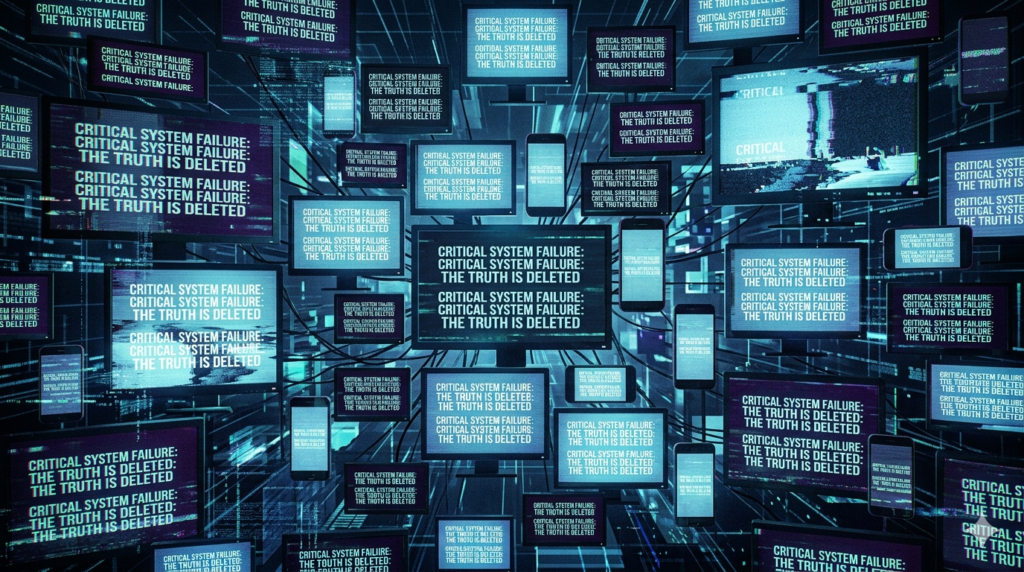
One of the most powerful tools available to any media system is repetition. In a totalitarian context, repetition is not just a strategy. It is a foundation.
Messages are circulated constantly. The same phrases appear across news reports, interviews, cultural programming, and even casual conversation. Language itself becomes standardized.
This has a subtle but profound effect. Doubt requires space to grow. Repetition fills that space.
Even those who are skeptical can find themselves influenced by the sheer consistency of the messaging. It becomes harder to remember alternative versions of events, harder to articulate disagreement, harder to hold onto uncertainty.
The goal is not always to convince. It is to narrow the range of what feels sayable.

When Entertainment Becomes Political
Not all programming in these systems is overtly political. In fact, much of it is not.
Entertainment plays a crucial role. It provides relief, distraction, and a sense of normalcy. But it also reinforces the boundaries of acceptable thought.
Stories avoid certain themes. Characters reflect certain values. Conflicts resolve in ways that align with the broader narrative of the regime.
Over time, this shapes cultural expectations. People begin to see the world not just through news, but through stories that subtly echo the same ideas.
The studio, then, is not just producing information. It is producing culture.
The Transition to the Digital Studio
While television remains a powerful medium, the concept of the “studio” has expanded. Today, it includes social media platforms, online video, and algorithm-driven content.
The principles, however, remain consistent.
Content is still curated. Narratives are still repeated. Images are still controlled. The difference is scale and speed. Messages can now be distributed instantly and tailored to specific audiences.
This makes the system more flexible, but also more difficult to detect. The boundaries between official messaging and organic content blur.
The studio is no longer a single room. It is an entire ecosystem.
Why It Keeps Reappearing
The reason this pattern repeats across different regimes and different eras is simple. It works.
People do not navigate the world through raw information. They rely on stories, images, and shared understandings. A regime that can shape those elements gains a powerful advantage.
It does not need to eliminate all opposition. It only needs to make its own version of reality more accessible, more familiar, and more persistent than any alternative.
The television studio, in all its forms, is the tool that makes this possible.
Final Thoughts
It is easy to think of propaganda as something obvious, something that belongs to the past or to distant places. But the structures that support it are often ordinary.
A camera. A script. A well-lit room.
What changes is how those tools are used.
A totalitarian regime builds a television studio not because it values communication, but because it understands perception. It knows that control over what people see and hear can be as important as control over what they do.
And once that system is in place, reality itself becomes something that can be edited, framed, and broadcast on demand.