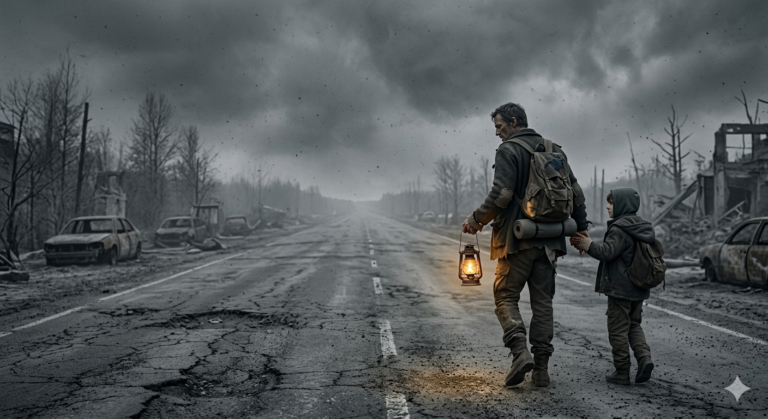
The Door at the End of Notes from Underground and Why Dostoevsky Left It Open
Fyodor Dostoevsky’s Notes from Underground is one of the strangest books ever written.
It barely has a plot.
Its narrator contradicts himself constantly.
Entire sections feel hostile to the reader.
At times, the book seems determined to sabotage its own arguments.
And yet the novella remains terrifyingly modern because Dostoevsky understood something many later writers still struggle to admit:
Human beings do not always want happiness.
They want freedom even when it destroys them.
That idea hangs over the entire novel like a shadow.
But nowhere does it become more haunting than in the ending, where Dostoevsky leaves one small possibility unresolved.
A door remains open.
And he refuses to tell us whether anyone walks through it.
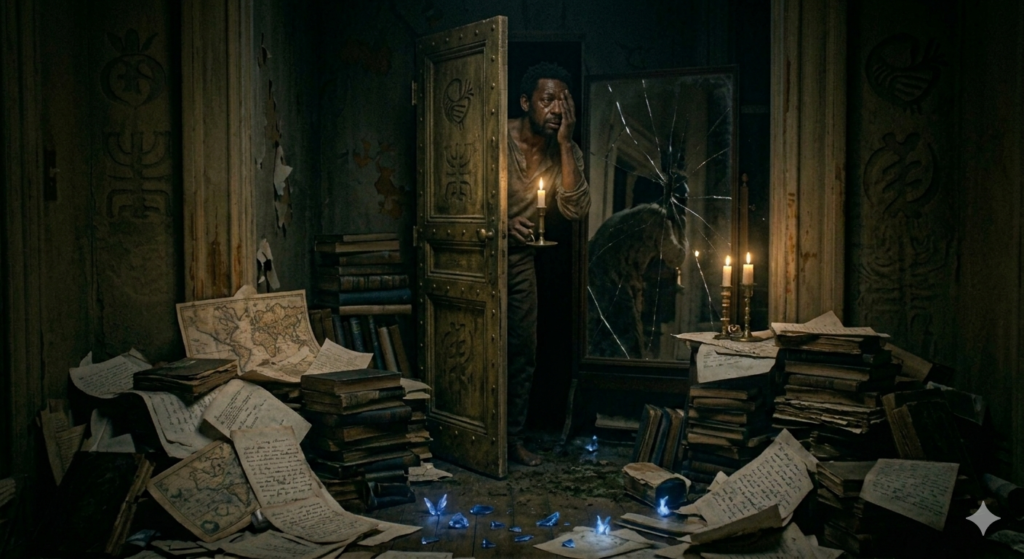
The Underground Man Lives Against the World
The narrator of Notes from Underground is not simply lonely.
He is actively opposed to existence itself.
He rejects:
reason,
social progress,
human optimism,
rational self-interest,
and even his own happiness.
Much of the novella functions as an attack on nineteenth-century utopian philosophy, especially the belief that human beings could become rationally organized into harmonious societies through science and social engineering.
The Underground Man despises this vision.
Not because he enjoys suffering exactly, but because he sees something terrifying hidden beneath perfect rational order:
the death of human unpredictability.
He believes people would rather destroy themselves than become perfectly manageable creatures.
That insight gives the novella its enduring force.
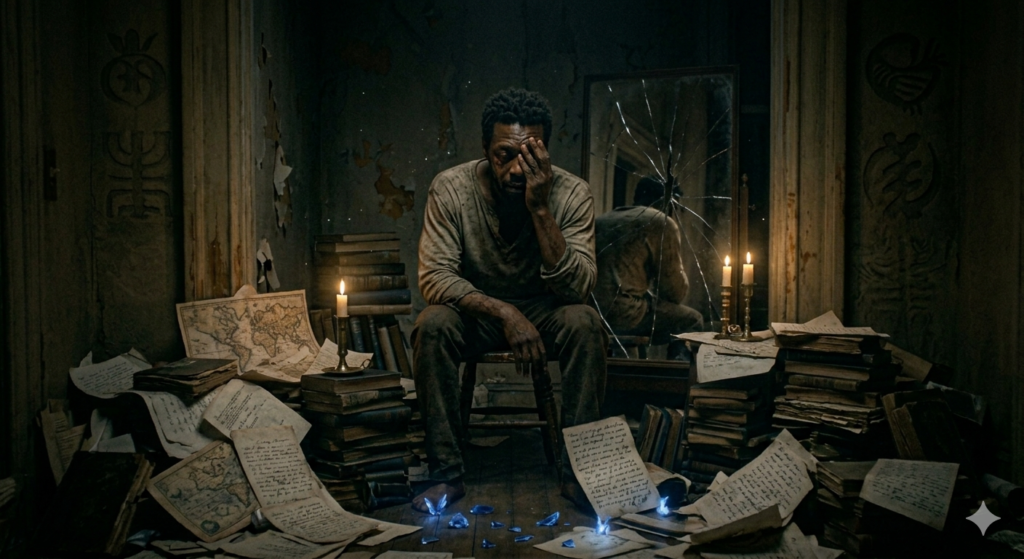
The Novel Is Really About Consciousness as Punishment
One reason the Underground Man feels so psychologically alive is that Dostoevsky portrays consciousness itself as painful.
The narrator overthinks everything.
Every interaction becomes humiliatingly self-aware.
Every emotional impulse gets analyzed until it collapses.
He cannot act naturally because he experiences himself constantly from the outside.
This creates paralysis.
Modern readers recognize this immediately because the Underground Man anticipates forms of alienation now deeply familiar:
self-consciousness,
social anxiety,
resentment,
emotional isolation,
and intellectual overanalysis that prevents meaningful action.
The tragedy of the character is not merely that he suffers.
It is that he cannot stop observing himself suffering.
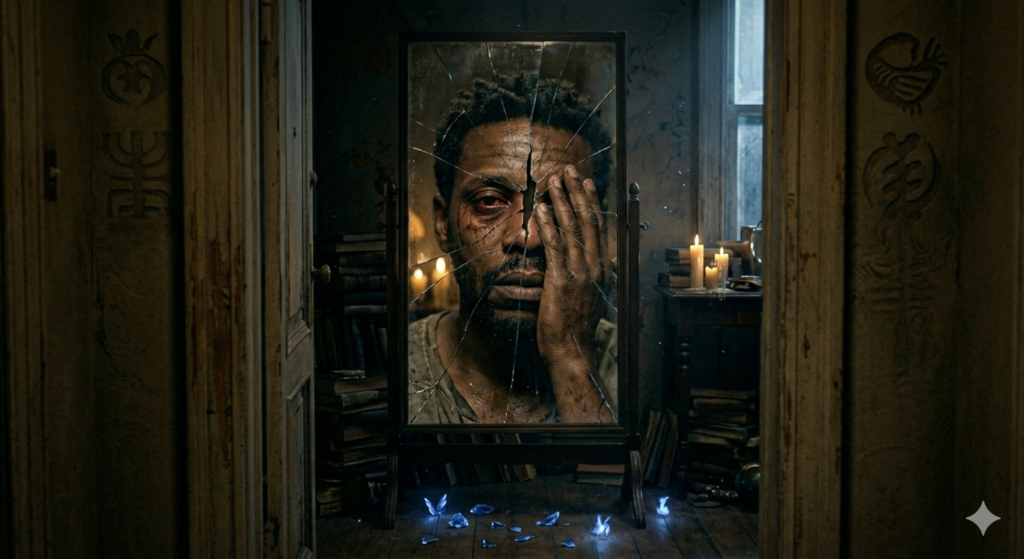
Liza Represents Something the Underground Man Cannot Control
The novella’s emotional center arrives through the Underground Man’s interaction with Liza, a young sex worker he encounters after humiliating experiences with former acquaintances.
At first, he attempts to dominate her psychologically through long speeches about degradation, suffering, and the future awaiting her.
But something unexpected happens.
Liza listens seriously.
More importantly, she responds with genuine human vulnerability. She sees pain beneath the narrator’s cruelty and isolation.
This destabilizes him completely.
The Underground Man can survive humiliation,
resentment,
and loneliness.
What he cannot survive is authentic emotional intimacy.
Because intimacy threatens the identity he has constructed around alienation.
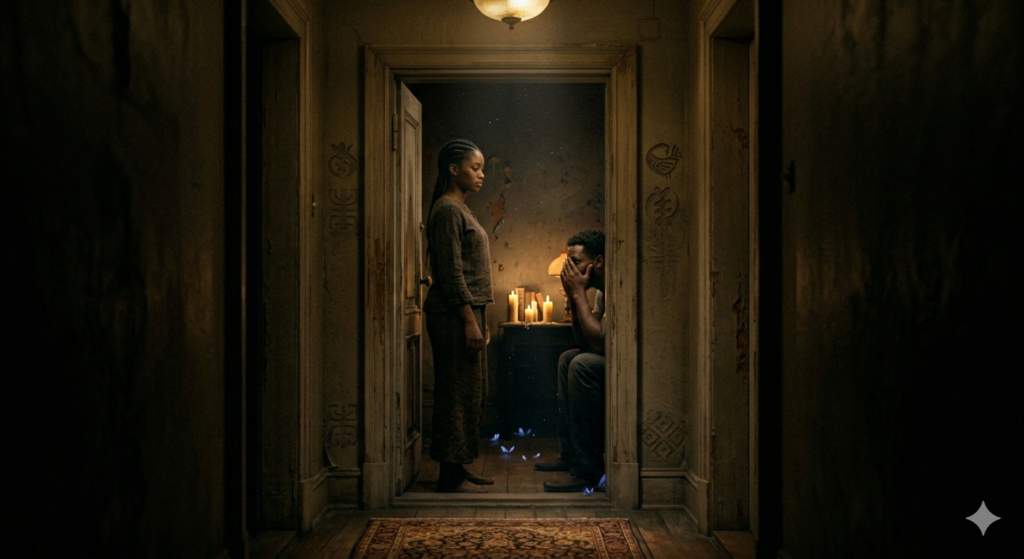
The Door Appears at the End
Near the novella’s conclusion, Liza visits the Underground Man in his miserable apartment after he gave her his address impulsively.
The scene becomes emotionally catastrophic.
The narrator oscillates wildly between tenderness and cruelty. He humiliates her again, insults her, and attempts to reassert control emotionally because genuine connection terrifies him.
Yet Liza still recognizes his suffering.
Then comes the crucial moment.
After the emotional collapse between them, she leaves behind money he had secretly pushed into her hand as an act of humiliation. Refusing the money becomes an act of dignity and moral clarity.
The Underground Man runs after her.
But too late.
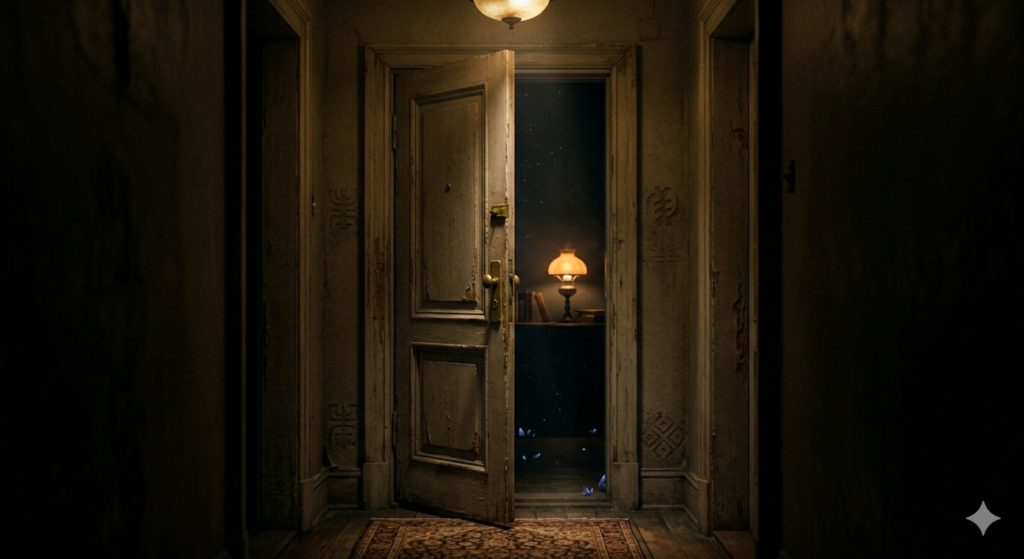
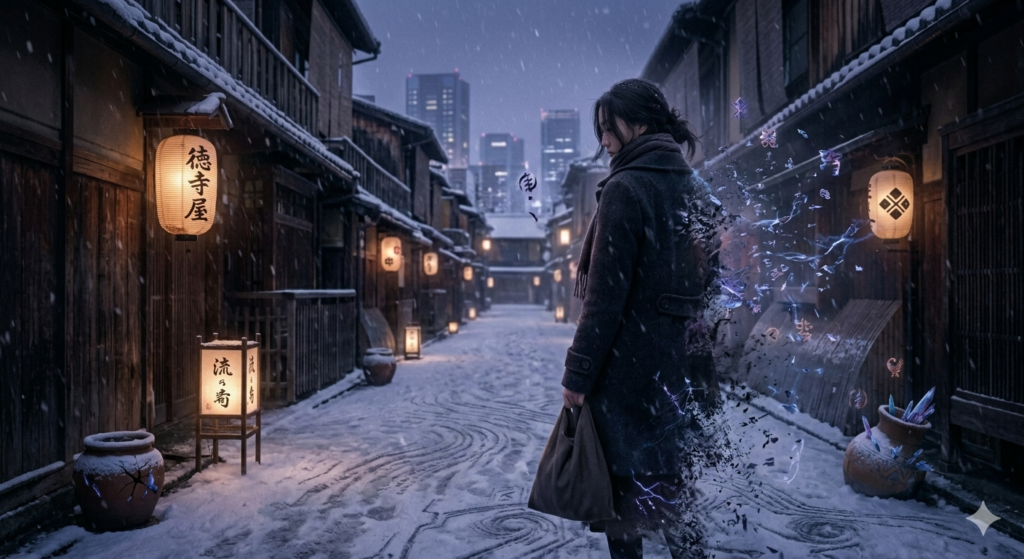
And then Dostoevsky leaves the emotional door open.
Not literally perhaps, but spiritually.
The narrator admits he could still find her.
Still change.
Still step outside the underground prison of resentment and self-destruction.
But he does not tell us whether he will.
That uncertainty is everything.
Dostoevsky Refused Redemption Narratives
Many novels would resolve the story clearly.
The narrator reforms.
Or he collapses completely.
Or the moral lesson becomes explicit.
Dostoevsky refuses all of this.
Instead, he leaves readers trapped inside possibility.
The Underground Man recognizes his condition.
He understands his isolation.
He briefly encounters genuine human connection.
Yet self-awareness alone does not guarantee transformation.
That is one of Dostoevsky’s deepest insights:
people often remain attached to the very suffering destroying them.
The Underground Man prefers the psychological safety of alienation over the terrifying vulnerability required for real connection.
Dostoevsky leaves the ending unresolved because human freedom itself remains unresolved.
The Novel Rejects the Fantasy of Rational Humanity
Much of Notes from Underground attacks the idea that people can be reduced to logical systems.
The Underground Man insists repeatedly that human beings sabotage their own interests constantly simply to prove they are free.
This is why the “door” at the end matters symbolically.
Dostoevsky refuses deterministic conclusions.
The narrator is not mechanically doomed.
Nor is redemption guaranteed.
Freedom remains terrifying precisely because it leaves multiple futures possible.
The Underground Man could seek reconciliation.
Or retreat permanently underground.
The novel ends before certainty arrives.
That openness preserves human complexity.
Why the Ending Still Feels Modern
Contemporary readers often find the novella disturbingly recognizable because the Underground Man anticipates emotional patterns intensified in modern life:
- ironic detachment
- fear of vulnerability
- self-protective cynicism
- emotional self-sabotage
- intellectualized loneliness
- resentment masking desire for connection
The narrator wants intimacy desperately.
But he also fears it because intimacy requires surrendering control over how he is perceived.
That contradiction feels painfully contemporary.
Many people today recognize the impulse to retreat emotionally rather than risk genuine exposure.
Dostoevsky understood this psychology long before modern therapeutic language existed.
Liza Is the Novel’s Moral Center
Importantly, Liza is not presented as naive salvation.
She possesses emotional clarity the narrator lacks.
She recognizes suffering without transforming it into philosophical performance. Where the Underground Man intellectualizes endlessly, Liza responds humanly.
This is why her departure matters so much.
She offers the possibility of connection without demanding perfection.
The narrator cannot accept it.
Or perhaps cannot accept it yet.
Again, Dostoevsky refuses certainty.
Why Dostoevsky Left the Door Open
Dostoevsky leaves the ending unresolved because closing it would betray the novel’s central argument.
Human beings cannot be reduced to formulas.
Not rational formulas.
Not moral formulas.
Not literary formulas either.
The Underground Man remains capable of transformation.
But capability is not destiny.
The open door at the novella’s end represents freedom itself:
terrifying,
painful,
unpredictable,
and impossible to resolve neatly.
A closed ending would turn the character into a moral lesson.
Dostoevsky wanted something harder.
He wanted readers to recognize themselves inside the uncertainty.
Final Thoughts
The final pages of Notes from Underground remain devastating because they offer no comforting conclusion.
Dostoevsky understood that people often cling to resentment, alienation, and self-destruction even when connection becomes possible. Freedom includes the ability to refuse healing.
But the novel also refuses total despair.
The door remains open.
The possibility remains alive.
The narrator is not fully trapped unless he chooses to remain trapped.
Dostoevsky ends the novella there because real human transformation can never be guaranteed externally.
It can only remain possible.
And sometimes possibility itself is the most frightening thing of all.