Tlotlo Tsamaase Is Writing the African Dystopia of the Next Decade
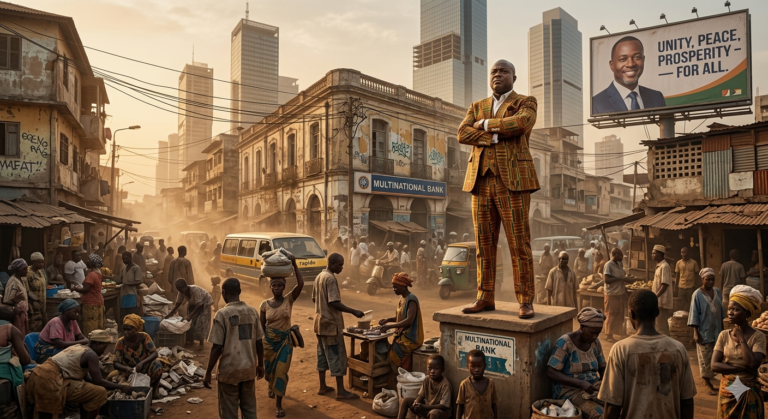
A great deal of dystopian fiction still imagines collapse through familiar Western imagery:
surveillance states,
megacities,
corporate authoritarianism,
cold technological futures.
Tlotlo Tsamaase writes something stranger.
Her fiction feels haunted rather than mechanical.
Spiritual rather than merely political.
Emotionally intimate rather than institutionally distant.
And that difference matters.
The Botswana-born writer Tlotlo Tsamaase is creating some of the most psychologically unsettling speculative fiction emerging from contemporary African literature because she understands that future dystopias will not only control economies or governments.
They will shape memory,
grief,
ritual,
identity,
family,
and the invisible emotional systems people use to survive.
That is why her stories feel less like traditional science fiction and more like nightmares whispered through folklore.
Her Worlds Feel Spiritually Colonized
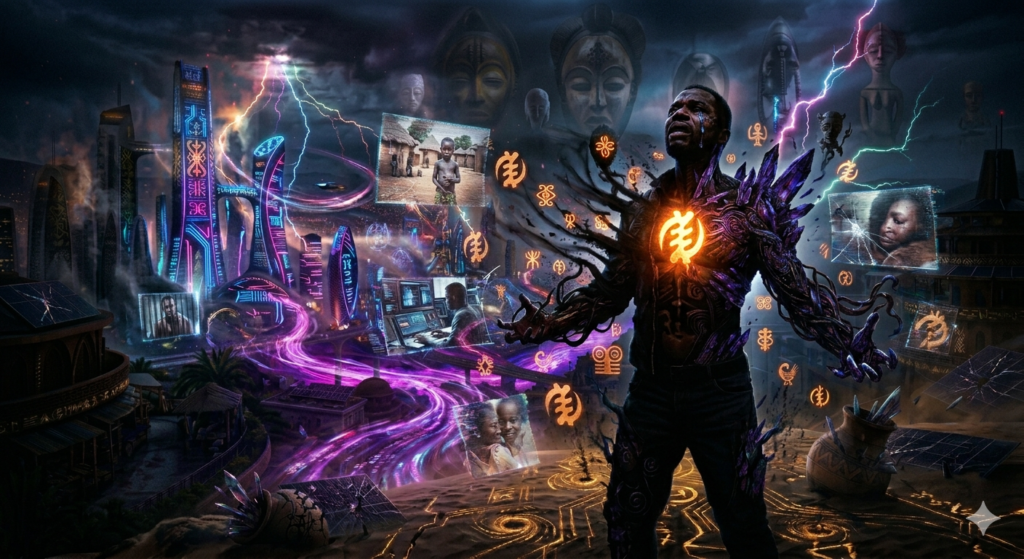
One of the most striking qualities in Tsamaase’s fiction is the way power penetrates emotional and spiritual life itself.
In many dystopian stories, oppression operates visibly:
laws,
technology,
police systems,
corporate structures.
Tsamaase often focuses on something harder to map directly.
Her worlds feel emotionally contaminated.
Grief becomes manipulated.
Bodies become unstable.
Memory fractures.
Communities lose spiritual grounding.
People become alienated not only politically, but cosmologically.
This creates a uniquely disturbing atmosphere because the threat is not simply external authority.
Reality itself begins feeling unreliable.
That emotional instability separates her work from more conventional dystopian traditions.
Horror and Dystopia Collapse Into Each Other
Western literary traditions often separate genres neatly:
science fiction,
fantasy,
horror,
literary fiction.
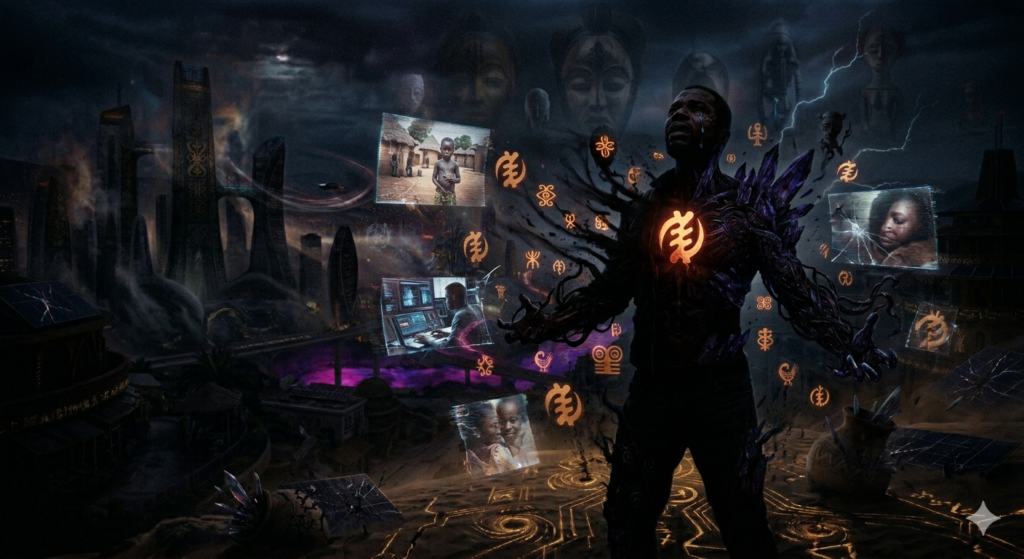
Tsamaase ignores these boundaries almost completely.
Her stories move fluidly between speculative technology,
body horror,
spiritual haunting,
dream logic,
and political collapse.
This hybridity makes her work feel startlingly contemporary because modern crises themselves rarely stay inside neat categories.
Climate catastrophe becomes psychological.
Technology becomes spiritual.
Economic instability becomes bodily anxiety.
Historical trauma becomes supernatural presence.
Tsamaase writes worlds where all these forces bleed together.
The result is fiction that feels less interested in predicting gadgets than in capturing emotional futures.
The Body Is Never Stable in Her Fiction
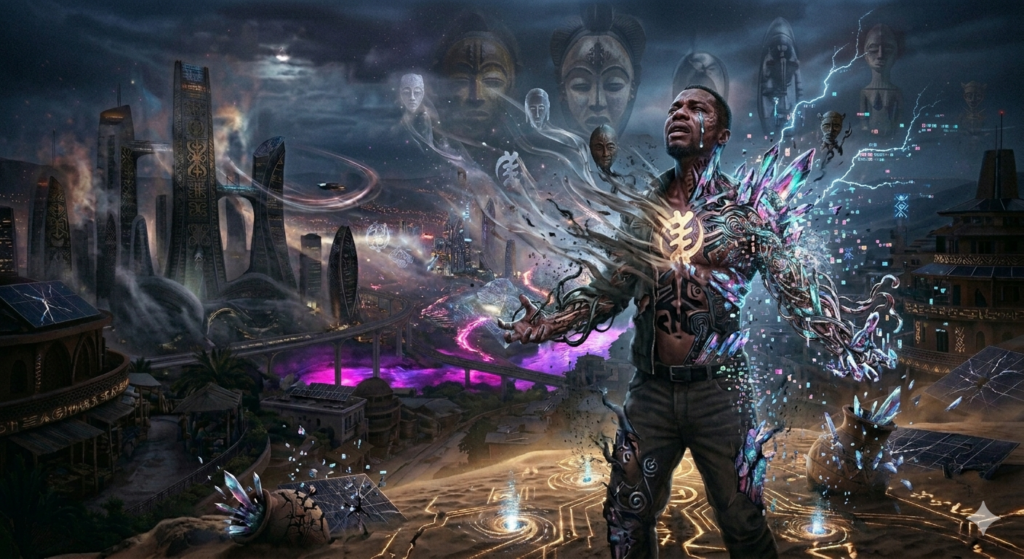
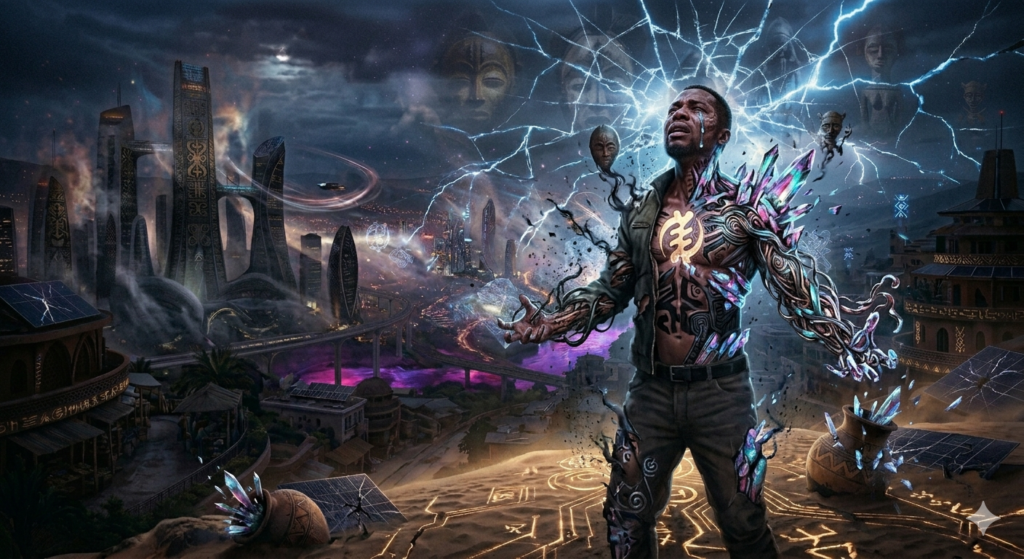
Many of Tsamaase’s stories focus intensely on bodily transformation.
Bodies mutate.
Decay.
Merge.
Fragment.
Carry inherited trauma physically.
This obsession matters politically.
Dystopian systems often attempt control through the body:
surveillance,
labor,
reproduction,
medical systems,
violence,
beauty standards,
technological integration.
Tsamaase pushes this further by portraying bodies as sites where social trauma becomes physically visible.
Her characters frequently experience embodiment itself as unstable. Flesh carries history. Identity becomes porous. Pain moves across generations almost biologically.
This creates horror far deeper than simple gore.
The body becomes evidence that systems of violence leave permanent marks.
Her Fiction Understands the Afterlife of Colonialism
Many futuristic dystopias imagine entirely new systems emerging in the future.
Tsamaase understands something crucial:
the future is already shaped by unresolved histories.
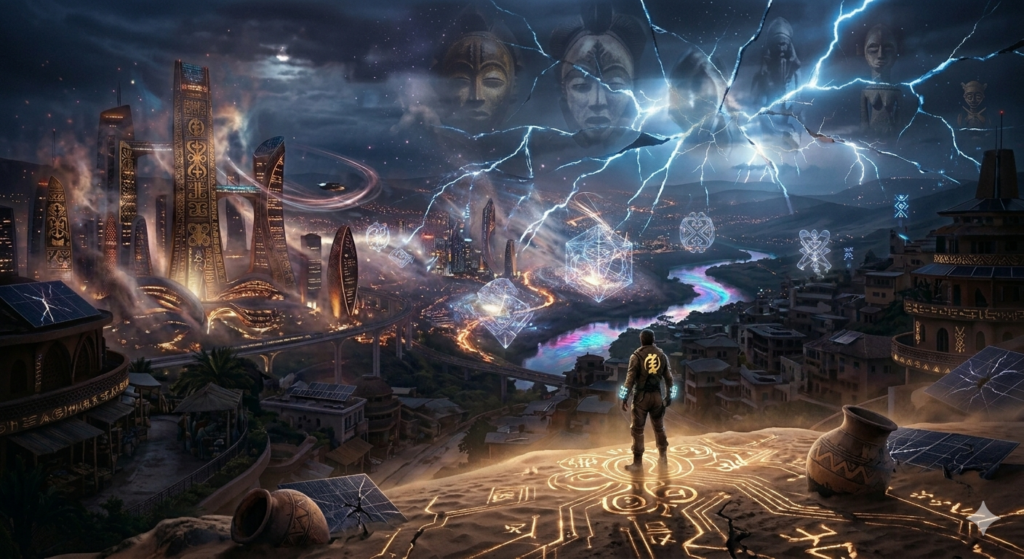
Colonialism in her fiction does not disappear neatly into the past. Its emotional and structural consequences linger inside technology, inequality, memory, language, and spiritual life itself.
This gives her work historical density.
Her dystopias do not emerge from nowhere.
They evolve from accumulated violence already embedded within the present.
That perspective feels increasingly important globally. Contemporary crises often grow from older histories societies never fully resolved:
colonial extraction,
racial hierarchy,
environmental destruction,
forced displacement,
economic inequality.
Tsamaase writes futures where those buried histories return emotionally and spiritually transformed.
She Writes Loneliness Better Than Most Dystopian Authors
One reason Tsamaase’s fiction lingers psychologically is her understanding of loneliness.
Not simple physical isolation,
but emotional estrangement from reality itself.
Characters often feel disconnected from:
their communities,
their memories,
their bodies,
their histories,
even their own emotional certainty.
This gives her stories an intimate scale despite their speculative settings. The apocalypse in her work is often deeply personal before it becomes societal.
Readers do not merely observe dystopian systems externally.
They feel consciousness itself becoming unstable from within.
That interiority makes her fiction unusually haunting.
Language Becomes Atmospheric Rather Than Explanatory
Tsamaase’s prose style matters enormously.
Many dystopian novels prioritize explanation:
how the government works,
how the technology functions,
how society collapsed.
Tsamaase often withholds certainty intentionally.
Her language becomes poetic,
fragmented,
sensory,
and emotionally suggestive. Readers experience atmosphere before explanation.
This technique mirrors trauma and anxiety powerfully. In real crises, people rarely possess total clarity about the systems overwhelming them.
They experience fear first.
Disorientation first.
Emotional distortion first.
Tsamaase captures that psychological texture beautifully.
African Speculative Fiction Is Expanding the Genre Itself
Part of what makes Tsamaase’s work so exciting is that African speculative fiction increasingly reshapes what dystopian literature can become.
Writers across the continent are refusing inherited genre expectations and creating speculative worlds grounded in:
local cosmologies,
postcolonial realities,
environmental collapse,
oral storytelling traditions,
urban transformation,
and spiritual hybridity.
Tsamaase belongs to this larger literary movement, but her voice feels particularly psychologically intense.
Her fiction suggests that future dystopias will not simply be technological systems controlling populations mechanically.
They will also involve:
memory erosion,
spiritual fragmentation,
ecological grief,
emotional alienation,
and inherited historical trauma.
That vision feels alarmingly plausible.
Why Her Work Feels Like the Next Decade
Many dystopian traditions now feel predictable.
Authoritarian government.
Surveillance technology.
Corporate domination.
Those fears still matter.
But readers increasingly recognize that modern crises are also emotional,
ecological,
historical,
and existential simultaneously.
Tsamaase writes precisely from that intersection.
Her fiction captures the feeling of living inside worlds where:
reality becomes unstable,
history refuses burial,
technology amplifies grief,
and identity itself feels increasingly fragile.
That emotional complexity is why her work feels ahead of its moment.
Final Thoughts
Tlotlo Tsamaase is writing the African dystopia of the next decade because she understands that future horror will not only emerge through visible systems of control.
It will emerge through damaged memory,
fractured identity,
spiritual displacement,
ecological anxiety,
and the emotional afterlives of historical violence.
Her stories do not simply imagine societies collapsing.
They imagine consciousness struggling to remain whole inside worlds already emotionally broken.
That is what makes her fiction so unsettling.
And increasingly, so necessary.