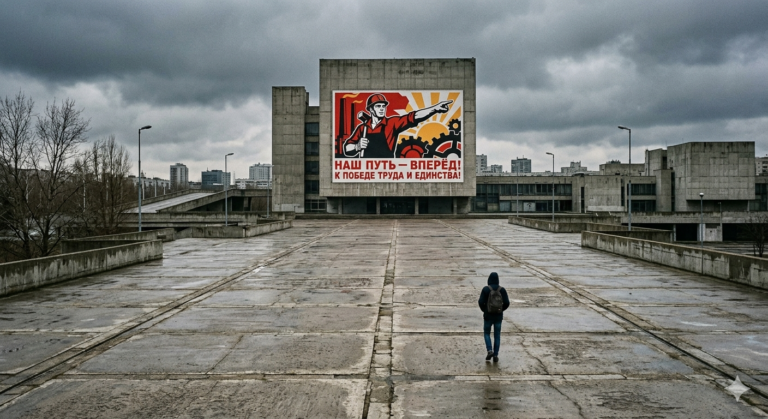
The Quiet Brutality of Yevgeny Zamyatin’s Final Sentence
Yevgeny Zamyatin’s We ends with one of the coldest final sentences in dystopian literature.
Not because it explodes dramatically.
Not because civilization collapses spectacularly.
Not because the protagonist dies heroically.
Its brutality is quieter than that.
By the novel’s conclusion, something far more disturbing has happened:
the possibility of inner resistance itself appears extinguished.
And Zamyatin delivers this horror almost calmly.
That calmness is what makes the ending unforgettable.
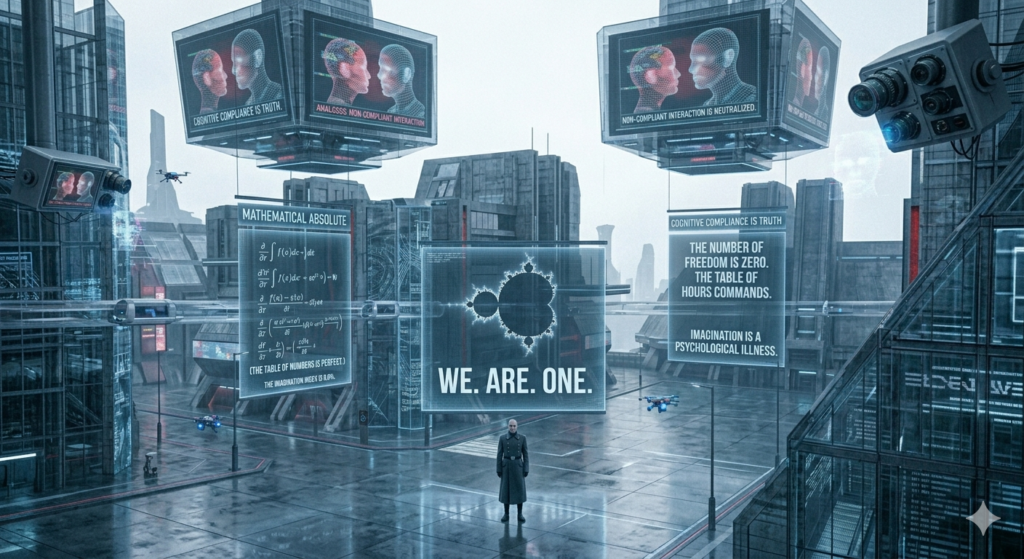
We Invented the Modern Dystopia Before Orwell and Huxley
Published in the early twentieth century, We predates both Nineteen Eighty-Four and Brave New World.
Its influence on later dystopian fiction is enormous:
glass cities,
mass surveillance,
numbered citizens,
state-controlled intimacy,
mathematical ideology,
and the dream of eliminating human unpredictability entirely.
The novel takes place in the One State, a society devoted to perfect rational order. Citizens live under near-total transparency. Privacy is treated almost as pathology. Individuality becomes dangerous because unpredictability threatens collective stability.
Everything functions according to system logic.
At first glance, the world appears efficient,
peaceful,
and harmonious.
That appearance is exactly the problem.
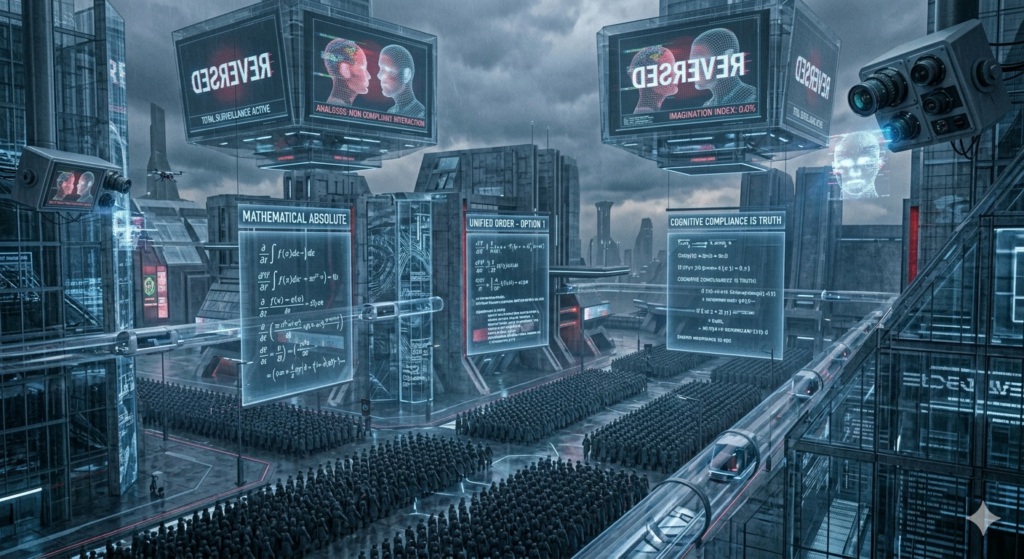
D-503 Begins as a Believer
The protagonist, D-503, initially supports the One State completely.
He is proud of its precision.
Proud of its mathematical beauty.
Proud of the elimination of chaos.
Importantly, D-503 does not begin as a rebel secretly resisting oppression. He genuinely believes rational order has liberated humanity from suffering.
This matters because Zamyatin understood authoritarian systems become most powerful when citizens internalize them emotionally rather than obeying through fear alone.
D-503 experiences the system as meaningful.
Then he meets I-330.
And consciousness begins destabilizing.
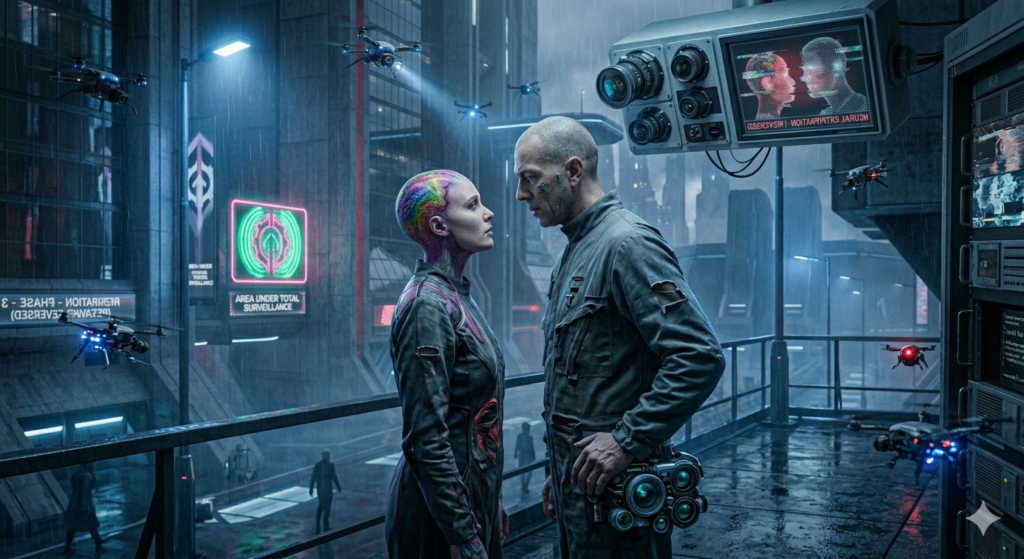
Love Becomes a Political Threat
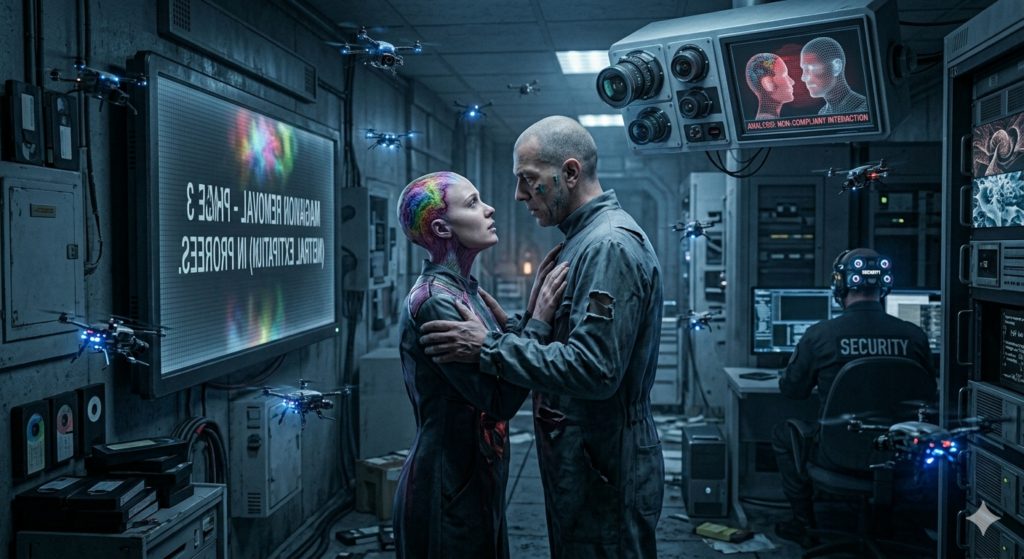
Like many great dystopian novels, We understands that emotional intimacy threatens total systems of control.
I-330 introduces D-503 to experiences the One State cannot fully regulate:
desire,
irrationality,
jealousy,
uncertainty,
imagination,
and inner contradiction.
These emotions begin fracturing his mathematical worldview.
For the first time, D-503 experiences himself as divided internally. He develops fantasies, fears, longings, and doubts impossible to reduce into perfect system logic.
This transformation terrifies him.
Because the One State has taught citizens that inner conflict itself is illness.
And in a sense, the system is correct.
Once authentic subjectivity awakens, total control becomes unstable.
The Novel Understands That Tyranny Wants Psychological Simplicity
Many authoritarian systems seek obedience externally.
The One State wants something deeper:
psychological purity.
Citizens are expected not merely to obey rules, but to eliminate contradiction within themselves. The state seeks complete alignment between external behavior and internal consciousness.
That is why imagination becomes dangerous.
Fantasy creates alternative realities internally.
Desire creates divided loyalties.
Love creates emotional priorities beyond state logic.
Zamyatin therefore portrays individuality not as heroic independence exactly, but as painful fragmentation.
To become fully human in We is to become psychologically unstable.
That insight gives the novel enormous emotional complexity.
The “Great Operation” Is the Novel’s True Horror
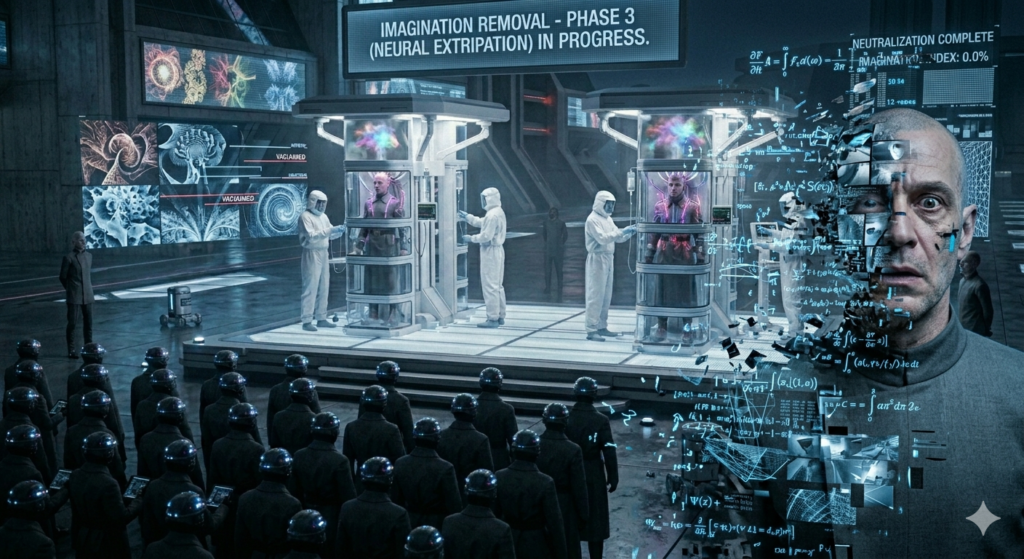
Near the novel’s conclusion, the One State introduces the Great Operation, a medical procedure designed to remove imagination from the human mind permanently.
This idea remains one of the most horrifying concepts in dystopian fiction because it reframes rebellion itself as neurological dysfunction.
The state no longer merely punishes dissidents.
It cures them.
After undergoing the procedure, citizens become emotionally simplified. Conflict disappears. Doubt disappears. Inner resistance disappears.
Most terrifyingly, suffering disappears too.
The procedure transforms people into psychologically manageable beings incapable of destabilizing the system from within.
This is where Zamyatin’s vision becomes profoundly unsettling.
The state does not merely crush freedom violently.
It removes the emotional conditions necessary for freedom to exist at all.
The Final Sentence Feels Emotionally Empty on Purpose
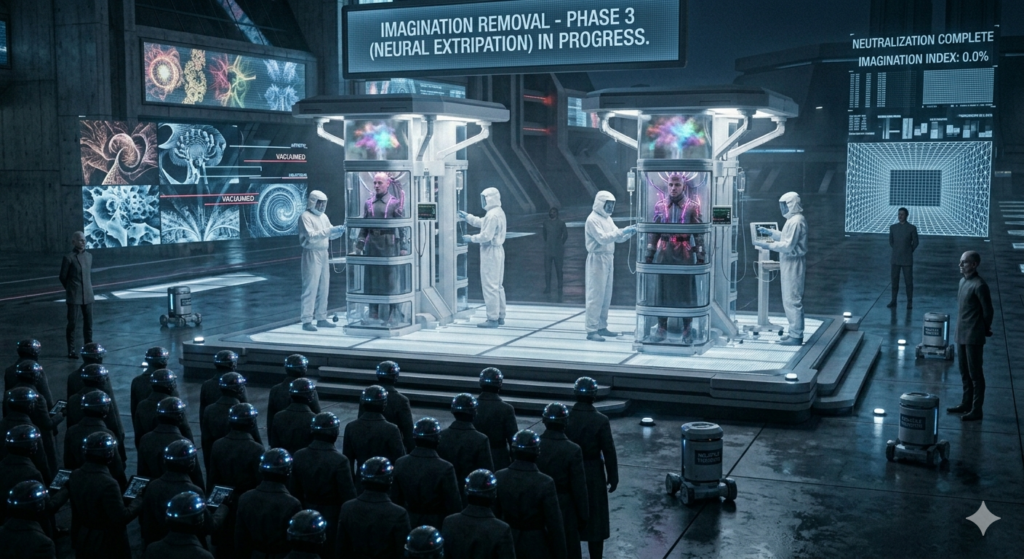
By the ending, D-503 has undergone the Great Operation.
The emotional chaos once consuming him disappears. His love for I-330 vanishes. His inner contradictions dissolve. He calmly reports the torture and execution of former rebels without emotional disturbance.
And then comes the devastating final note:
the state will prevail because human imagination and freedom have been neutralized internally.
The brutality of the ending lies precisely in its emotional flatness.
D-503 no longer suffers.
But he no longer truly exists psychologically either.
The novel ends not with dramatic despair, but with consciousness emptied out.
That quietness is horrifying.
Zamyatin Understood Modern Authoritarianism Early
What makes We so remarkable historically is how accurately it anticipated later authoritarian systems.
Zamyatin recognized that modern tyranny would not rely solely on visible terror. It would seek rational legitimacy:
efficiency,
scientific management,
psychological optimization,
collective happiness,
and social stability.
The One State constantly justifies control as liberation from human suffering.
Citizens are told freedom creates anxiety.
Choice creates pain.
Individuality creates instability.
Therefore total rational order becomes framed as compassion.
This logic remains disturbingly recognizable.
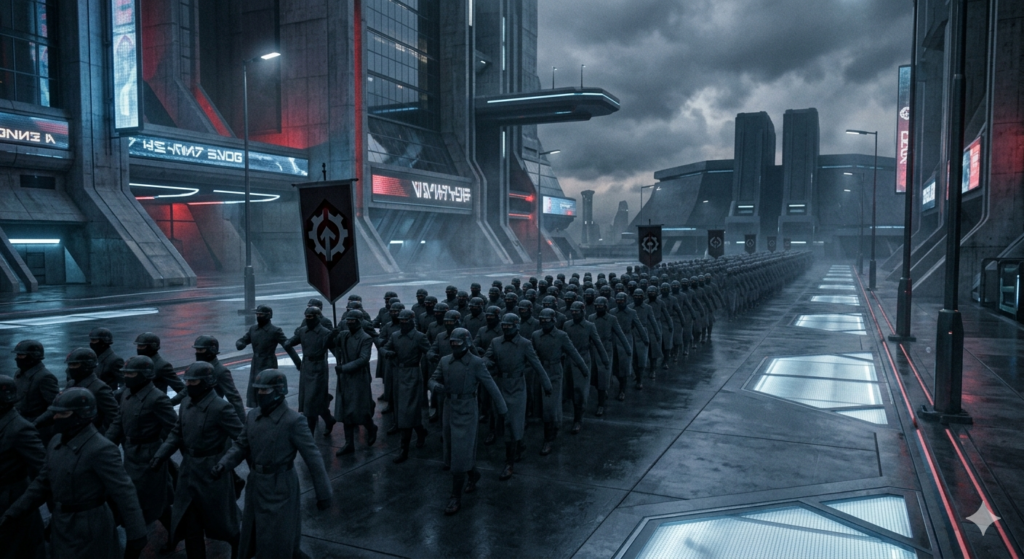
The Ending Rejects Romantic Heroism
Many dystopian novels preserve some final spark of resistance.
Zamyatin does not.
There is no triumphant martyrdom.
No hidden revolutionary victory.
No reassuring moral survival.
Instead, We confronts readers with a terrifying possibility:
human beings may eventually adapt psychologically to systems destroying their individuality.
Not through constant violence alone.
But through emotional normalization.
That is why the ending feels so brutal.
The state wins not merely politically, but internally.
D-503 becomes incapable of imagining freedom anymore.
And without imagination, resistance itself becomes impossible.
Why the Novel Still Feels Modern
Contemporary readers often find We surprisingly current because its fears extend beyond traditional dictatorship.
The novel anticipates societies increasingly organized around:
optimization,
data logic,
predictability,
surveillance,
behavioral management,
and emotional regulation.
Modern systems often promise convenience and stability while subtly discouraging unpredictability or emotional complexity.
Zamyatin saw early that total control might arrive not only through fear, but through the seductive promise of psychological simplicity.
That insight feels increasingly relevant.
The Quietness Is the Point
The final sentence of We devastates because it refuses theatrical tragedy.
Zamyatin understood something many later dystopias sometimes forget:
the greatest horror is not always pain.
Sometimes it is the disappearance of the inner self capable of feeling pain meaningfully at all.
D-503’s emotional emptiness at the end signals something worse than death.
It signals the collapse of interior freedom.
The rebellion fails not only because bodies are controlled.
But because imagination itself becomes medically removable.
Final Thoughts
The ending of We remains one of the most psychologically disturbing conclusions in dystopian literature because Yevgeny Zamyatin recognized that modern authoritarianism ultimately seeks not obedience alone, but emotional simplification.
The final sentence lands with such force because it arrives after the protagonist’s inner life has been erased almost completely.
No screaming.
No dramatic collapse.
No final act of rebellion.
Only calm acceptance.
And that calmness feels terrifying precisely because readers remember the divided, longing, irrational consciousness that once existed underneath it.
The tragedy of We is not merely that the state wins.
It is that the protagonist eventually stops being capable of understanding what has been lost.