What the Wallpaper in Charlotte Perkins Gilman’s Story Was Always Trying to Say
Charlotte Perkins Gilman’s The Yellow Wallpaper is often taught as a story about madness.
And it is.
But reducing the story to psychological collapse misses something much more disturbing happening beneath the surface. The wallpaper itself is not simply a symbol of insanity. It is a language the narrator slowly learns to read because ordinary language has already failed her.
That is the real horror of the story.
The wallpaper says what the narrator is forbidden to say openly.
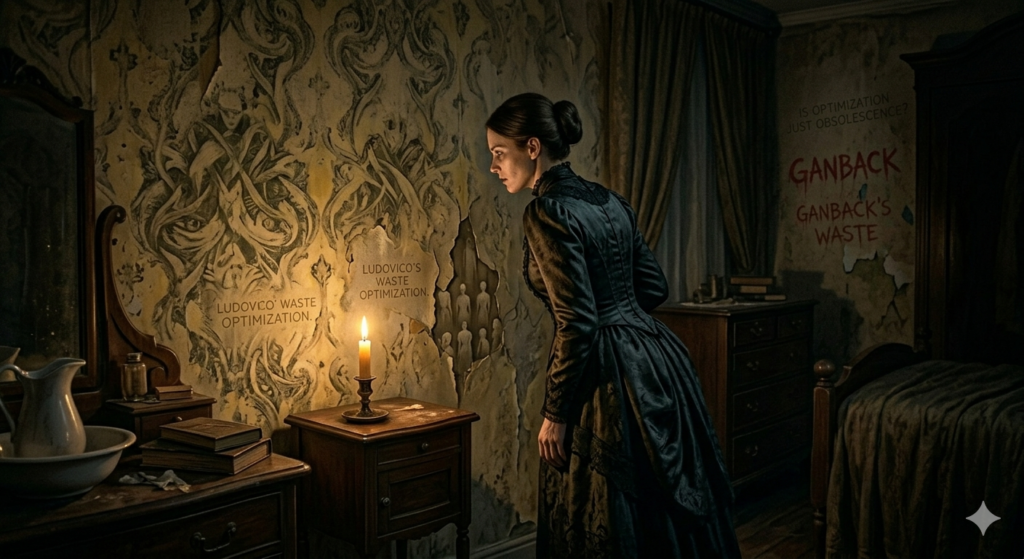
The Narrator Is Trapped Long Before the Wallpaper Appears
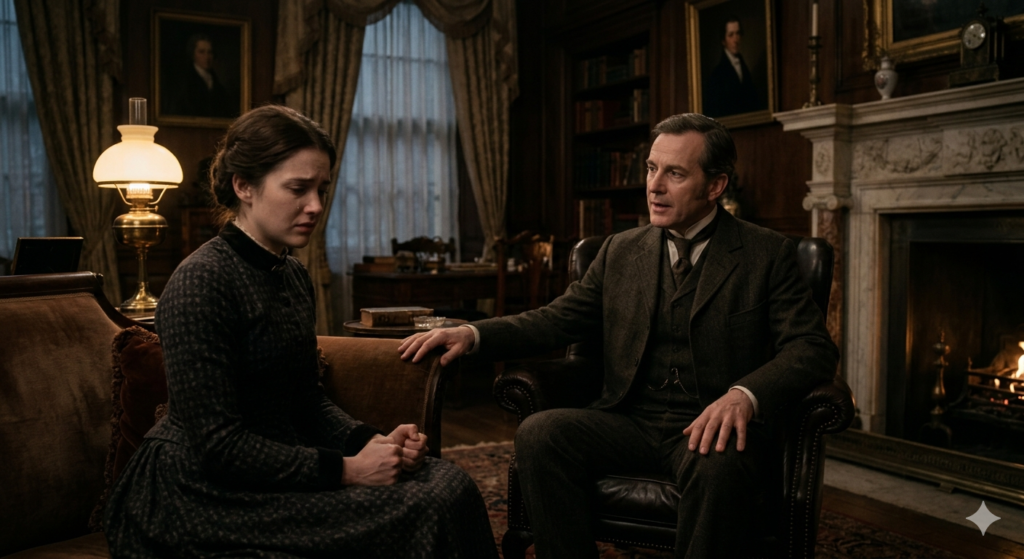
When readers first encounter the narrator, she is already imprisoned socially, intellectually, and emotionally.
Her husband John controls:
- her movement
- her treatment
- her schedule
- her writing
- even her interpretation of her own feelings
Importantly, John does not present himself as cruel.
He appears calm,
reasonable,
educated,
protective.
That subtlety matters enormously.
Gilman understood that oppression often hides behind paternal concern. John constantly dismisses the narrator’s perceptions while insisting he knows what is best for her. He transforms control into care.
The narrator therefore loses something essential:
confidence in her own reality.
This is why the wallpaper becomes so important. It emerges inside a world where direct self-expression has been systematically weakened.
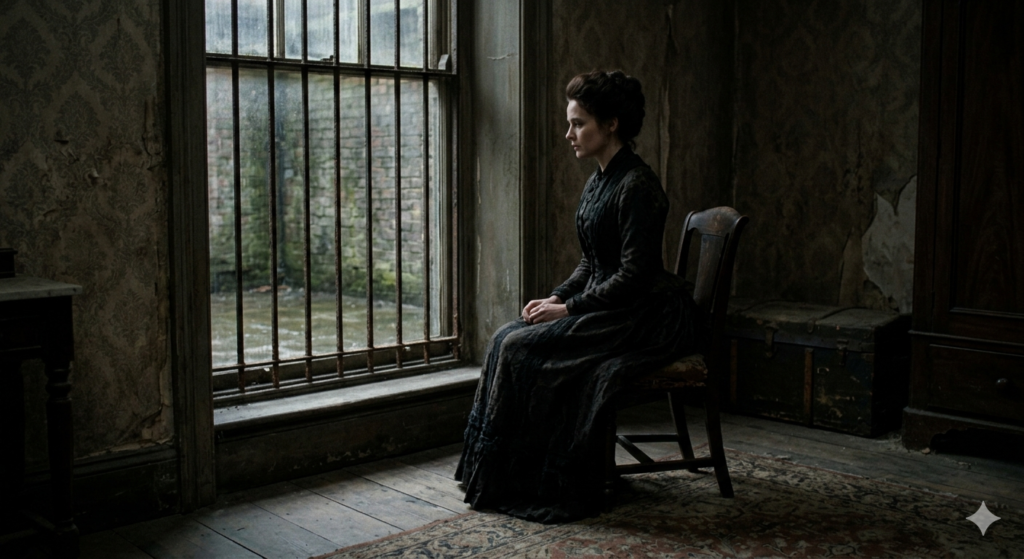
The Wallpaper Represents a Mind Searching for Escape
At first, the wallpaper appears merely ugly.
The narrator describes its chaotic patterns,
disturbing color,
and shapeless design with obsessive frustration. But gradually the wallpaper transforms into something more alive.
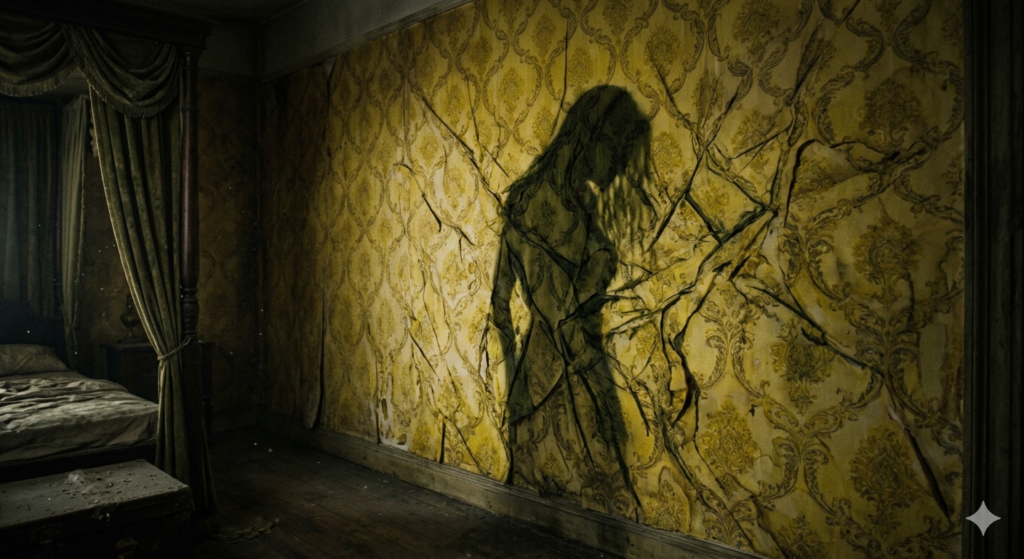
She begins noticing movement.
Hidden shapes.
A trapped woman behind the pattern.
This progression is psychologically crucial.
The narrator projects herself into the wallpaper because it becomes the only space where her suppressed thoughts can survive indirectly. The trapped woman behind the design mirrors her own condition precisely:
confined,
watched,
silenced,
struggling to break free.
Readers sometimes interpret this as pure delusion.
But Gilman suggests something more complicated. The narrator’s visions emerge from emotional truths her society refuses to acknowledge openly.
The wallpaper becomes a coded form of perception.
The Story Is Really About Intellectual Starvation
One of the most painful aspects of The Yellow Wallpaper is how thoroughly the narrator is denied intellectual life.
She wants to:
write,
think,
work,
express herself,
engage creatively with the world.
Instead, she is prescribed passivity.
The infamous “rest cure” imposed on her reflects real nineteenth-century medical treatments for women diagnosed with nervous disorders or hysteria. Women were often discouraged from intellectual activity entirely because thinking itself was considered potentially dangerous to female health.
Gilman understood the violence hidden inside enforced passivity.
The narrator’s mind does not collapse because she thinks too much.
It collapses because she is forbidden meaningful thought altogether.
The wallpaper therefore becomes the mind’s desperate substitute for intellectual engagement. Since she cannot openly create meaning through writing or conversation, her consciousness begins extracting meaning obsessively from the room surrounding her.
The wallpaper becomes text.
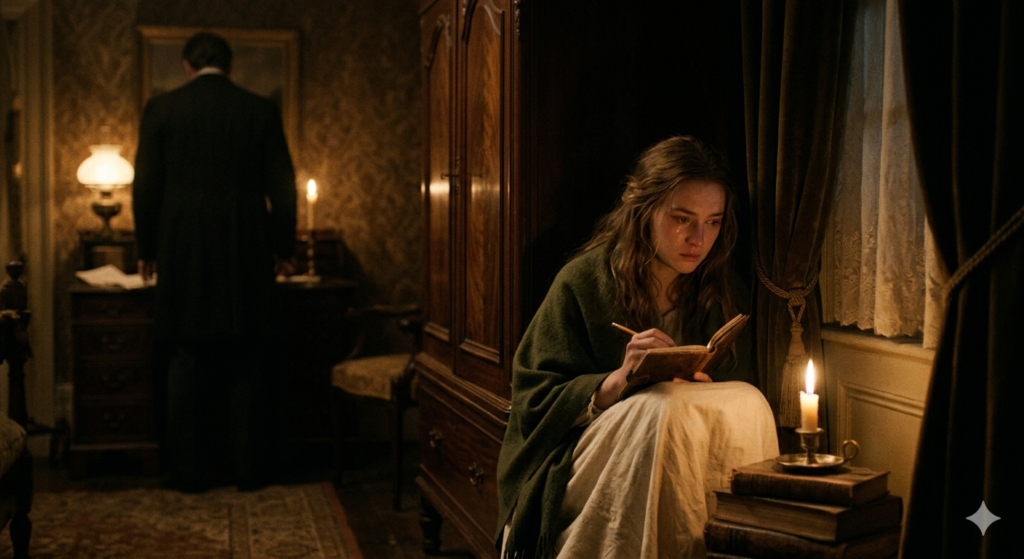
The Horror Comes From Being Disbelieved
Many horror stories involve monsters or supernatural threats.
The horror in The Yellow Wallpaper comes from invalidation.
Every time the narrator expresses discomfort, fear, or emotional distress, her perceptions are dismissed. John repeatedly interprets her reality for her:
“You are improving.”
“You are overreacting.”
“You must rest.”
“You should not think about these things.”
This dynamic slowly destroys her trust in language itself.
If every attempt at honest communication gets minimized or corrected, direct speech begins feeling useless. The narrator therefore turns toward obsession and symbolic interpretation instead.
The wallpaper becomes a private language beyond patriarchal control.
That is why the story still feels psychologically modern. Many readers recognize the emotional terror of not being believed about one’s own experience.
The Woman Behind the Wallpaper Is Not Separate From the Narrator
As the story progresses, the distinction between the narrator and the woman trapped behind the wallpaper begins collapsing.
This merging matters deeply.
The trapped figure represents not only the narrator individually, but women collectively inside restrictive social systems. The narrator eventually notices many women creeping outside secretly, suggesting the condition extends beyond her isolated experience.
Gilman transforms personal psychological breakdown into broader social critique.
The wallpaper’s pattern resembles the structure of patriarchal life itself:
confusing,
repetitive,
confining,
and difficult to fully escape from once internalized.
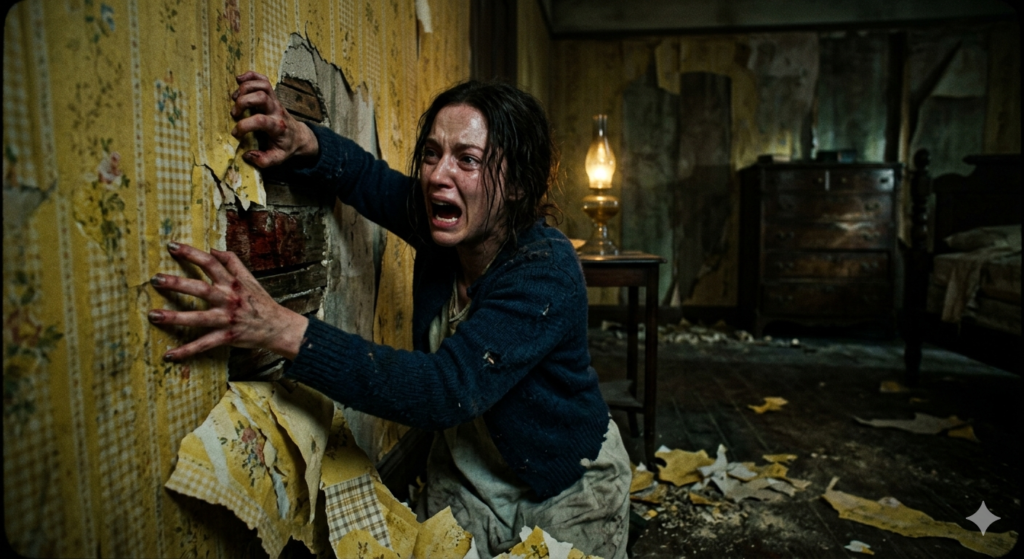
The narrator tears at the wallpaper because she is trying to tear through the social logic imprisoning her consciousness.
The act appears irrational externally.
Emotionally, it makes perfect sense.
The Ending Is Both Liberation and Catastrophe
The ending of The Yellow Wallpaper remains so powerful because it refuses easy interpretation.
Has the narrator gone insane?
Has she achieved a kind of freedom?
Has she escaped psychologically or collapsed entirely?
Gilman deliberately leaves these questions unstable.
The narrator’s final breakdown contains strange triumph. She finally rejects John’s authority completely. She no longer accepts his interpretation of reality over her own.
Yet this liberation arrives through psychological fragmentation.
That contradiction is central to the story’s enduring force.
The narrator can only escape the system by becoming unintelligible to it.

Gilman Was Writing Against a Real Medical System
The story becomes even more unsettling when readers remember Gilman based it partly on personal experience.
She herself underwent the “rest cure” prescribed by physician Silas Weir Mitchell. The treatment restricted intellectual activity and creative work almost entirely.
Gilman later explained that following the treatment nearly destroyed her psychologically.
This historical context matters because The Yellow Wallpaper is not abstract symbolism alone. It is also a furious critique of systems that pathologized women’s intellect, creativity, and emotional expression.
The wallpaper therefore represents more than madness.
It represents resistance against enforced silence.

Why the Story Still Feels Modern
Despite being published in 1892, The Yellow Wallpaper continues feeling contemporary because its emotional dynamics remain recognizable.
The story speaks to experiences of:
- emotional invalidation
- gendered medical dismissal
- psychological isolation
- intellectual suppression
- loss of personal autonomy
- the struggle to articulate invisible suffering
Modern readers still recognize systems that explain people’s experiences back to them instead of listening honestly.
That recognition keeps the story alive.
Final Thoughts
The wallpaper in Gilman’s story was never merely decoration or hallucination.
It was a hidden language created by a mind trapped inside structures that denied direct speech legitimacy.
The narrator stares at the wallpaper because it becomes the only place where forbidden truths remain visible:
her confinement,
her anger,
her hunger for intellectual freedom,
and the unbearable pressure of being treated as incapable of understanding her own reality.
By the end of the story, the wallpaper is no longer simply something she sees.
It becomes the structure she has been living inside all along.