What Player Piano Got Right About Automation Before Anyone Was Watching
Before Nineteen Eighty-Four became the defining literary warning about surveillance, and before modern conversations about artificial intelligence dominated public anxiety, Kurt Vonnegut wrote a quiet, strange, deeply unsettling novel about automation.
Player Piano was published in 1952.
At the time, it looked almost exaggerated.
Factories run by machines.
Human workers replaced by automated systems.
Engineers and managers elevated into a technical elite while ordinary people drift into purposelessness.
Today, the novel feels less like science fiction and more like an early diagnosis of modern economic life.
What makes Player Piano remarkable is not simply that it predicted automation.
It understood the psychological consequences long before most people were paying attention.
[IMAGE PLACEHOLDER: Massive automated factory towering over silent workers in a futuristic industrial city]
The Novel Understands That Work Is About More Than Income
Most conversations about automation focus on economics:
jobs lost,
productivity gained,
efficiency increased.
Vonnegut understood something deeper.
People do not only work for money.
They work for meaning,
identity,
structure,
social value,
and dignity.
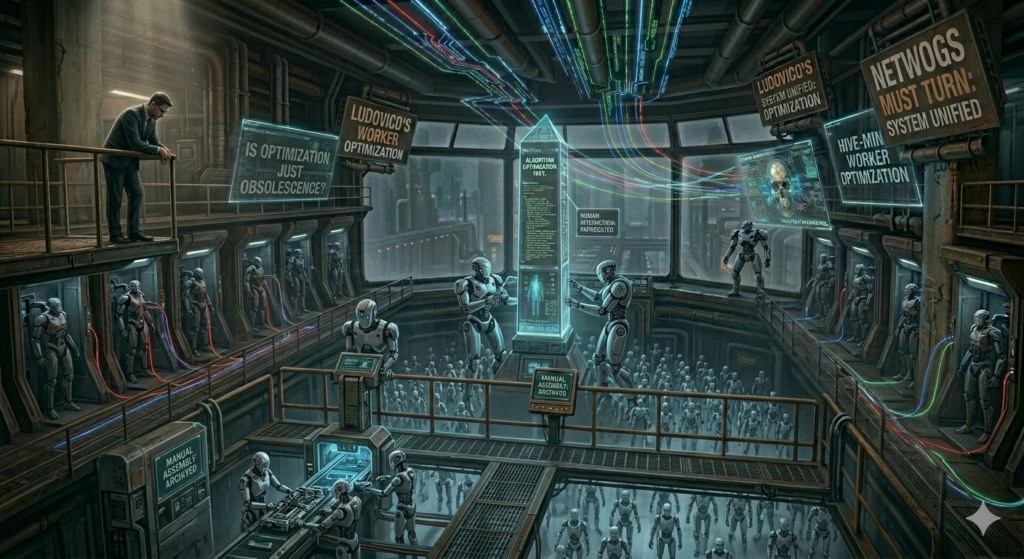
In Player Piano, machines perform labor more efficiently than humans ever could. Society technically becomes wealthier and more organized. Production increases. Systems function smoothly.
Yet the population becomes emotionally hollow.
Large portions of society feel unnecessary.
This is the novel’s central insight and the reason it still feels disturbingly modern. Automation does not simply threaten employment. It threatens the psychological role human beings believe they occupy within society itself.
The Engineers Become the New Aristocracy
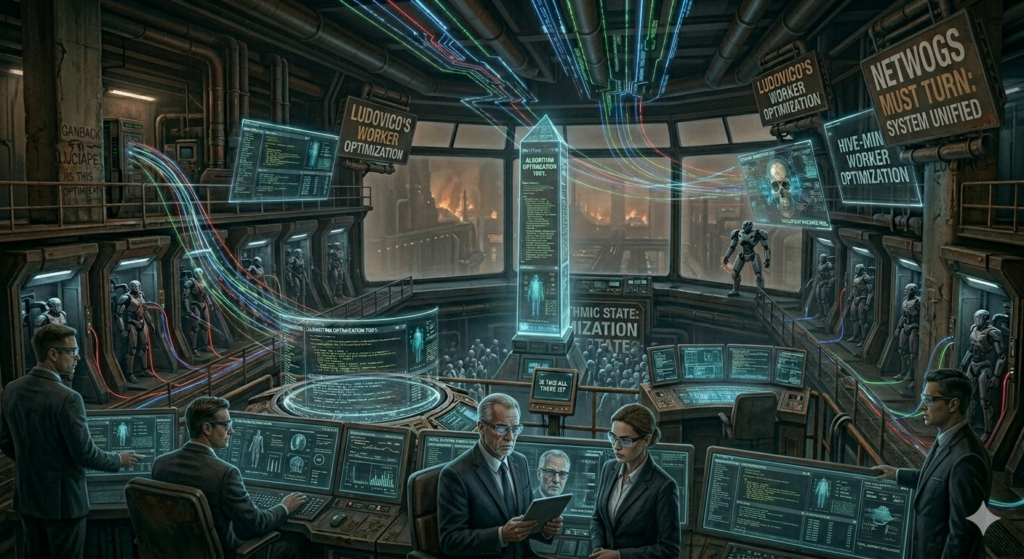
One of the novel’s most fascinating predictions is the emergence of a technocratic elite.
In Player Piano, social status belongs largely to engineers, managers, and technical experts who design and oversee automated systems. Intellectual and technical ability become the primary justification for hierarchy.
The system presents itself as rational and meritocratic.
That is exactly what makes it dangerous.
Nobody openly declares tyranny.
Nobody claims ordinary people are worthless.
The society simply organizes itself around efficiency until millions become economically and psychologically marginal.
This subtlety gives the novel enormous power.
Vonnegut understood that modern inequality might not always appear through visible oppression. It could emerge through systems that technically function well while quietly stripping large groups of people of social purpose.
The elite in Player Piano genuinely believe they are improving civilization.
That belief makes the dystopia more believable.
Automation Creates Emotional Redundancy
The most haunting aspect of Player Piano is not poverty.
It is redundancy.
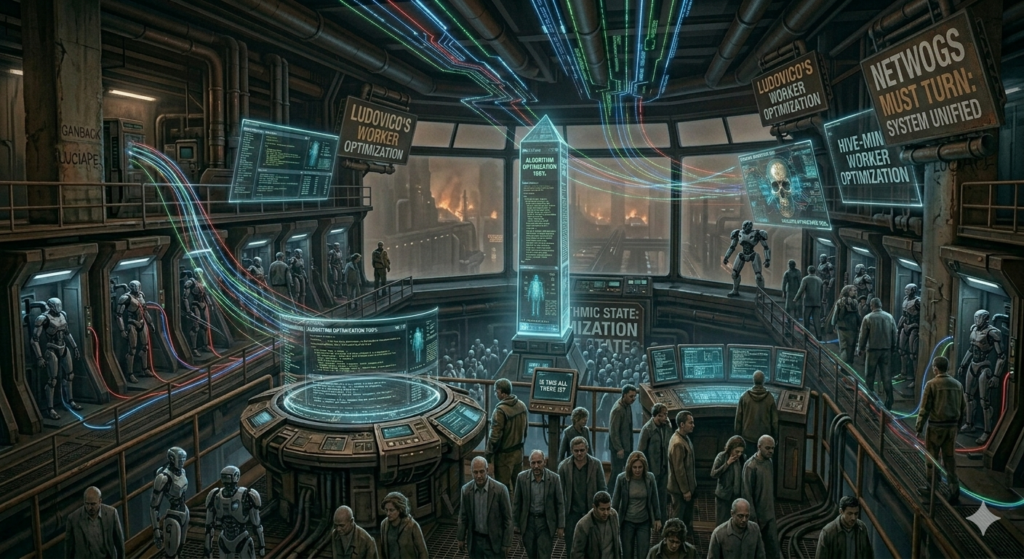
The displaced workers in the novel are not always starving. Many receive state support. Society continues operating materially.
But they feel useless.
This emotional condition runs through the entire book:
the fear that human beings may survive technologically while losing any meaningful role inside the systems surrounding them.
Vonnegut recognized early that modern societies often define human worth through productivity. Once machines outperform people economically, societies face a terrifying philosophical problem:
What happens to self-worth when usefulness disappears?
The novel never offers an easy solution.
Paul Proteus Is Trapped Inside the System He Benefits From
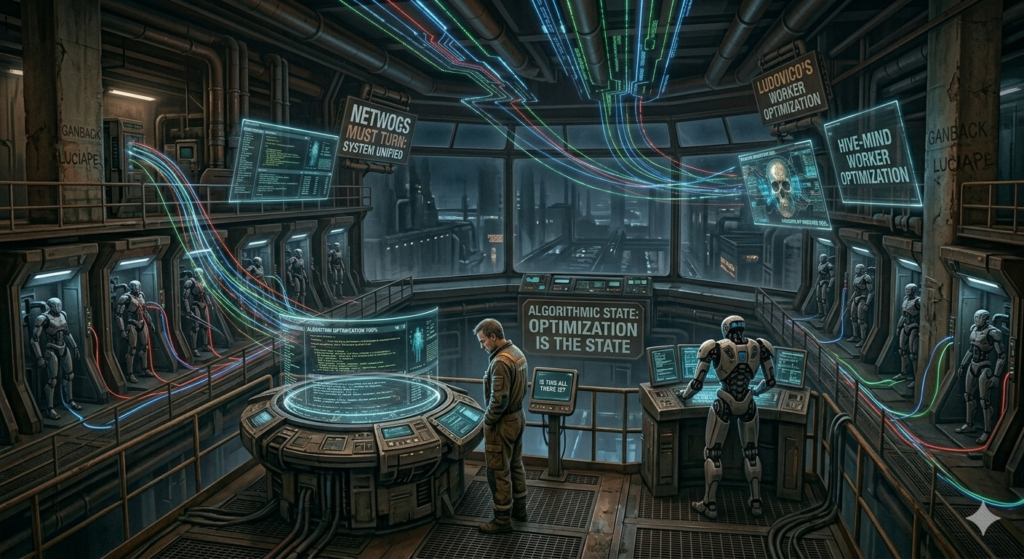
The novel’s protagonist, Paul Proteus, embodies one of Vonnegut’s most important ideas.
Paul belongs to the privileged technical class.
He enjoys status,
comfort,
and professional success.
Yet he feels spiritually empty.
This matters because Player Piano is not simply anti-technology. Vonnegut does not portray machines themselves as evil. The deeper issue is that automation reorganizes human relationships around efficiency while neglecting emotional and existential needs.
Paul gradually realizes the system’s success creates widespread alienation.
But he also struggles to imagine alternatives.
That tension makes the novel psychologically realistic. Technological systems often become so integrated into daily life that even dissatisfied people feel trapped inside them.
The Novel Predicted Algorithmic Society Before Computers Became Personal
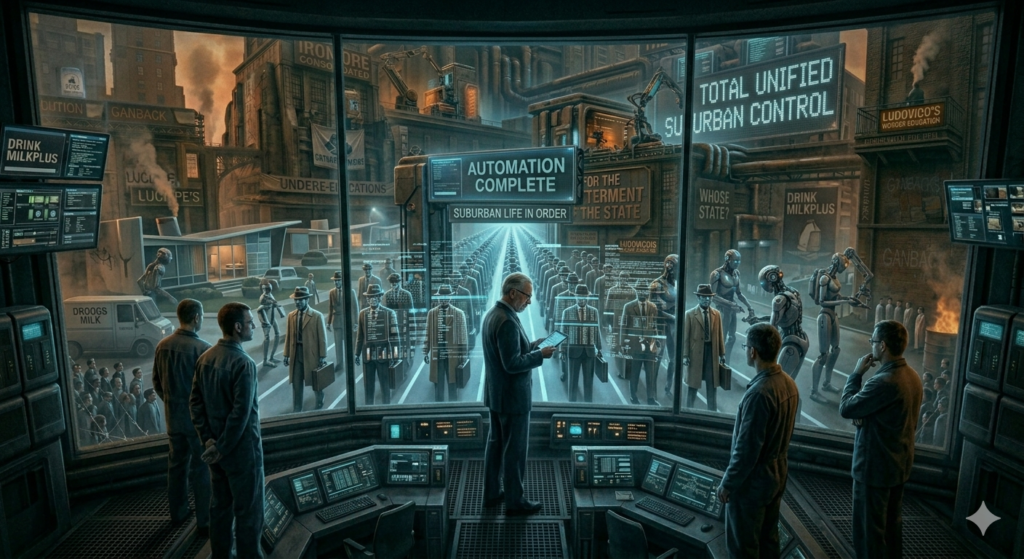
One reason Player Piano feels prophetic today is that Vonnegut anticipated societies increasingly governed through technical systems ordinary people barely understand.
Decisions in the novel become shaped by:
- efficiency metrics
- centralized planning
- machine optimization
- technical expertise
- automated production systems
Human judgment gradually loses authority to system logic.
This dynamic feels extremely contemporary.
Modern life is increasingly mediated through algorithms,
data systems,
automation,
and technological infrastructures invisible to most users. Decisions about employment, finance, visibility, communication, and opportunity are often shaped by systems operating beyond public comprehension.
Vonnegut sensed early that technological management could become a form of soft social control without needing overt authoritarianism.
The Rebellion in the Novel Is Deeply Tragic
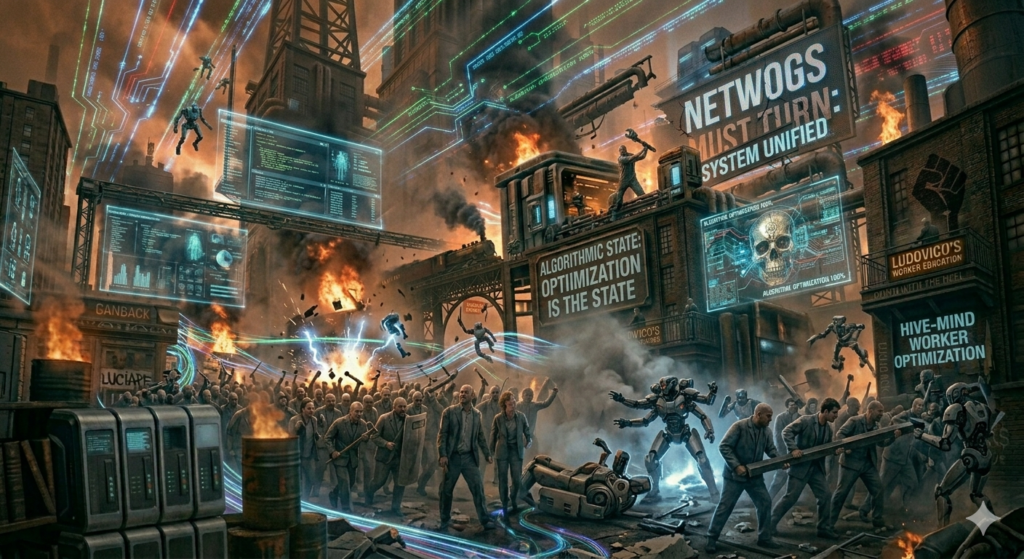
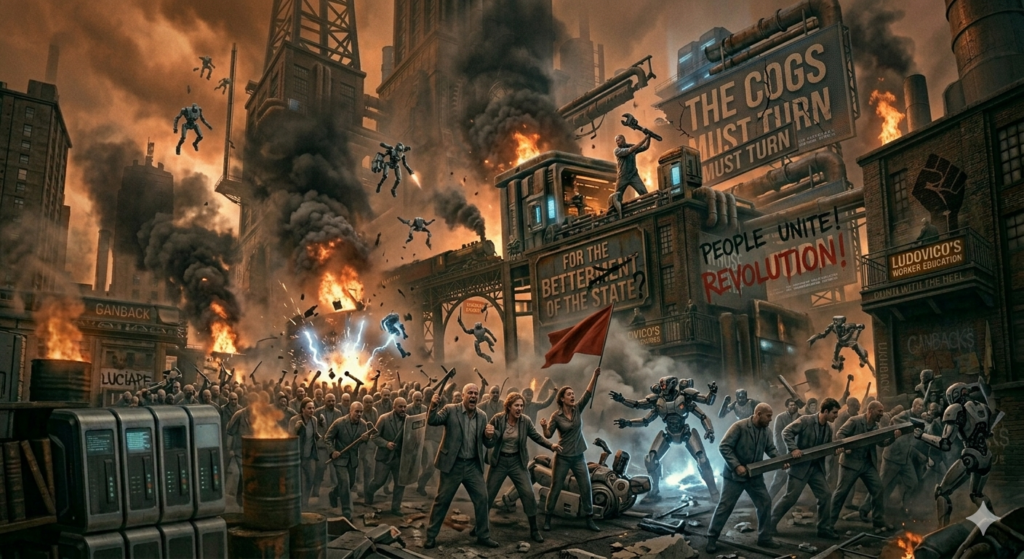
Eventually, resistance emerges against the automated order.
But Vonnegut portrays rebellion ambivalently.
The resistance movement recognizes something real:
human beings are becoming emotionally disposable.
Yet the novel also suggests nostalgia alone cannot solve technological transformation. Destroying machines does not automatically restore meaning or community.
This complexity makes Player Piano much smarter than simple anti-technology fiction.
Vonnegut understood the problem was not merely machines.
It was the social philosophy surrounding them.
A society obsessed exclusively with efficiency eventually risks treating human beings themselves as inefficient components.
That is the true dystopia.
Why the Novel Was Ahead of Its Time
When Player Piano appeared in 1952, many readers viewed automation optimistically. Machines symbolized progress, prosperity, and modernity.
Vonnegut saw another possibility:
technological abundance combined with existential emptiness.
This perspective was unusual because postwar America largely celebrated industrial expansion and technical achievement. Vonnegut instead focused on emotional dislocation.
He asked questions many societies still struggle to answer:
- What gives life meaning beyond productivity?
- Can technological efficiency coexist with human dignity?
- What happens when economic systems no longer require most people’s labor?
- How do societies distribute not only wealth, but purpose?
Those questions feel even more urgent now than when the novel first appeared.
The Novel Feels Increasingly Relevant in the Age of AI
Modern readers encounter Player Piano differently because automation is no longer abstract.
Artificial intelligence now performs tasks once considered uniquely human:
writing,
analysis,
design,
translation,
coding,
customer service,
and creative assistance.
This creates anxieties remarkably similar to those running through Vonnegut’s novel.
The fear is not only unemployment.
It is displacement of human significance itself.
People increasingly wonder:
What remains uniquely valuable about human contribution when machines replicate intellectual labor too?
Player Piano anticipated this emotional crisis decades early.
Why Vonnegut’s Tone Matters
Unlike many dystopian writers, Vonnegut approaches automation with sadness rather than apocalyptic terror.
The novel feels melancholic more than catastrophic.
Machines are efficient.
Systems operate logically.
Society remains materially functional.
Yet something deeply human slowly disappears underneath the optimization.
That emotional subtlety gives the novel lasting power. The world of Player Piano does not collapse dramatically.
It simply becomes spiritually thinner.
Final Thoughts
Player Piano remains one of the most important novels ever written about automation because Kurt Vonnegut understood a truth many technological debates still overlook:
Human beings need more than survival.
They need purpose,
recognition,
community,
and the feeling that their existence matters beyond economic calculation.
The novel predicted that societies built entirely around efficiency might eventually produce abundance while simultaneously generating widespread emotional alienation.
More than seventy years later, that fear no longer feels speculative.
It feels increasingly familiar.