Why the Last Word of The Road Is the Word That Was There All Along
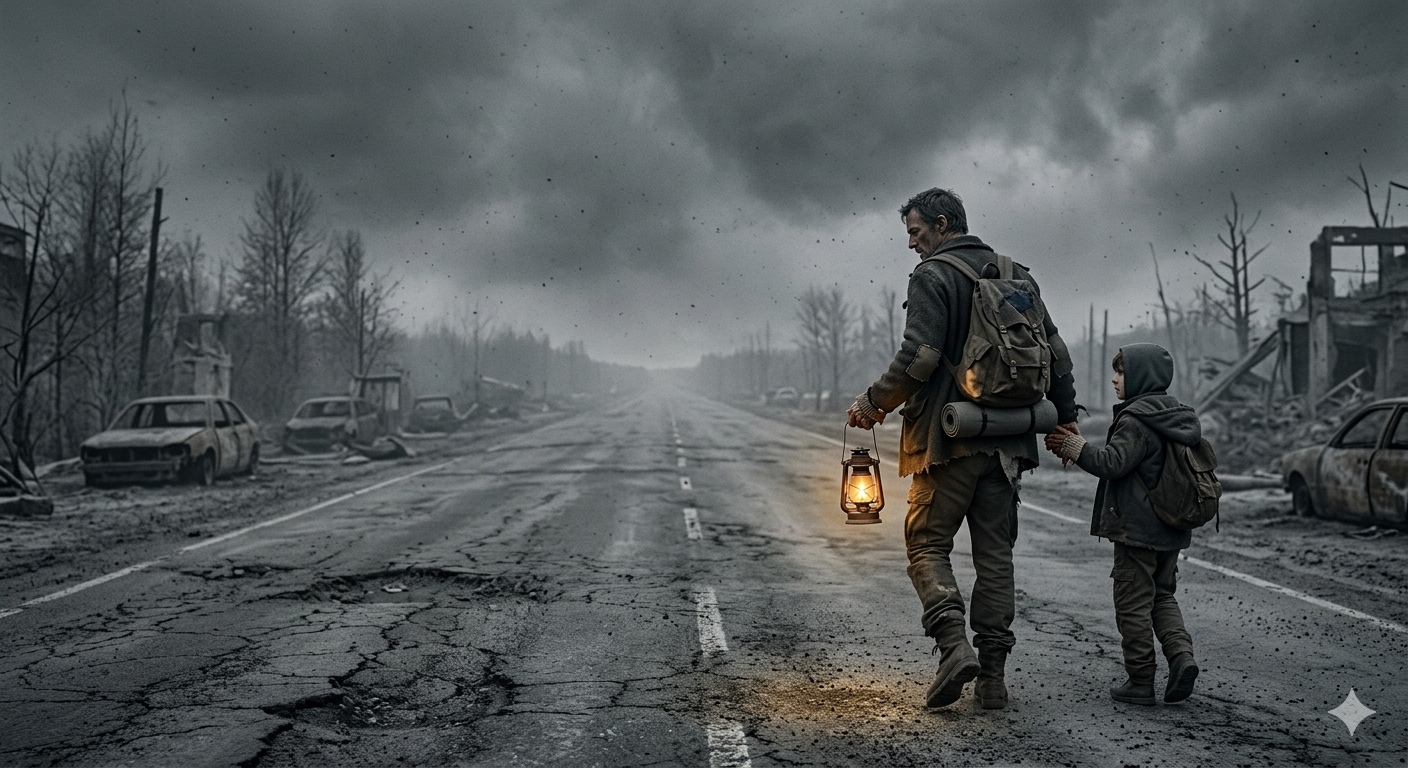
Cormac McCarthy’s The Road is filled with silence. The novel strips language down to its bare essentials, leaving readers in a world where almost everything has already disappeared. Civilization is gone. Nature is dying. Memory is fading. Even conversations feel fragile, as if words themselves are struggling to survive.
Yet for all its bleakness, the novel ends with a word that quietly changes everything.
Not because it arrives suddenly, but because it was there from the beginning.
The final pages of The Road are famous for their haunting beauty. After hundreds of pages of ash, hunger, fear, and emotional exhaustion, McCarthy ends the novel not with violence or despair, but with memory. Specifically, he ends with trout. The image feels strange at first. Why end an apocalyptic novel with fish swimming in mountain streams?
Because the ending is not really about trout.
It is about what humanity has lost, what it still remembers, and what refuses to fully disappear.
The Ending Feels Different From the Rest of the Novel
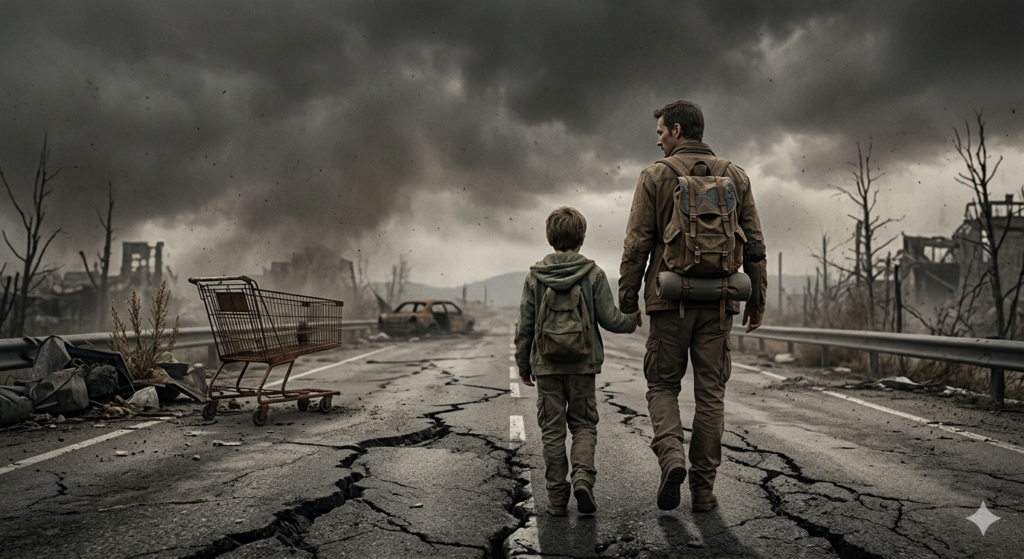
Most of The Road feels brutally immediate. McCarthy focuses on survival minute by minute. The prose is sparse and repetitive in a deliberate way. Characters rarely stop to reflect for long because reflection itself is dangerous in a dying world.
Then the ending shifts.
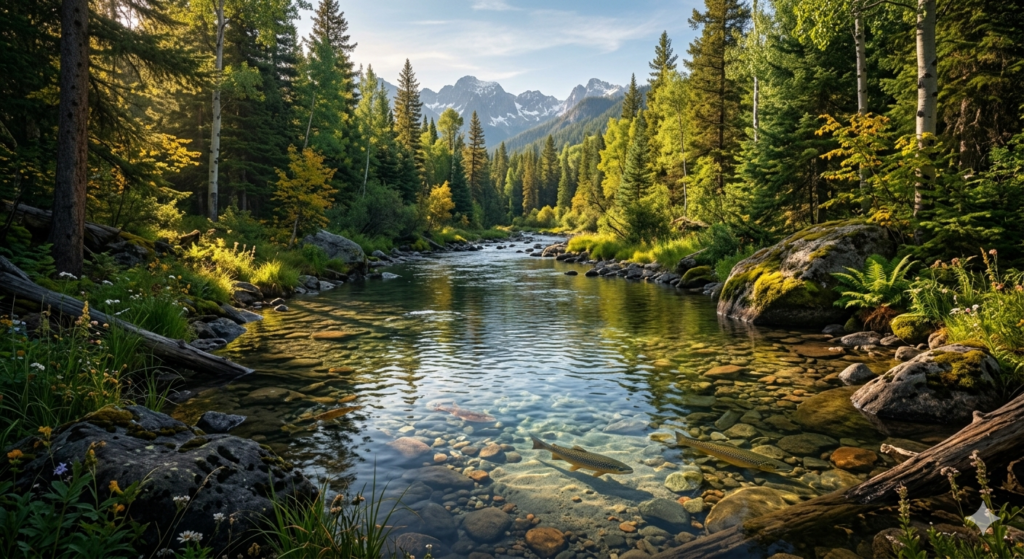
Suddenly the language becomes lyrical again. The final paragraph slows down and expands into something almost dreamlike. McCarthy describes trout that once lived in streams, creatures marked with patterns “that were maps of the world in its becoming.”
It feels ancient. Sacred. Almost biblical.
Readers often interpret this ending as either hopeful or hopeless. But what makes it powerful is that it contains both emotions at the same time.
The world the trout belonged to is gone.
But the memory of that world survives through language.
Why Trout Matter So Much
Throughout the novel, nature is mostly absent. Trees fall without warning. Animals are nearly extinct. The landscape is gray, dead, and silent. Even the ocean feels empty.
That absence creates a strange effect. Readers begin to miss beauty in the same way the characters do.
So when McCarthy suddenly describes living trout in vivid detail, the moment lands with enormous emotional force.
The trout represent more than nature. They represent continuity. They existed long before humanity and may continue spiritually even after humanity collapses. Their markings become symbols of an older order, one untouched by the greed and destruction that ruined the world.
Most importantly, the trout remind readers that beauty existed before the apocalypse.
And memory itself becomes a form of resistance against oblivion.
The Last Word Was Always There
One of the most remarkable things about The Road is how the ending echoes ideas that have been present from the very beginning.
The novel constantly asks:
What does it mean to carry something forward?
The father and son repeat the phrase “carrying the fire” throughout the story. At first, the phrase sounds mysterious. But as the novel progresses, it becomes clear that the fire is not literal.
It is memory.
Compassion.
Humanity.
Meaning.
The ending completes this idea.
The trout are another version of the fire. They belong to the memory of the world before destruction. The final word matters because it reconnects the reader to everything the novel has been quietly mourning all along.
Not simply human survival.
But the loss of wonder.
McCarthy’s Use of Language Makes the Ending Powerful
Cormac McCarthy writes differently from most modern novelists. He removes quotation marks. He avoids excessive punctuation. He strips dialogue down until it feels almost primal.
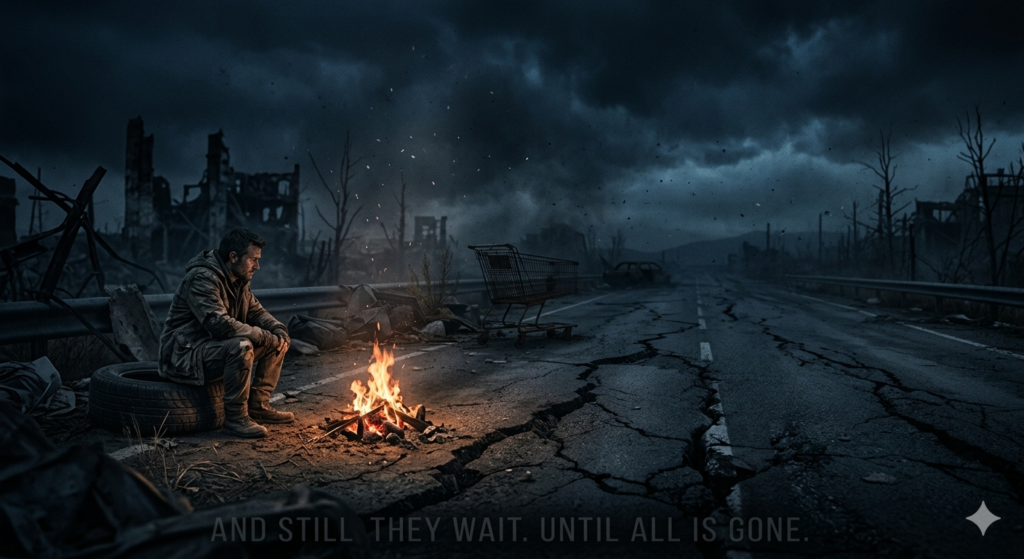
That style matters because it mirrors the world itself. Civilization has collapsed, so language begins collapsing too.
But the final paragraph suddenly becomes rich and poetic. The sentences lengthen. The imagery deepens. It feels as though language itself briefly remembers what it used to be.
This is why the last word carries so much emotional weight.
The novel spends hundreds of pages reducing the world to ash and emptiness. Then at the very end, McCarthy restores language just long enough to preserve the memory of beauty.
The ending does not deny destruction.
It refuses to let destruction become the only thing remembered.
Why Readers Never Forget the Ending
Many dystopian or post-apocalyptic novels end with dramatic revelations or final twists. The Road does something far more difficult. It ends quietly.
And that quietness lingers.
Readers finish the novel carrying the same feeling the characters carry throughout the story: grief mixed with fragile hope.
The trout passage works because it speaks to something universal. Even outside the novel, people fear losing not only life, but the memory of what made life meaningful.
McCarthy understood that civilization is built as much on memory as on physical survival. Once memory disappears, humanity becomes spiritually extinct even if people remain alive.
That is why the final word matters so deeply. It reminds readers that beneath all the ash and suffering, the novel has always been about preserving the memory of a living world.
The Real Meaning of “Carrying the Fire”
Readers often debate what “carrying the fire” means, but the ending gives the clearest answer.
The fire is not optimism in a simple sense. McCarthy is far too honest a writer for easy hope.
The fire is the decision to remember beauty even after the world becomes cruel.
It is the refusal to become emotionally dead.
The father teaches the son survival skills throughout the novel, but he also teaches him something more important: how to remain human in a world designed to erase humanity.
The trout symbolize the final form of that lesson.
Even if the world disappears, the memory of wonder can still survive inside language, stories, and human consciousness.
Final Thoughts
The last word of The Road feels devastating because it was never truly separate from the novel itself. It was hidden inside every moment of grief, every conversation about carrying the fire, and every memory of the world before collapse.
Cormac McCarthy ends the novel with trout because they embody everything the characters are trying to protect without fully realizing it: the memory of beauty, mystery, and life untouched by ruin.
The ending does not promise recovery.
It offers remembrance.
And sometimes remembrance is the last form hope can take.


