Chimamanda Ngozi Adichie’s Half of a Yellow Sun Read as a Dystopia of Witness
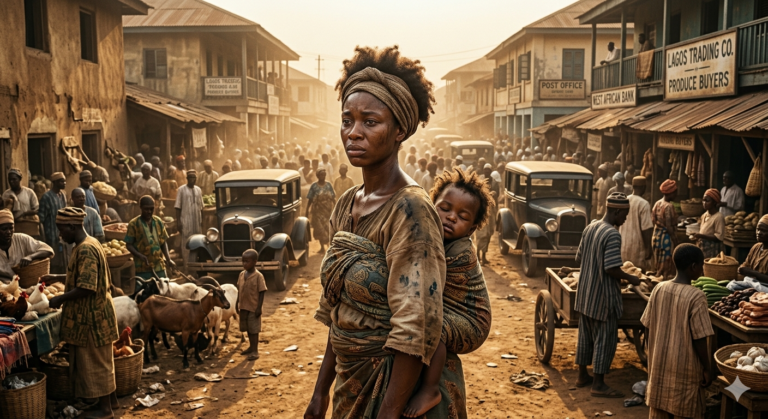
There is nothing futuristic about Half of a Yellow Sun. It is rooted in a specific history, the Nigerian Civil War, and grounded in intimate human experiences. Yet, read from a certain angle, the novel begins to resemble something else. Not a dystopia in the traditional sense of imagined futures, but a dystopia of witness.
In this reading, the horror is not that the world is unfamiliar. It is that it is painfully real, and that reality itself becomes difficult to hold onto, interpret, and communicate.
When Reality Becomes Unstable
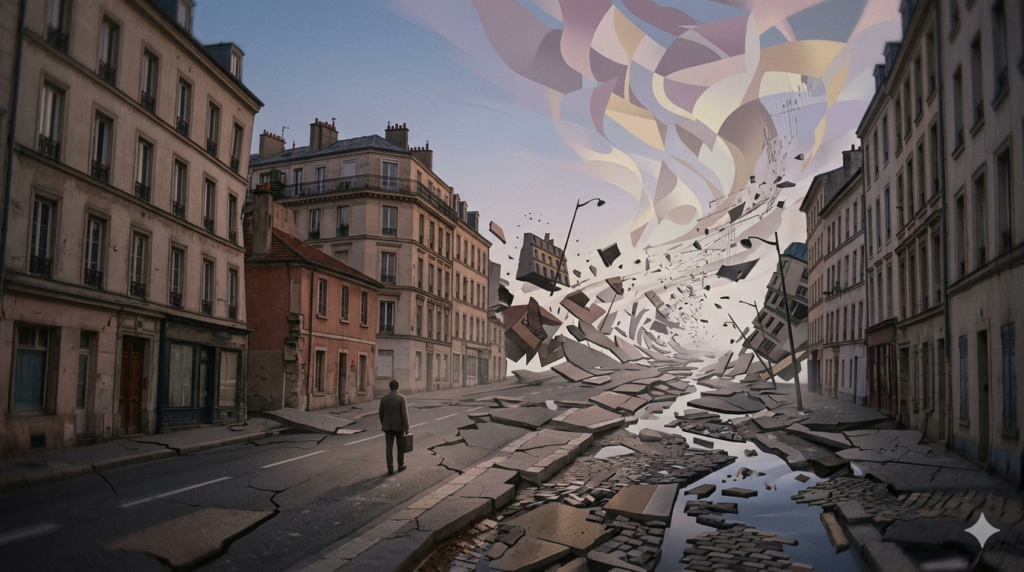
Dystopias often begin with a rupture. A moment when the rules of the world shift and nothing feels secure anymore. In Half of a Yellow Sun, that rupture is war.
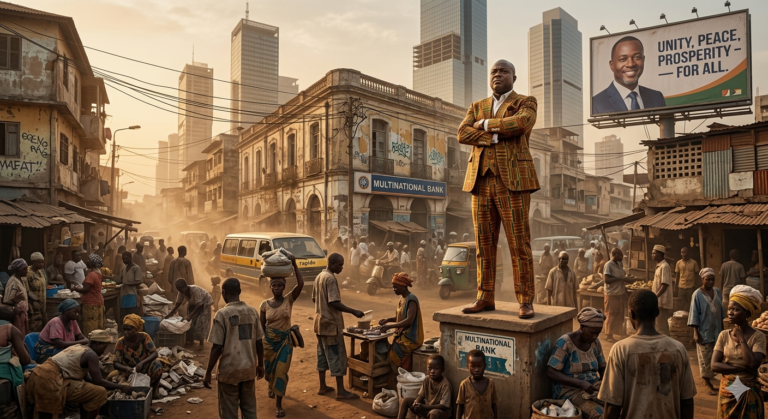
Before the conflict fully unfolds, life carries a sense of direction. Characters argue about politics, identity, and independence, but there is still an assumption that the world is intelligible. That events follow a logic that can be debated and understood.
War dissolves that assumption.
Violence appears suddenly and unpredictably. Information becomes unreliable. Rumors spread faster than facts. The line between what is happening and what is being said to be happening begins to blur.
This is where the novel starts to echo dystopian logic. Not through invention, but through disorientation.
The Burden of Witness
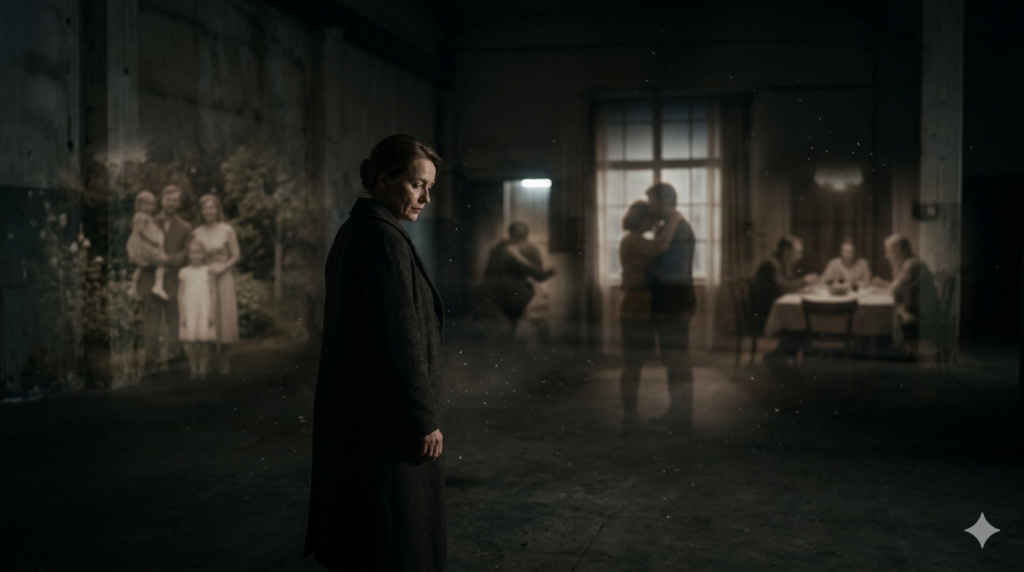
At the center of the novel is not just the experience of suffering, but the act of witnessing it.
Characters like Ugwu, Olanna, and Richard are not merely participants in events. They are observers, interpreters, and, in different ways, recorders of what they see. Each of them struggles with the same question. How do you make sense of something that resists sense?
Witnessing, in this context, becomes a kind of burden.
To see is not enough. To understand feels impossible. And yet, there is a persistent pressure to remember, to describe, to give shape to what is happening.
This is where the dystopian element sharpens. In many classic dystopias, the danger lies in enforced ignorance or manipulated truth. Here, the danger lies in the overwhelming presence of reality itself, a reality so fractured that it resists coherent narration.
Language Under Strain
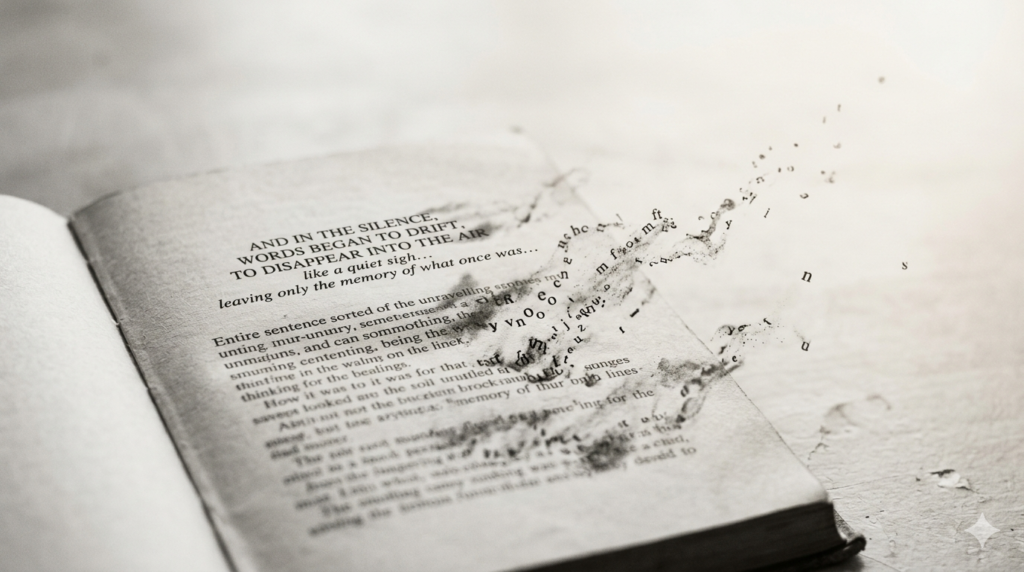
One of the most striking features of the novel is how language begins to fail under pressure.
At first, conversations are lively and articulate. Characters debate ideology, culture, and the future of Nigeria with confidence. Words feel sufficient.
As the war intensifies, language changes. It becomes fragmented, repetitive, sometimes eerily detached. At times, silence replaces speech altogether.
This shift reflects more than emotional distress. It signals a deeper breakdown. When events exceed the capacity of language, communication itself becomes unstable.
In dystopian fiction, language is often controlled from above. In Half of a Yellow Sun, it collapses from within.
The Politics of Representation
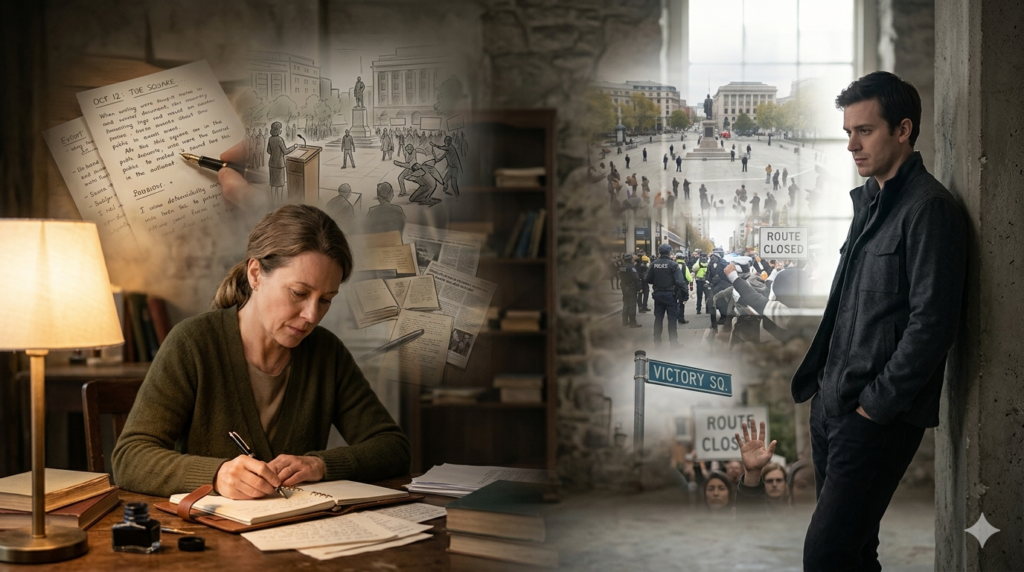
The novel also engages with a quieter but equally important question. Who gets to tell the story?
Richard, the British writer, arrives with the intention of documenting the conflict. Yet he becomes increasingly aware of his own limitations. His distance, his perspective, and his position complicate his role as a narrator.
Ugwu, on the other hand, gradually moves toward authorship. His transformation suggests a shift in narrative authority, from outsider to participant.
This tension highlights a key aspect of the “dystopia of witness.” It is not only about what is seen, but about how it is represented and by whom.
In a world where reality is fractured, the act of telling becomes a site of power.
Memory and Its Fragility
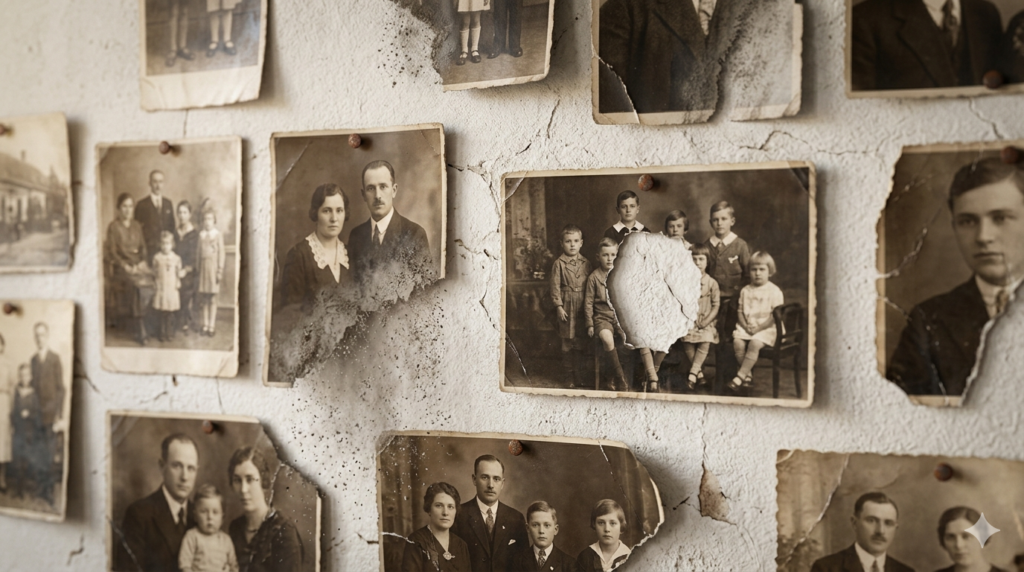
As the war progresses, memory itself becomes uncertain.
Events pile on top of each other. Trauma interrupts continuity. What happened yesterday begins to feel distant, distorted, or unreal.
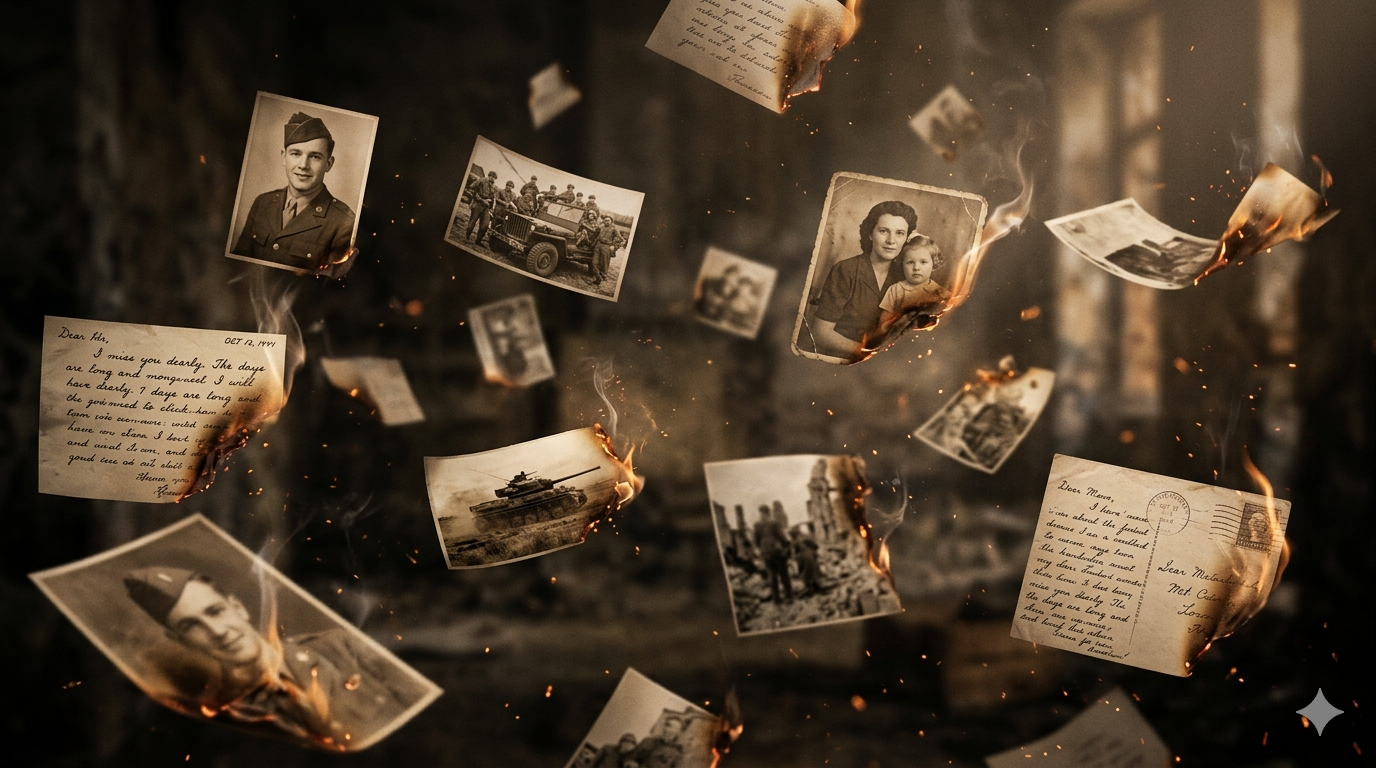
At the same time, there is a strong impulse to preserve memory. To hold onto names, faces, moments that might otherwise disappear.
This tension between remembering and forgetting mirrors a central concern of dystopian narratives. The fear that the past can be lost, altered, or rendered inaccessible.
In Adichie’s novel, that process is not imposed by a single authority. It emerges from the chaos of war and the limits of human endurance.
Everyday Life in a Broken World
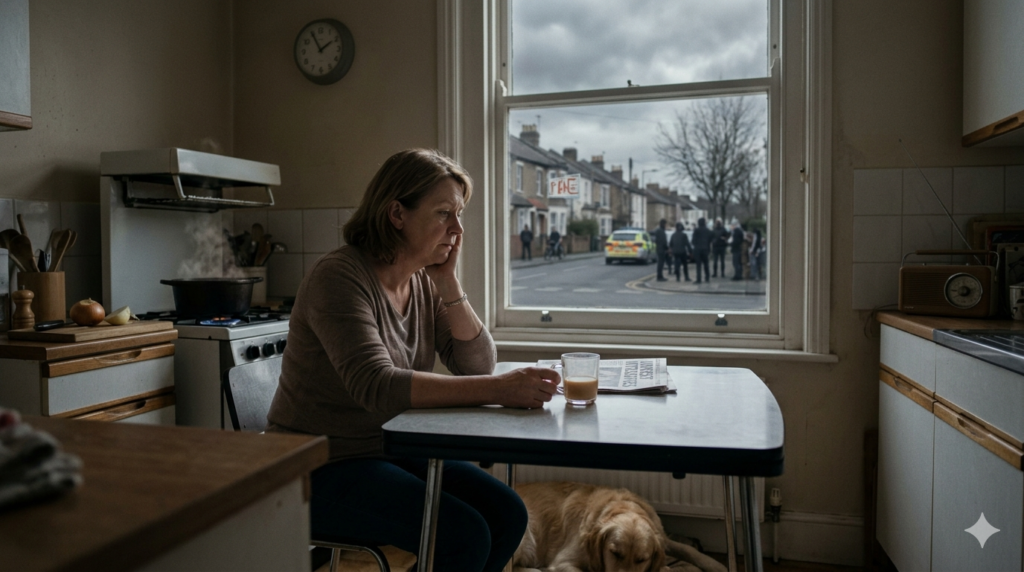
Another way the novel aligns with dystopian sensibilities is in its attention to the ordinary.
Even as violence escalates, people continue to cook, to fall in love, to argue, to hope. Daily routines persist, though altered and constrained.
This coexistence of normalcy and horror is deeply unsettling. It suggests that dystopia is not always a total break from everyday life. It can exist within it.
The familiar does not disappear. It becomes fragile.
A Different Kind of Dystopia
Reading Half of a Yellow Sun as a dystopia does not mean forcing it into a genre it does not belong to. Rather, it opens up a way of understanding how dystopian dynamics can exist within historical reality.
There is no single regime orchestrating events. No clearly defined system controlling truth. Instead, there is fragmentation, uncertainty, and the overwhelming difficulty of making sense of lived experience.
The dystopia here is not constructed. It is encountered.
Final Thoughts
Chimamanda Ngozi Adichie’s novel resists easy categorization, and that is part of its power. It does not offer a neatly structured vision of oppression or control. It offers something messier and, in many ways, more unsettling.
A world where witnessing becomes a struggle. Where language falters. Where memory slips.
To read Half of a Yellow Sun as a dystopia of witness is to recognize that the most disorienting worlds are not always imagined. Sometimes, they are remembered.