
The Iron Heel: The Forgotten American Dystopia That Predicted Everything
Long before Nineteen Eighty-Four, before Brave New World, and decades before modern dystopian fiction became culturally dominant, Jack London wrote one of the strangest and most unsettling political novels in American literature.
The Iron Heel was published in 1908.
And reading it today feels eerie.
Not because every prediction came true literally, but because London understood structural dynamics that still shape modern political life:
corporate power,
wealth concentration,
state violence,
media manipulation,
destroyed labor movements,
and the alliance between economic elites and political authority.
The novel feels less like early science fiction and more like someone accidentally glimpsing the twentieth and twenty-first centuries too clearly.
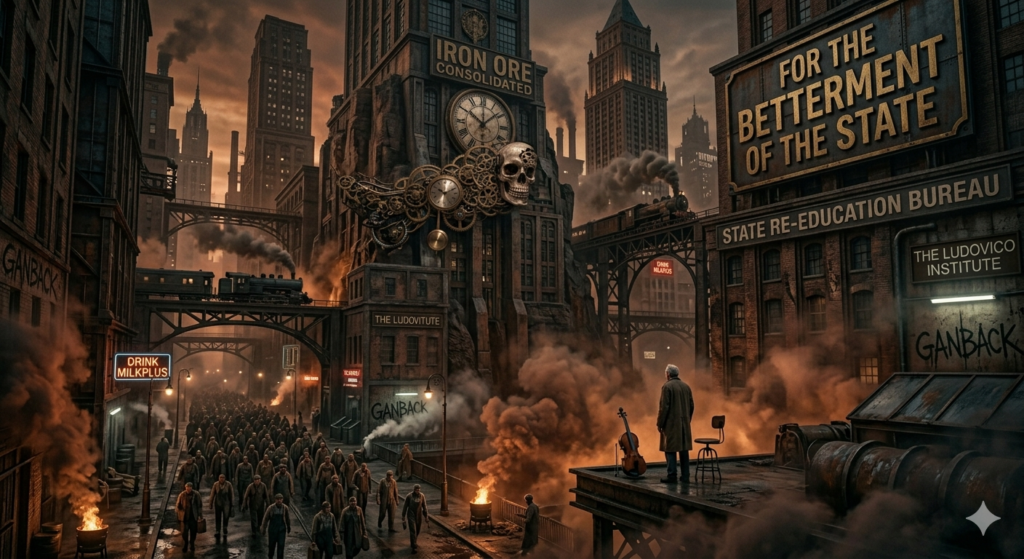
The Novel Predicted Corporate Oligarchy Before Most People Imagined It
At the center of The Iron Heel is the rise of an oligarchic ruling class known as the Iron Heel.
These elites are not traditional aristocrats or monarchs.
They are corporate and industrial powers who gradually absorb political institutions until democracy becomes largely performative.
This was an extraordinary idea for 1908.
London recognized early that modern capitalism could evolve into systems where economic power and political power become inseparable. Elections continue. Governments continue. Public rhetoric about freedom continues.
But actual control consolidates upward.
The ruling class in the novel maintains dominance through:
- economic monopolies
- militarized repression
- destruction of labor unions
- control of information
- manufactured instability
- strategic violence
Reading the novel now, many passages feel disturbingly contemporary.
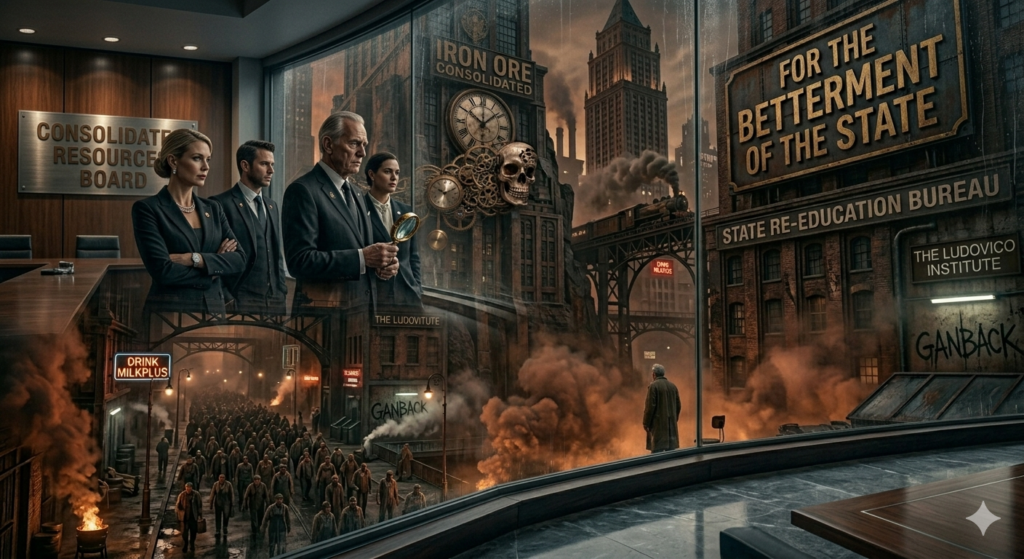
The Dystopia Arrives Through Class War
Most famous dystopian novels focus heavily on surveillance or totalitarian ideology.
The Iron Heel is obsessed with class.
London portrays society dividing increasingly between concentrated wealth and massive economic precarity. Workers lose bargaining power. Political systems become corrupted by corporate interests. Resistance movements are infiltrated and crushed violently.
Importantly, the novel does not imagine authoritarianism emerging suddenly.
It develops gradually through economic imbalance.
This is one reason the book feels unusually realistic compared to many later dystopias. London understood that democratic systems can weaken structurally long before they collapse visibly.
The apocalypse in The Iron Heel is political normalization.
Each compromise appears temporary.
Each expansion of elite power appears justified.
By the time the system fully hardens, resistance becomes extraordinarily difficult.
Ernest Everhard Is Both Visionary and Problem
The novel’s revolutionary protagonist, Ernest Everhard, remains one of the most fascinating figures in early dystopian fiction.
He is brilliant,
charismatic,
ruthlessly analytical,
and almost prophetically aware of how power operates.
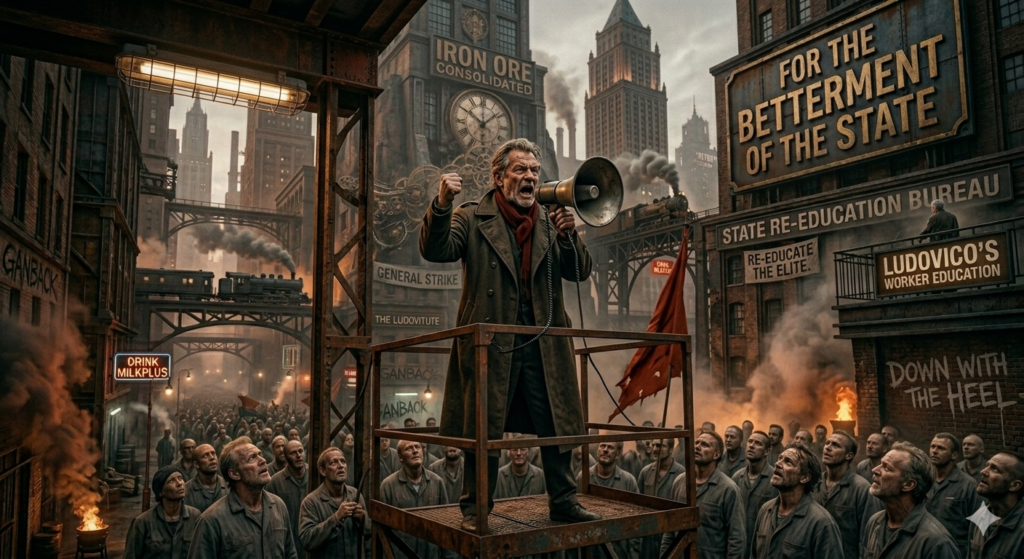
Everhard correctly predicts many developments other characters dismiss as impossible. He sees how corporations manipulate political institutions, how media narratives shape public perception, and how ruling classes preserve themselves during crises.
Yet London intentionally makes him difficult too.
Everhard often speaks with overwhelming certainty.
His rhetoric becomes rigid.
His worldview leaves little room for ambiguity.
This complexity matters because the novel does not romanticize political struggle entirely. Even resistance movements carry authoritarian potential underneath absolute ideological confidence.
London seems simultaneously fascinated by revolutionary certainty and uneasy about it.
That tension gives the novel unusual depth.
[IMAGE PLACEHOLDER: Revolutionary speaker addressing workers beneath harsh industrial lighting]
The Future History Structure Feels Strangely Modern
One reason The Iron Heel still feels fresh is its narrative structure.
The novel is framed as a historical manuscript written from inside the rise of oligarchic tyranny, accompanied by scholarly footnotes written centuries later after the system eventually collapses.
This creates a fascinating double perspective:
the immediacy of political catastrophe
and the cold distance of historical analysis.
The footnotes often describe horrors casually because future historians already know the outcome. Entire massacres or political disasters become summarized academically.
That emotional detachment becomes chilling.
London understood something important:
history often transforms human suffering into administrative language over time.
The structure also reinforces one of the novel’s bleakest ideas. People living through democratic collapse rarely recognize fully what is happening while it unfolds.
Only later does the pattern become obvious historically.
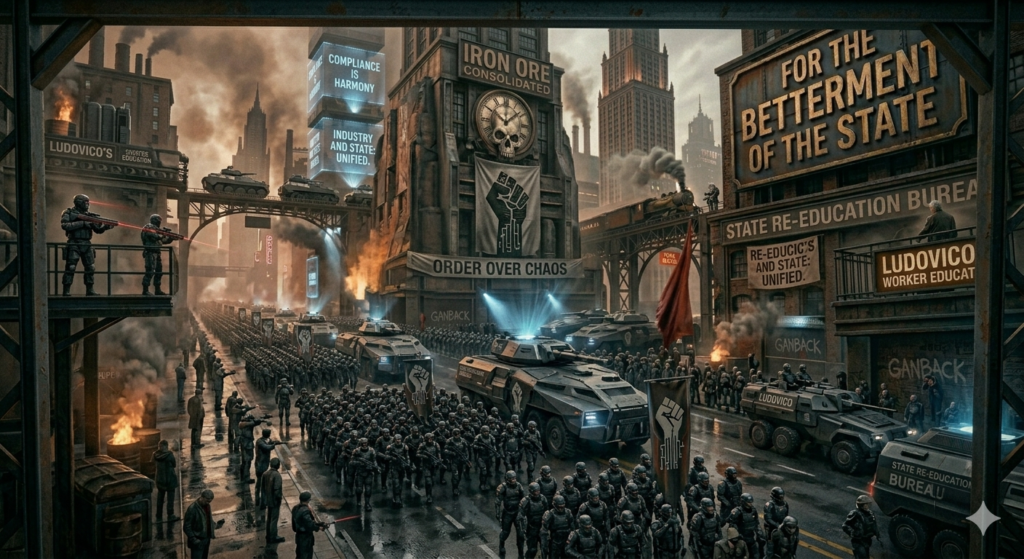
The Novel Predicted Fascism Before Fascism Existed
Although London was writing before the rise of twentieth-century fascism, many aspects of the Iron Heel resemble later authoritarian systems:
- corporate-state alliances
- militarized nationalism
- suppression of labor
- propaganda systems
- oligarchic rule protected through violence
- democratic institutions hollowed out internally
This predictive quality is partly why the novel feels so unsettling today.
London understood that modern authoritarianism might not emerge through kings or emperors alone. It could emerge through industrial capitalism protecting itself aggressively during periods of instability.
That insight proved historically devastatingly accurate.
The novel reads now like a warning issued before the twentieth century fully revealed what concentrated political and economic power could become.
Why the Novel Was Forgotten
Despite its influence on later dystopian fiction, The Iron Heel is rarely discussed alongside Orwell or Huxley today.
Partly this is because the novel is politically explicit in ways many literary institutions historically found uncomfortable. London directly critiques capitalism, class hierarchy, and elite economic control without much subtlety.
The book also lacks the sleek aesthetic simplicity of later dystopias. It is dense,
argumentative,
theoretical,
and openly ideological.
But this roughness may actually make it feel more alive.
Unlike many polished dystopian novels, The Iron Heel reads like a political emergency written in real time.
Its urgency still vibrates through the prose.
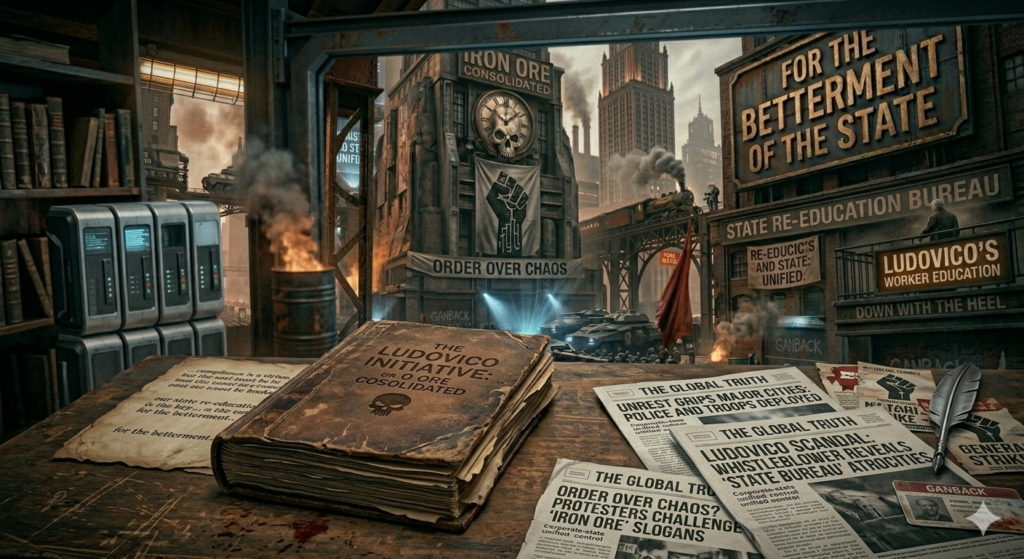
The Novel Understands How Democracies Decay
One of the book’s most frightening insights is that democracies rarely disappear all at once.
Instead:
institutions weaken gradually,
economic inequality deepens,
public trust erodes,
violence becomes normalized,
and elites justify extraordinary control measures as necessary for stability.
The process feels procedural rather than cinematic.
London repeatedly shows ordinary people struggling to recognize the scale of transformation occurring around them. Political deterioration happens incrementally enough that adaptation often feels easier than resistance.
This remains one of the most psychologically accurate aspects of the novel.
Societies rarely announce openly that democracy is ending.
They continue calling themselves democratic long after power has concentrated elsewhere.
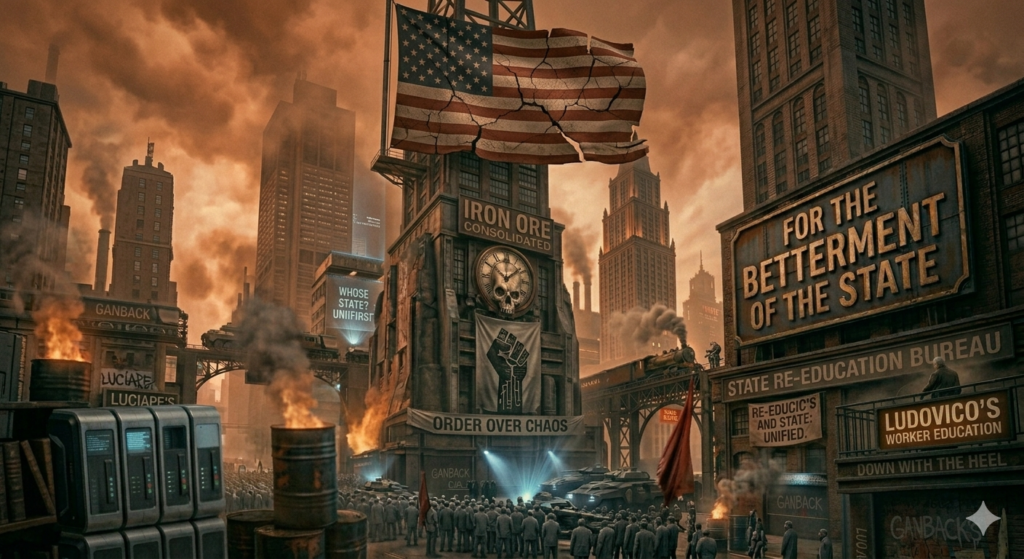
Why The Iron Heel Feels Relevant Again
The novel’s recent rediscovery makes sense because many of its central fears now feel globally recognizable:
extreme wealth inequality,
corporate political influence,
declining labor power,
authoritarian populism,
surveillance expansion,
and public distrust in democratic institutions.
Readers today recognize the emotional atmosphere immediately.
Not because the world exactly resembles London’s vision, but because the structural logic feels familiar.
That familiarity gives the novel renewed force.
Final Thoughts
The Iron Heel deserves recognition as one of the foundational dystopian novels of modern literature and perhaps the first truly major American dystopia.
Jack London understood that authoritarianism could emerge not against capitalism, but through capitalism protecting concentrated power violently when threatened.
More importantly, he understood how easily democratic language can survive even after democratic substance begins disappearing underneath it.
That insight still feels deeply unsettling more than a century later.
The novel’s greatest achievement is not predicting specific events.
It is predicting patterns.
And patterns are often what history repeats most faithfully.


