A Clockwork Orange and the Question Burgess Refused to Answer
Anthony Burgess’s A Clockwork Orange is one of the most misunderstood novels of the twentieth century.
People remember the violence.
The slang.
The milk bars.
The brutality.
The shocking imagery made famous by Stanley Kubrick’s A Clockwork Orange adaptation.
But beneath all the cultural controversy lies a far more unsettling philosophical problem.
The novel asks a question Burgess deliberately refuses to resolve:
What is a human being worth without the ability to choose evil?
That question sits at the center of the entire story, and Burgess never gives readers a comfortable answer.
Alex Is Not Meant to Be Defensible
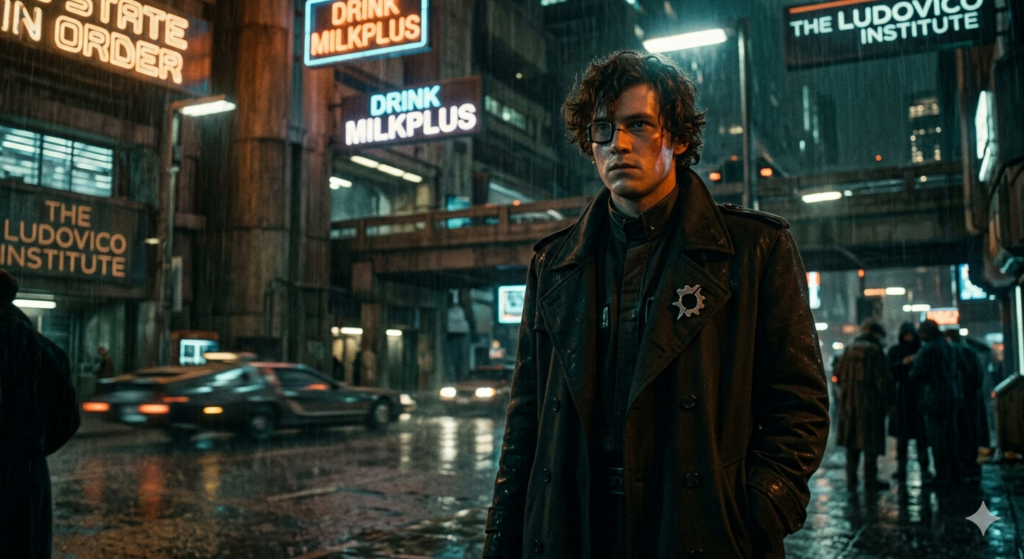
One reason readers struggle with A Clockwork Orange is because Alex is genuinely horrifying.
He assaults people.
Mocks suffering.
Treats violence as entertainment.
Speaks with playful charm while committing acts of cruelty.
Burgess does not soften him into an antihero audiences can easily admire morally. Alex is intelligent, charismatic, and artistically sensitive, but he is also deeply dangerous.
This matters because the novel’s central philosophical dilemma only works if Alex remains truly capable of evil.
If he were secretly good underneath, the story would become simpler. Readers could comfortably support his rehabilitation without confronting the deeper ethical problem Burgess actually cares about.
But Burgess insists on something uncomfortable:
human freedom includes the possibility of monstrous behavior.
The novel refuses to separate humanity from moral risk.
The State Wants Predictability More Than Morality
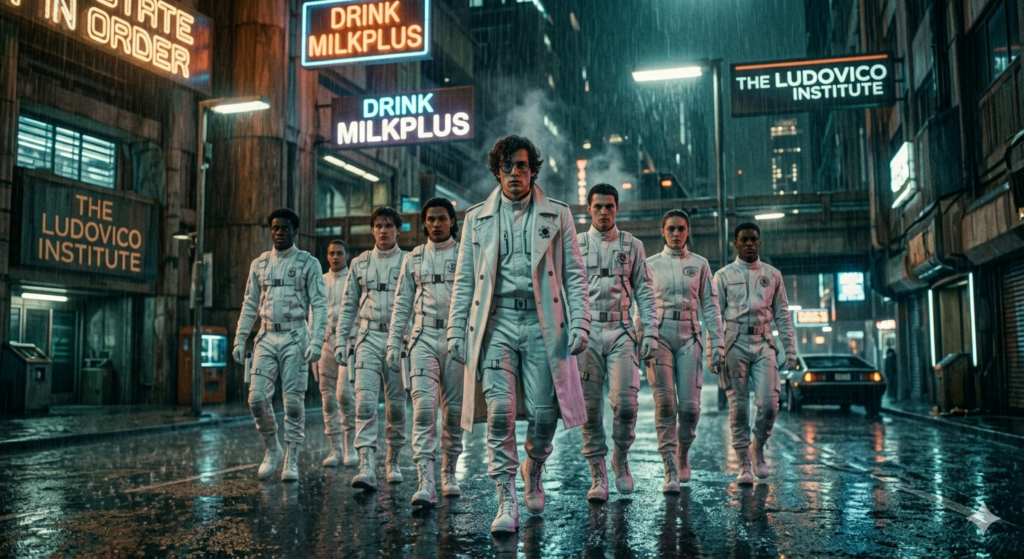
The government in A Clockwork Orange does not truly care about goodness.
It cares about control.
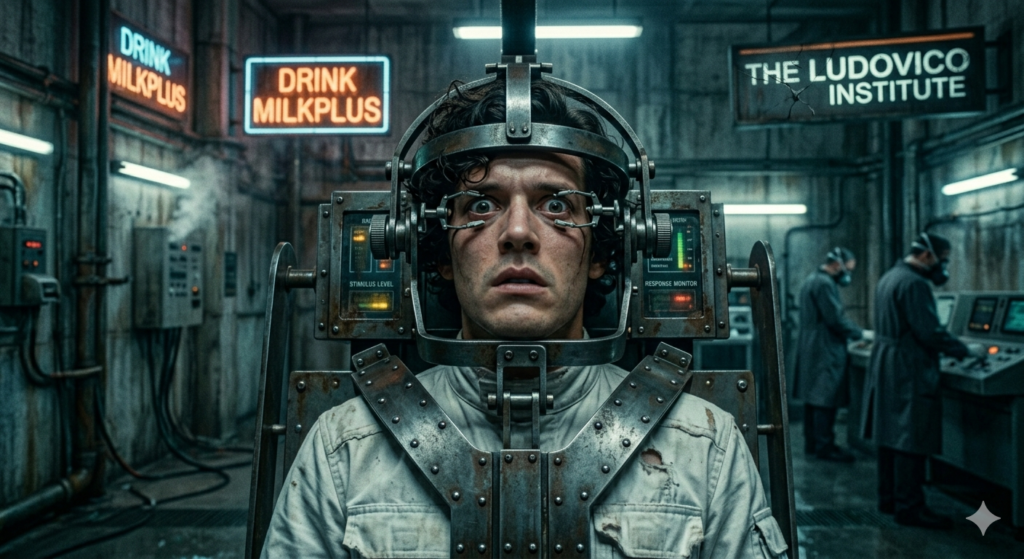
Alex undergoes the Ludovico Technique, an experimental psychological conditioning process designed to make violence physically unbearable to him. After treatment, he becomes incapable of harming others because the very thought produces overwhelming nausea.
On paper, this seems socially beneficial.
Crime disappears.
Violence decreases.
Society becomes safer.
But Burgess immediately exposes the deeper horror beneath the procedure.
Alex has not become morally better.
He has become mechanically obedient.
That distinction is everything.
The state eliminates evil not through ethical transformation, but through neurological manipulation. Alex loses the ability to choose.
This is where the title becomes crucial.
A “clockwork orange” represents something organic made mechanical.
Something living transformed into predictable machinery.
The novel asks whether goodness still means anything when it is no longer freely chosen.
Burgess Refused Easy Moral Answers
Many dystopian novels clearly signal who readers should support.
Not A Clockwork Orange.
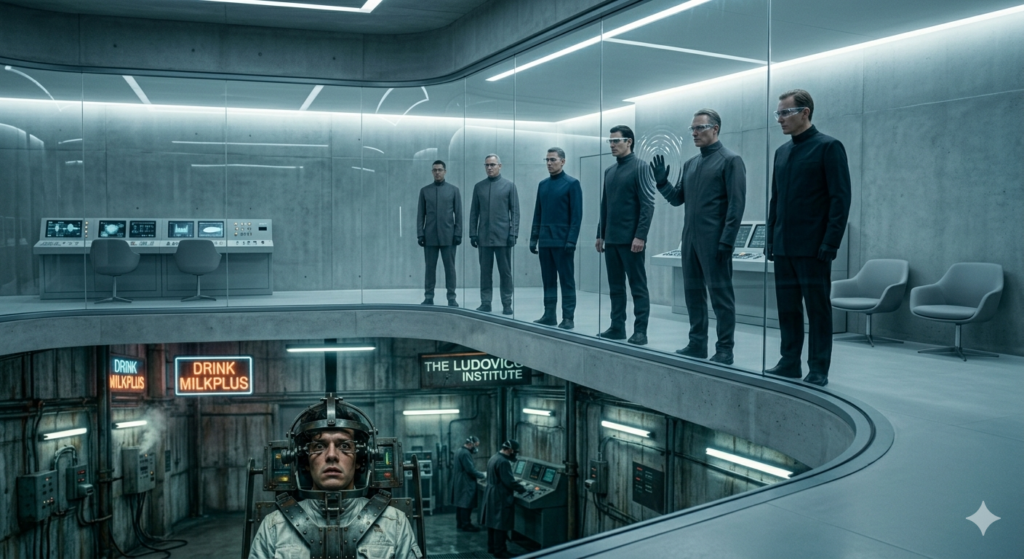
Burgess creates a moral trap instead.
Readers hate Alex’s violence.
Then they become disturbed by the state’s treatment of him.
Then they begin questioning their own reactions.
This shifting discomfort is intentional.
The novel repeatedly destabilizes moral certainty because Burgess understood that freedom itself is ethically dangerous. A society committed to total safety may eventually destroy the very qualities that make moral humanity possible.
The frightening part is that Burgess never entirely dismisses either side.
Alex is terrifying.
The state is terrifying too.
The novel therefore refuses the easy fantasy that social order and human freedom can be perfectly reconciled.
That unresolved tension gives the book its lasting power.
Violence and Art Exist Uneasily Together
One of the strangest elements of A Clockwork Orange is Alex’s love of music, especially Beethoven.
Burgess deliberately connects artistic sensitivity with moral corruption in ways many readers find unsettling. Alex experiences genuine emotional ecstasy through classical music while simultaneously committing acts of horrifying violence.
This destroys comforting assumptions about culture and morality.
The novel refuses the idea that artistic appreciation automatically creates ethical goodness. Beauty does not redeem Alex.
Intelligence does not redeem him.
Sensitivity does not redeem him.
Burgess understood that human beings are psychologically contradictory creatures capable of both aesthetic transcendence and cruelty simultaneously.
That insight makes the novel feel disturbingly realistic.
The Missing Final Chapter Changes Everything
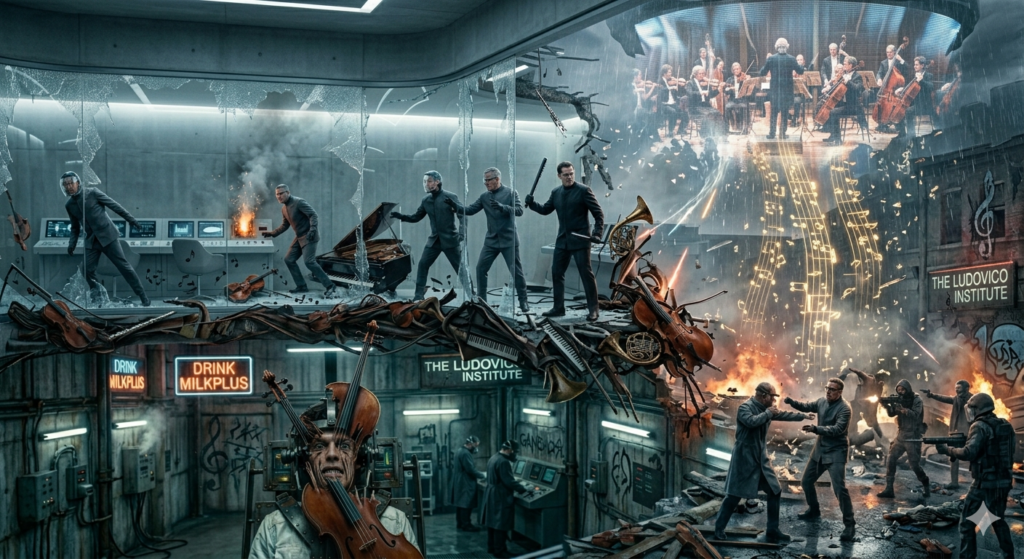
One of the most important facts about A Clockwork Orange is that many readers encountered an incomplete version for decades.
The original British edition contains a final chapter omitted from early American editions. Kubrick’s film also follows the shortened version.
Without the final chapter, the novel appears overwhelmingly cynical. Alex returns to violent impulses, suggesting human beings remain permanently trapped by their destructive nature.
But the restored ending complicates this dramatically.
In the final chapter, Alex begins feeling exhausted by violence. He starts imagining adulthood, family, and emotional maturity. The change emerges naturally rather than through state coercion.
This matters enormously.
Burgess suggests genuine moral development may only have meaning when it arises voluntarily through lived experience rather than external control.
The missing chapter transforms the novel from pure nihilism into something far more philosophically ambiguous.
The Novel Is Really About Free Will
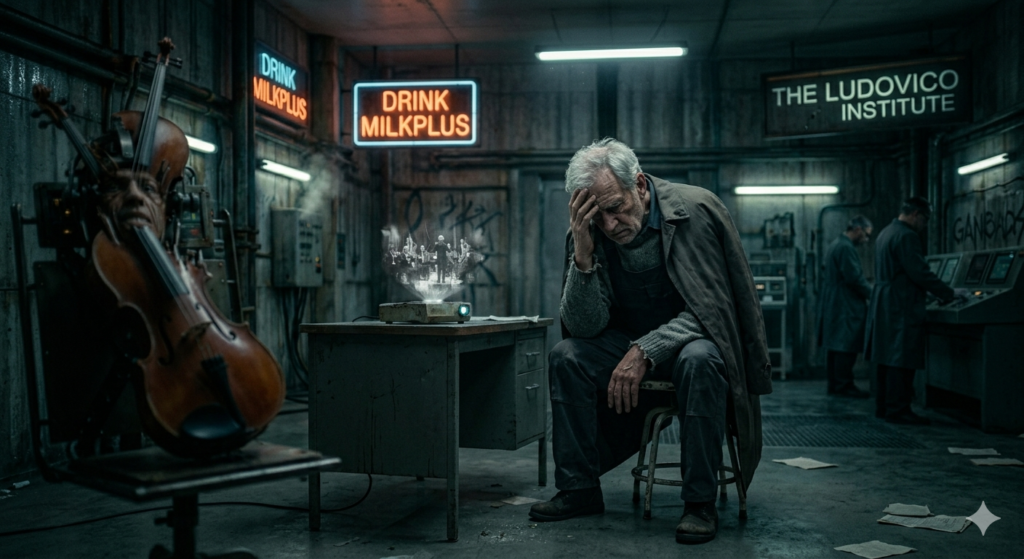
At its core, A Clockwork Orange is less interested in crime than in free will itself.
Burgess believed moral choice defines human identity. Remove choice entirely, even in the name of social good, and humanity becomes mechanized.
This idea gives the novel theological weight beneath its dystopian surface.
The ability to choose wrongly becomes inseparable from the possibility of choosing rightly.
That is the question Burgess refuses to comfortably answer:
Is a violent free human being morally preferable to a harmless programmed one?
The novel never resolves the dilemma because Burgess understood there may be no satisfying solution.
A perfectly safe society may require forms of control incompatible with meaningful humanity.
But unrestricted freedom carries enormous potential for suffering.
The tension remains unresolved intentionally.
Why the Novel Still Feels Uncomfortable Today
Many older dystopian novels feel tied to specific political eras.
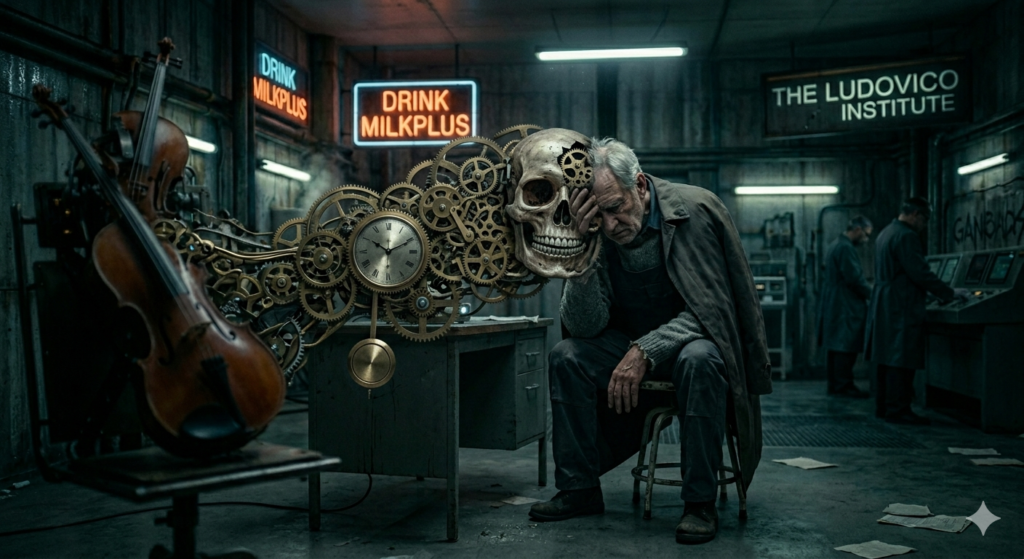
A Clockwork Orange remains disturbingly modern because debates surrounding behavioral control, psychological conditioning, surveillance, and social engineering continue evolving today.
Modern societies increasingly attempt to manage behavior through:
- algorithms
- pharmaceutical intervention
- predictive policing
- digital monitoring
- psychological optimization
- emotional manipulation through media systems
The novel’s fears no longer seem purely speculative.
Burgess anticipated a world where efficiency and stability might gradually become more socially valued than unpredictable human freedom.
That possibility still feels unsettling.
Kubrick Understood the Horror but Not the Entire Argument
Kubrick’s adaptation remains visually brilliant and culturally influential, but its omission of the final chapter changes the emotional meaning significantly.
The film emphasizes coldness,
irony,
and cyclical violence.
It presents a world where brutality and manipulation appear endless.
Burgess reportedly disliked this interpretation because he believed the final chapter mattered deeply. For him, the novel was partly about the possibility of voluntary moral growth emerging naturally over time.
Without that ending, the story becomes more fatalistic.
This tension between novel and film partly explains why discussions around A Clockwork Orange remain so divided decades later.
Final Thoughts
A Clockwork Orange endures because Anthony Burgess refused to provide comforting moral clarity.
He understood that freedom is dangerous.
Control is dangerous too.
Human beings are capable of beauty and cruelty simultaneously.
Most importantly, he refused to answer the central question cleanly:
What happens when society becomes so afraid of evil that it begins eliminating the freedom necessary for genuine goodness to exist?
The novel leaves readers trapped inside that uncertainty.
And perhaps Burgess believed uncertainty itself was part of being human.