Severance and the Dystopia of the Slightly Late Apocalypse
Most dystopian stories begin after the collapse.
The world has already burned.
Governments have fallen.
Cities are empty.
People wander through ruins searching for food, meaning, or survival.
Apple TV+’s Severance does something far stranger and far more unsettling.
The apocalypse in Severance has not fully arrived yet.
It is merely late enough to feel normal.
That delay is what makes the show terrifying. Nothing in Severance looks traditionally catastrophic. Offices still exist. Elevators still work. Employees still joke awkwardly during meetings. People still go to dinner parties and complain about work.
Civilization appears intact.
But emotionally, spiritually, and psychologically, something has already collapsed.
The show presents a world where human beings continue functioning after meaning itself has quietly begun disappearing.
The Horror of Severance Is Administrative
Most dystopias rely on visible oppression:
- military violence
- surveillance states
- ruined environments
- authoritarian governments
Severance replaces all of this with corporate procedure.
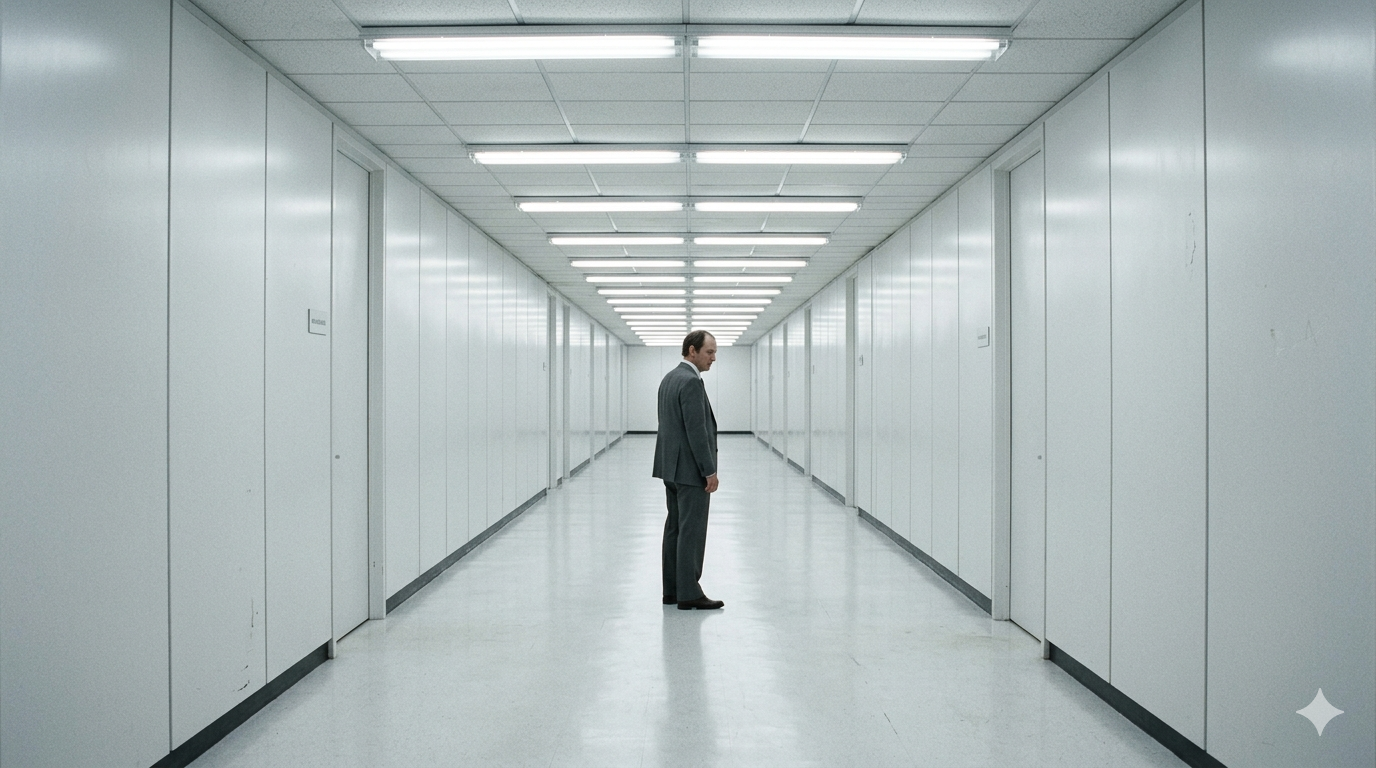
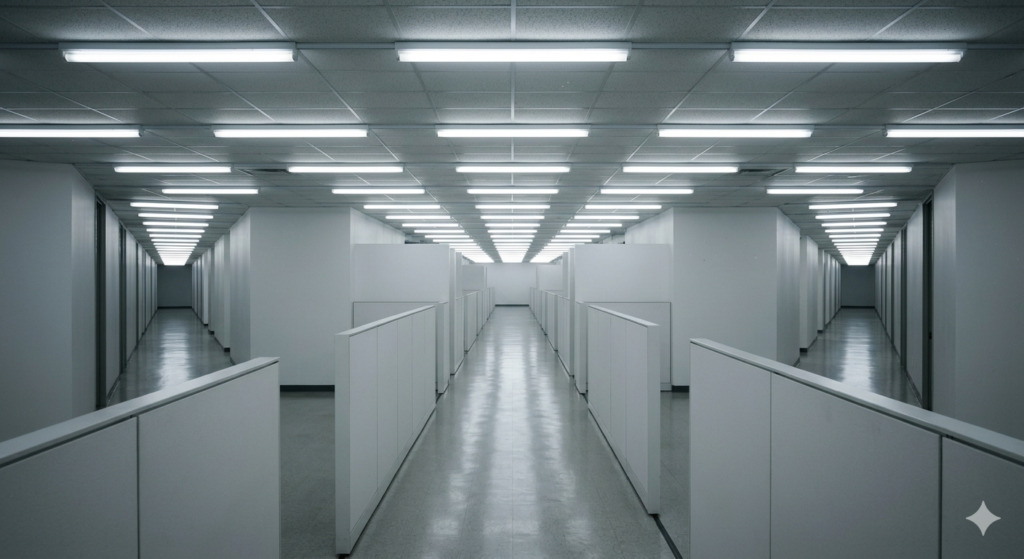
That is what makes the series feel uniquely modern. The horror emerges through orientation videos, office perks, wellness sessions, and sterile politeness. Lumon Industries does not scream its control.
It calmly schedules it.
The severance procedure itself initially appears almost practical. Separate work consciousness from personal consciousness. Eliminate work stress. Create balance.
But the deeper implications become horrifying almost immediately.
The “innie” exists only at work.
They never sleep.
Never leave.
Never experience a real life outside labor.
Their entire existence becomes permanent employment.
The apocalypse in Severance is not explosive destruction.
It is the total colonization of consciousness by work culture.
The World Feels Emotionally Post-Apocalyptic Already
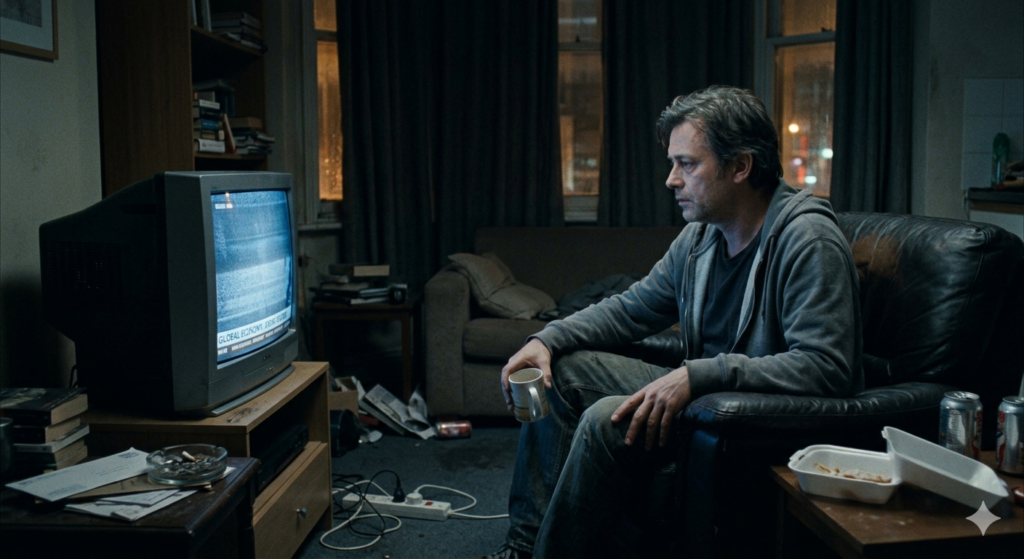
One of the strangest aspects of Severance is how emotionally exhausted the world feels before anything openly catastrophic occurs.
Characters drift through conversations with emotional numbness. Relationships feel disconnected. Homes feel sterile. Even social gatherings carry a strange atmosphere of detachment and artificiality.
The show creates the sensation that people survived something invisible.
Not war.
Not plague.
Not environmental collapse.
But the slow erosion of authentic human experience.
This is why the series feels less like science fiction and more like psychological realism exaggerated slightly into absurdity. The office becomes a metaphor for a culture already struggling with fragmentation:
- fragmented attention
- fragmented identity
- fragmented relationships
- fragmented purpose
The severed mind simply literalizes what many people already feel emotionally.
Lumon Understands That Identity Is Malleable
The genius of Severance lies in its understanding that modern systems rarely demand complete obedience immediately.
They reshape identity gradually.
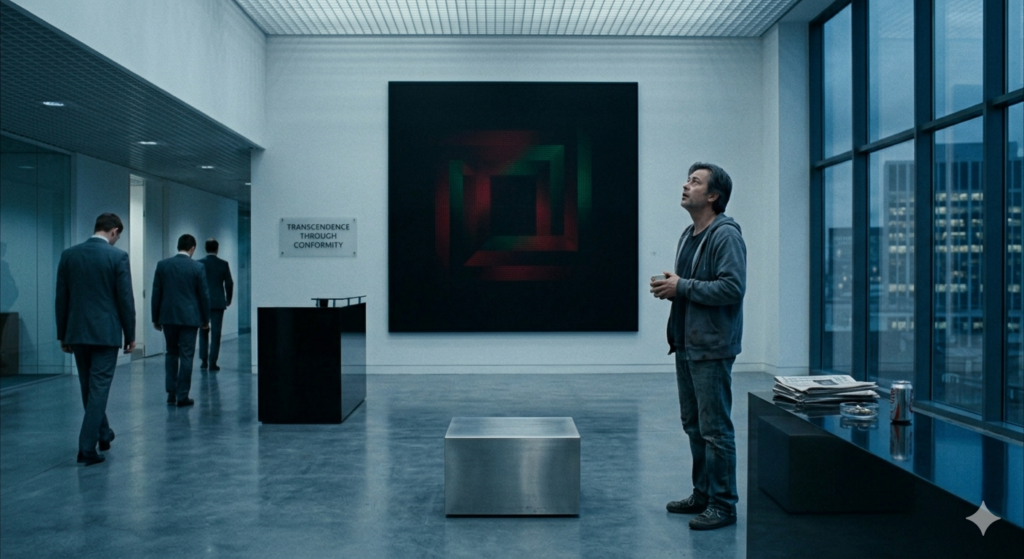
Lumon does not force employees to become different people through obvious violence. Instead, the corporation creates environments where identity slowly reorganizes itself around institutional logic.
Language changes.
Behavior changes.
Emotional responses change.
The innies eventually begin treating corporate rituals with religious seriousness because those rituals become the only stable structure in their world.
This is one reason the show feels deeply dystopian despite its restrained aesthetic. Totalitarianism in Severance does not arrive through marching armies.
It arrives through workflow optimization.
The apocalypse is delayed just enough for people to normalize it.
The Office Functions Like a Religion
Many viewers describe Lumon as cult-like, but the comparison goes deeper than atmosphere.
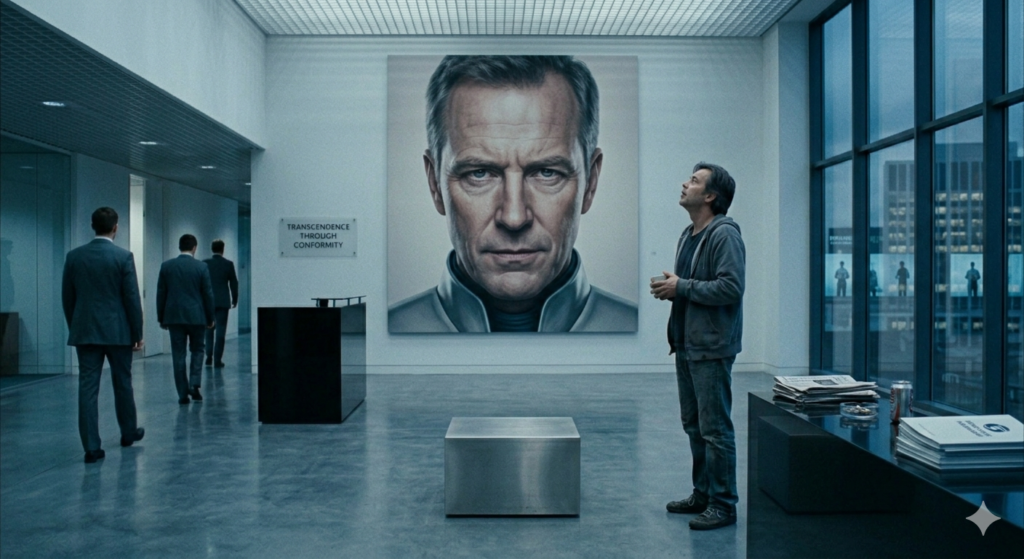
The company operates almost exactly like a religious institution:
- sacred texts
- founder worship
- ritualized language
- moral instruction
- confession
- rewards for obedience
- promises of higher purpose
Employees are not simply managed.
They are spiritually organized.
This matters because Severance suggests modern corporations increasingly absorb emotional and existential functions once associated with religion or community. Work becomes identity. Productivity becomes morality. Institutional loyalty becomes meaning.
The show exaggerates these dynamics only slightly.
That slight exaggeration is what makes it disturbing.
The world of Severance does not feel impossible.
It feels adjacent.
Why the “Innie” Is Such a Tragic Figure
The innies are among the saddest characters in modern dystopian fiction because they are born directly into captivity.
They enter existence already trapped.
Unlike traditional dystopian protagonists, they possess almost no historical memory. They cannot compare their lives to freedom because they have never experienced freedom at all.
This creates a uniquely painful form of innocence.
The innies celebrate tiny rewards.
Finger traps.
Waffles.
Music dance experiences.
Their emotional world becomes structured around corporate incentives because nothing else exists.
The tragedy is not merely exploitation.
It is the reduction of human possibility itself.
The apocalypse in Severance is subtle because humanity technically survives. People still laugh, socialize, and function.
But enormous portions of emotional life have quietly disappeared.
The Show Understands the Exhaustion of Modern Life
Part of the reason Severance resonated so strongly is because it captures a widespread modern feeling many people struggle to articulate.
The sense that life increasingly feels divided into disconnected selves.
Professional self.
Online self.
Private self.
Performative self.
People move constantly between identities shaped by institutions, algorithms, expectations, and productivity demands.
Severance turns this psychological fragmentation into literal science fiction.
The result feels emotionally accurate in a way many futuristic dystopias do not. The show recognizes that contemporary alienation often appears banal rather than dramatic.
People still attend meetings.
Pay rent.
Answer emails.
Meanwhile meaning quietly deteriorates underneath ordinary routine.
Why the Apocalypse Feels “Slightly Late”
Traditional apocalyptic fiction imagines sudden collapse.
Severance imagines delayed recognition.
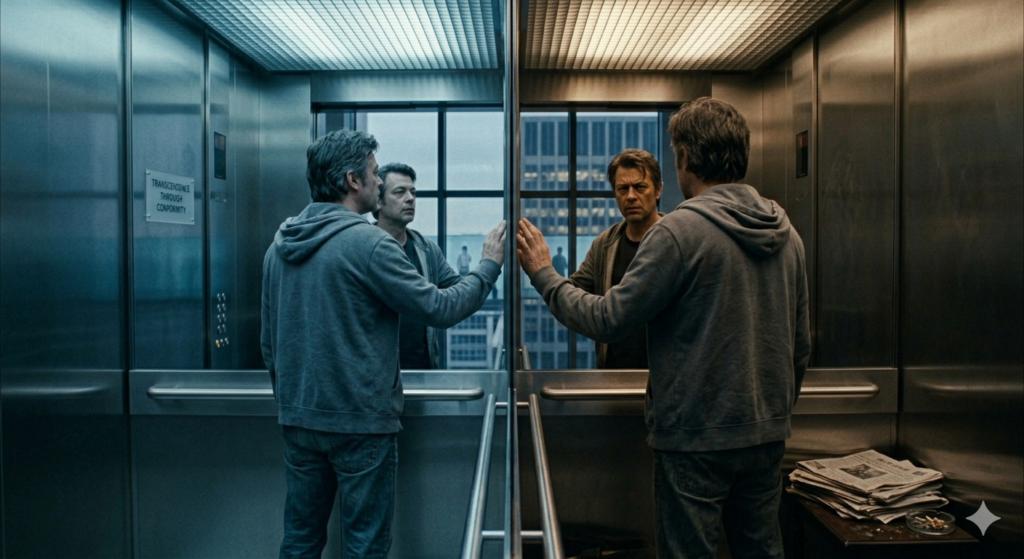
The catastrophe has already begun, but society continues functioning because institutions adapt faster than human awareness does.
This is why the show’s atmosphere feels so uncanny. Everyone behaves as though normality still exists while subtle signs suggest something profoundly unhealthy underneath the surface.
The apocalypse arrives administratively.
Psychologically.
Incrementally.
By the time people fully recognize the damage, the systems shaping them have already become ordinary.
That may be the most frightening idea in the entire series.
Final Thoughts
Severance succeeds because it understands that the most terrifying dystopias are not always dramatic. Sometimes they emerge quietly through systems people voluntarily participate in every day.
The show presents a world where the apocalypse is not fire or ruin, but emotional fragmentation normalized by corporate culture.
Lumon Industries does not destroy civilization.
It reorganizes consciousness until people no longer fully belong to themselves.
That is why the series feels so unsettlingly familiar. Its horror does not come from imagining a completely alien future.
It comes from recognizing pieces of the present exaggerated only slightly beyond comfort.