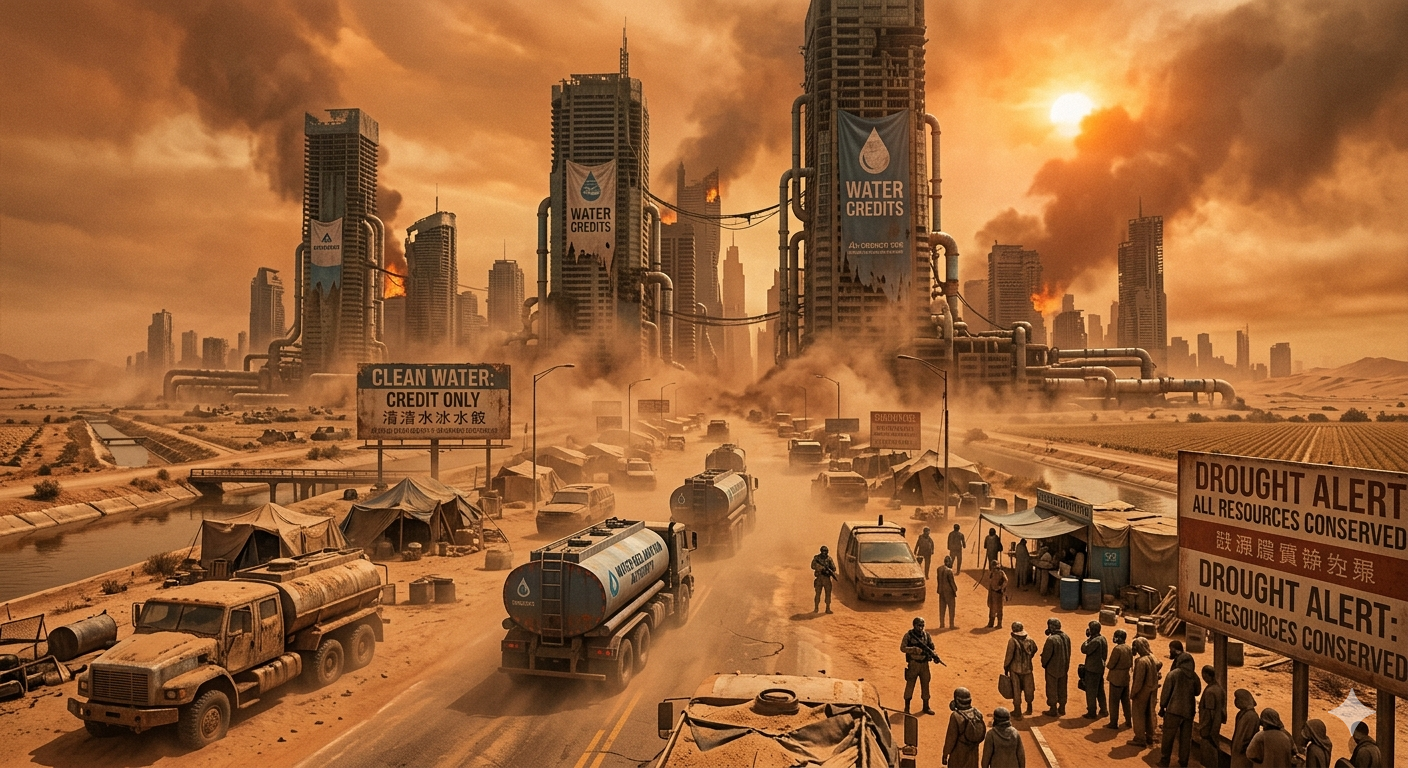
The Water Knife: Paolo Bacigalupi’s Climate Dystopia That Reads Like Reportage
Most dystopian fiction creates distance between readers and catastrophe.
The future arrives with dramatic visual markers:
collapsed governments,
burning cities,
robotic surveillance,
or completely transformed societies.
Paolo Bacigalupi’s The Water Knife does something far more disturbing.
It feels close.
Too close.
The novel reads less like speculative fiction and more like journalism written a few years ahead of reality. Its vision of climate collapse does not depend on giant cinematic disasters. Instead, it emerges through policy, scarcity, migration, privatization, corruption, and exhausted infrastructure.
The apocalypse in The Water Knife does not suddenly arrive.
It accumulates.
That accumulation is what makes the novel feel terrifyingly plausible.
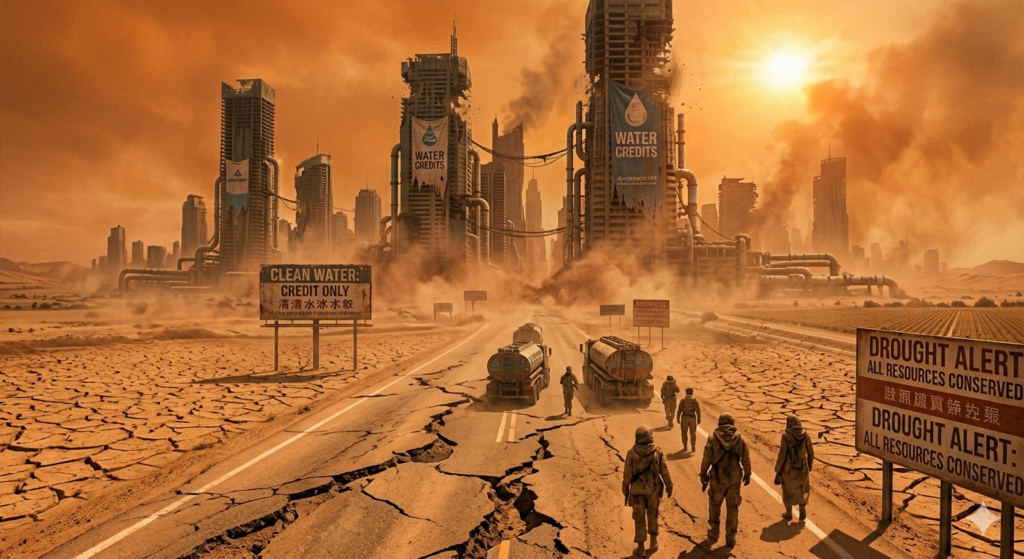
Bacigalupi Understands That Climate Collapse Is Bureaucratic
Many climate dystopias focus on spectacular destruction:
flooded cities,
superstorms,
or environmental chaos on a massive visual scale.
The Water Knife understands something more realistic.
Climate catastrophe often looks administrative before it looks cinematic.
Water rights.
Legal disputes.
Private security.
Infrastructure sabotage.
Corporate negotiations.
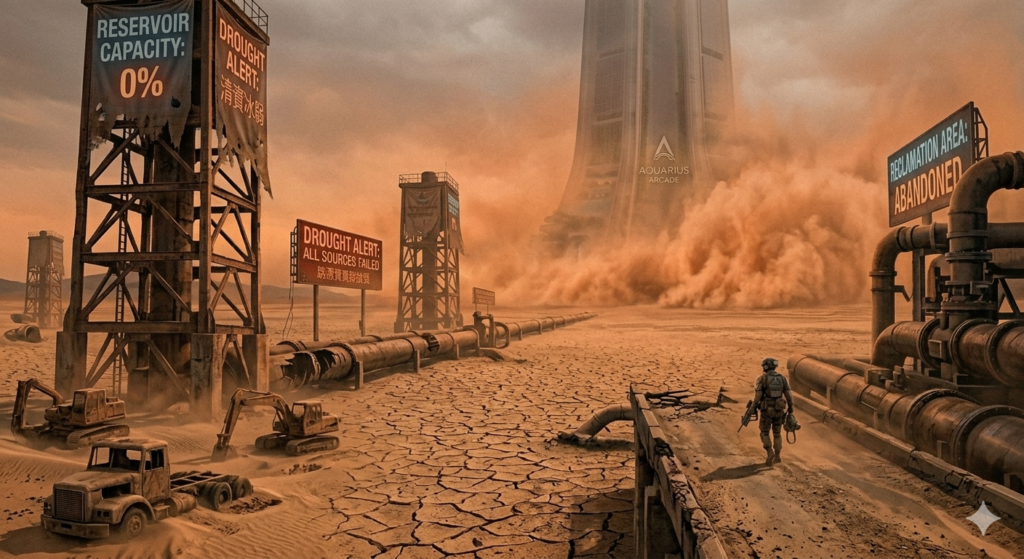
The novel’s central conflicts revolve around control over water access in the American Southwest, particularly cities like Phoenix and Las Vegas. Governments weaken while corporate power expands. Ordinary survival increasingly depends on access to privatized resources.
This feels frightening because Bacigalupi grounds everything in recognizable systems already visible today.
Nothing in the novel feels technologically impossible.
That realism makes the story read like investigative reporting from the near future.
The Future in The Water Knife Feels Economically Familiar
One reason the novel feels so believable is because Bacigalupi understands inequality.
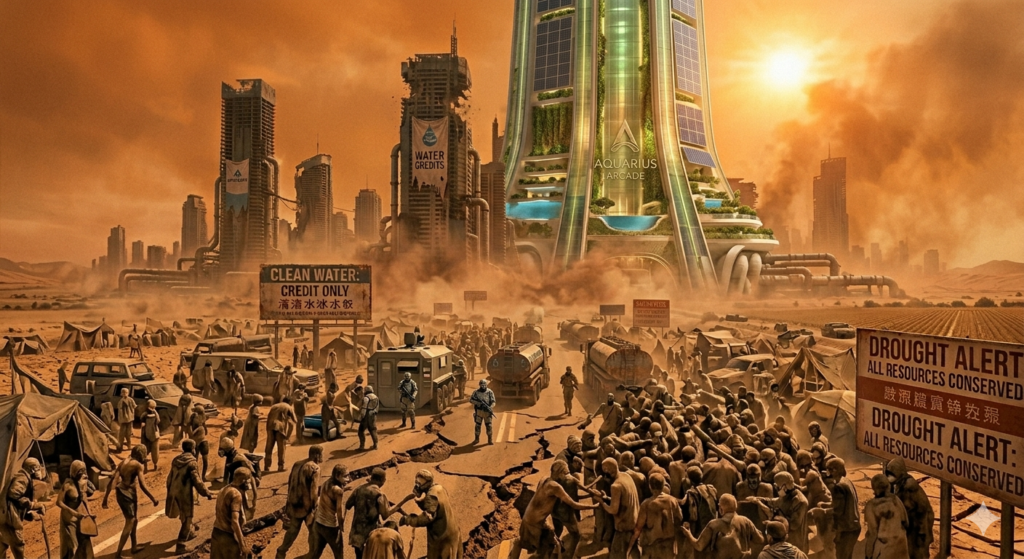
Climate collapse in The Water Knife does not affect everyone equally. Wealthy individuals live inside protected “arcologies” with filtered water and controlled environments while poor populations suffer heat, violence, dehydration, and displacement.
The rich continue functioning.
The vulnerable absorb the catastrophe.
This detail matters because the novel rejects simplistic apocalyptic fantasy. Society does not collapse uniformly. Systems continue operating for those with enough money, power, or access.
That unevenness makes the world emotionally recognizable.
Bacigalupi understands that climate disaster under capitalism would likely intensify existing hierarchies rather than erase them.
The apocalypse becomes stratified.
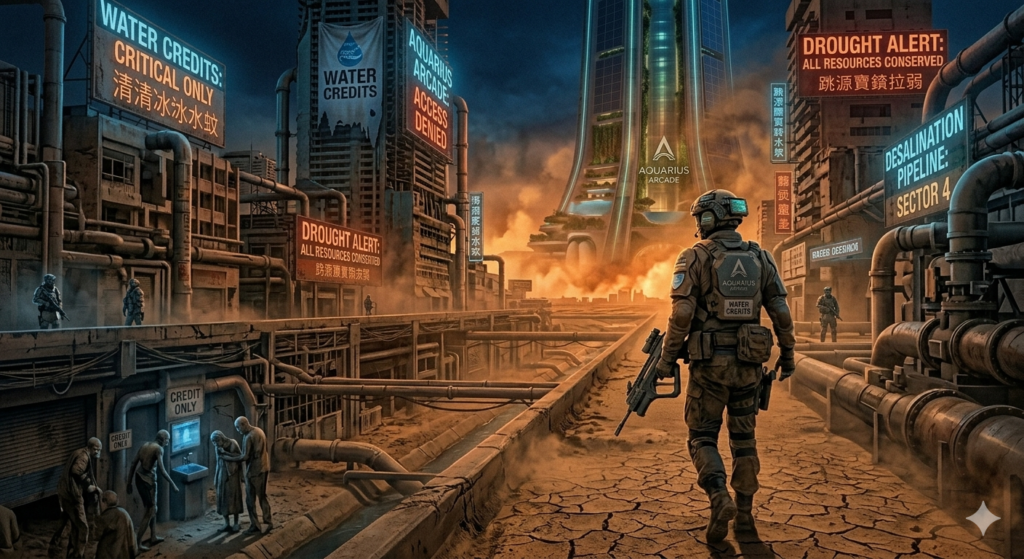
Angel Velasquez Is a Corporate Enforcer, Not a Hero
Traditional dystopian fiction often centers rebellious outsiders fighting oppressive systems. The Water Knife deliberately avoids this structure.
Angel Velasquez works for the system.
He is a fixer.
An operative.
A corporate weapon used to secure water rights for Las Vegas.
This choice changes the emotional texture of the novel completely. Readers experience climate collapse from inside institutional power rather than from romantic resistance.
Angel is not trying to save the world.
He is trying to survive professionally within it.
That moral ambiguity gives the novel its journalistic quality. Bacigalupi refuses comforting narratives about heroic resistance. Instead, he presents a world where people adapt psychologically to ongoing catastrophe because adaptation becomes economically necessary.
The result feels disturbingly credible.
The Novel Understands Migration as the Central Climate Story
Long before climate migration became a major mainstream political discussion, The Water Knife recognized displacement as one of the defining realities of environmental collapse.
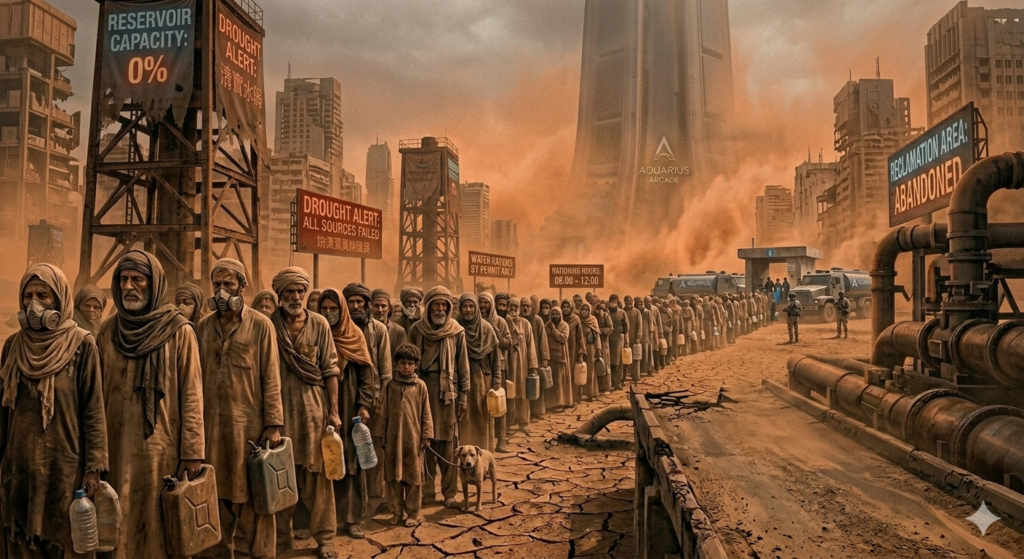
The novel’s refugees are called “Texans,” displaced by drought and economic devastation. Camps overflow with desperate people searching for survival while cities increasingly militarize access to resources.
This aspect of the novel feels especially prophetic because Bacigalupi understands that climate change is never only environmental.
It becomes:
- political
- economic
- psychological
- geographical
- humanitarian
The movement of desperate populations reshapes entire social systems.
Importantly, Bacigalupi does not romanticize suffering. Migration in the novel is exhausting, humiliating, and dangerous. Institutions respond not with compassion, but with securitization and exclusion.
That realism gives the book its brutal emotional force.
Why the Novel Feels Like Reportage
The prose style itself contributes to the sense of realism.
Bacigalupi writes with sharp physical detail:
dust,
heat,
sweat,
dryness,
decaying infrastructure,
violence simmering beneath ordinary interactions.
The world feels observed rather than imagined.
Unlike many dystopian novels that emphasize philosophical abstraction, The Water Knife focuses heavily on logistics. Readers constantly encounter discussions about reservoirs, pipelines, legal claims, water tables, and municipal systems.
This technical grounding creates authenticity.
The novel feels researched because it is deeply interested in how collapse actually functions materially. Bacigalupi understands that real disasters emerge through systems breaking unevenly over time rather than through single dramatic events.
The result resembles long-form investigative journalism transformed into fiction.
The Real Horror Is Adaptation
One of the novel’s most unsettling achievements is showing how quickly human beings normalize catastrophe.
People continue dating.
Working.
Negotiating.
Running businesses.
Making deals.
Meanwhile society quietly deteriorates around them.
This emotional normalization feels incredibly modern. Bacigalupi recognizes that climate change rarely arrives as one undeniable apocalyptic moment. Instead, people psychologically adapt to worsening conditions step by step.
Each crisis becomes the new normal.
That slow adjustment may be the novel’s most frightening idea.
Civilizations do not always collapse dramatically.
Sometimes they become increasingly cruel while insisting everything remains manageable.
Why The Water Knife Still Feels Ahead of Its Time
Many dystopian novels age quickly because their predictions become visually dated or politically simplistic.
The Water Knife remains powerful because Bacigalupi focused on structural dynamics rather than gimmicks.
Water scarcity.
Privatized survival.
Corporate governance.
Climate migration.
Infrastructure collapse.
Extreme inequality.
These issues feel more relevant now than when the novel first appeared.
The book’s greatest strength is that it avoids fantasy solutions. There are no technological miracles or sudden awakenings. Institutions largely protect themselves. Violence becomes normalized. Survival becomes transactional.
That realism makes the novel emotionally exhausting in the best possible way.
Final Thoughts
The Water Knife succeeds because it understands that the future may not look radically unfamiliar. Climate collapse may emerge through ordinary systems intensifying existing inequalities until everyday life itself becomes unstable.
Paolo Bacigalupi writes climate dystopia with the precision of a reporter rather than the spectacle of a traditional science fiction writer.
That approach makes the novel uniquely disturbing.
Its world does not feel invented.
It feels adjacent.
And perhaps the most unsettling part of all is how recognizable its logic already feels.