The City We Became: N.K. Jemisin’s Strangest Political Novel and Why It Matters
N.K. Jemisin’s The City We Became is one of the strangest major fantasy novels published in recent years.
It is urban fantasy.
Cosmic horror.
Political allegory.
Love letter.
Satire.
Apocalypse story.
Sometimes all at once.
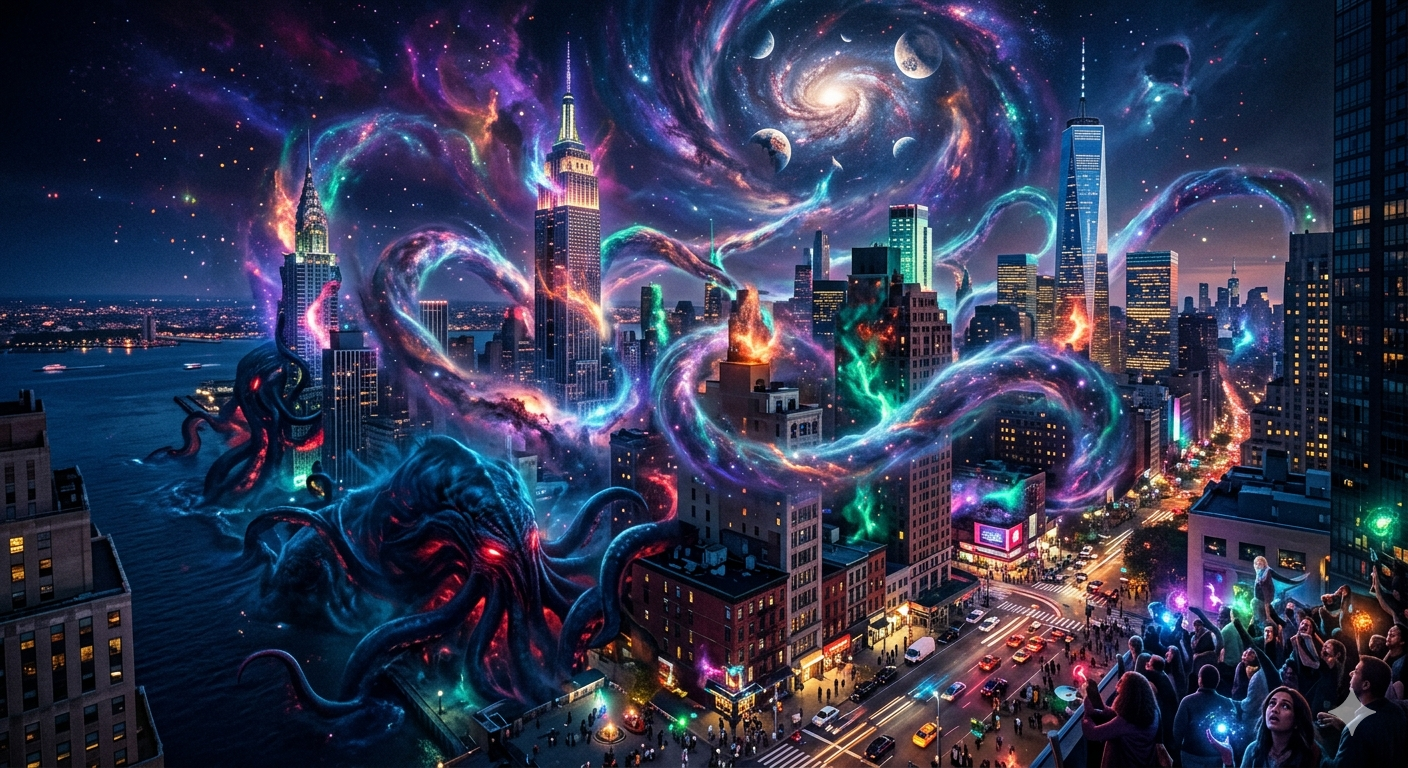
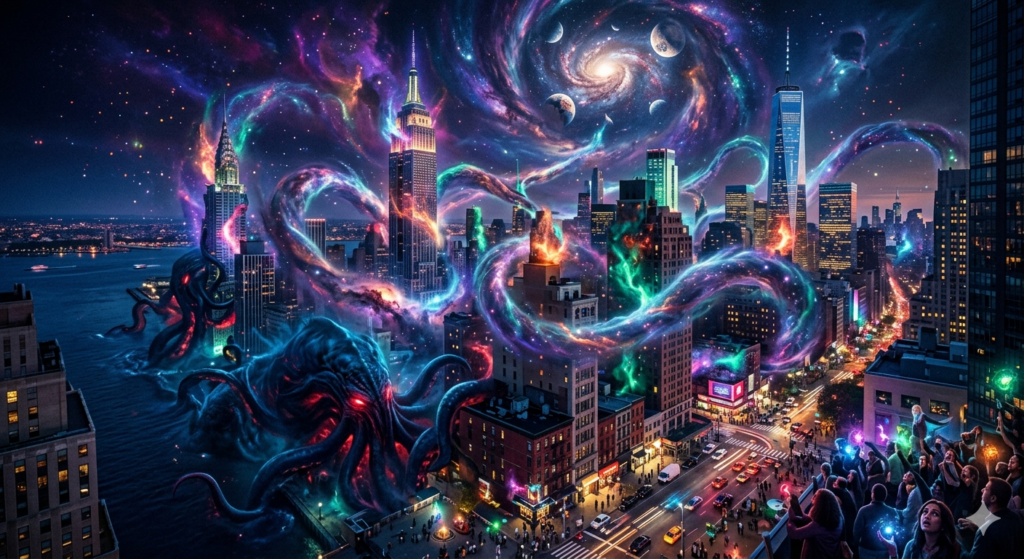
The novel imagines that great cities become living entities once they gather enough history, culture, contradiction, violence, creativity, and collective human energy. New York City is in the process of being born as a conscious being, and each borough receives a human avatar connected to its identity.
On paper, the premise sounds almost absurd.
In practice, it becomes one of the most emotionally and politically ambitious fantasy novels of the last decade because Jemisin understands something many writers avoid:
Cities are ideological battlegrounds long before they are physical places.
The Novel Treats Cities as Emotional Organisms
Most fantasy worlds focus on kingdoms, empires, or invented nations. Cities often function merely as settings where adventures happen.
The City We Became reverses this completely.
New York itself becomes the central character.
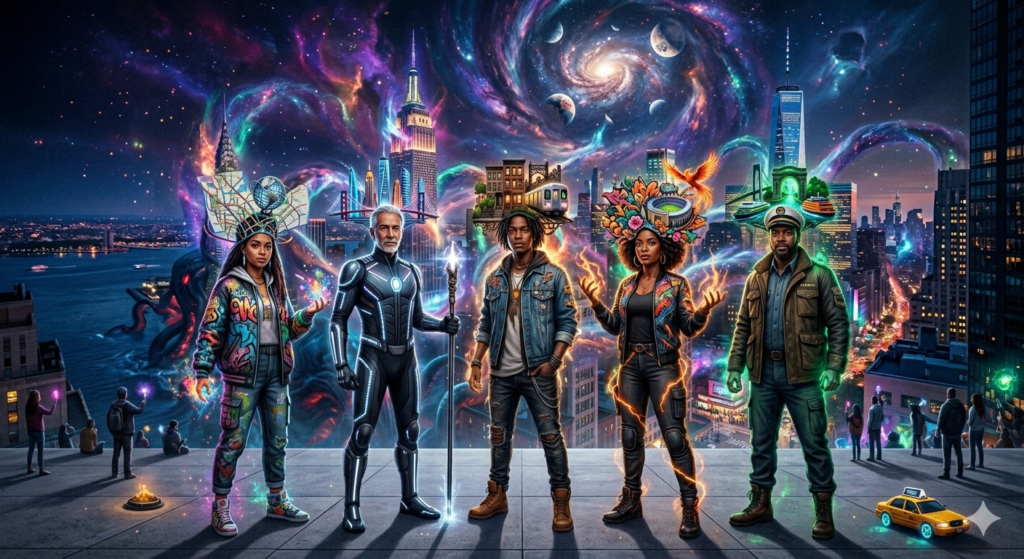
Its boroughs are not represented abstractly. They become embodied through avatars whose personalities reflect different histories, cultures, tensions, and social realities:
- Manhattan’s speed and performance
- Brooklyn’s artistic resilience
- the Bronx’s cultural strength
- Queens’ multiplicity
- Staten Island’s alienation and conservatism
This approach allows Jemisin to write about urban identity in ways traditional realism often cannot. Fantasy exaggeration reveals emotional truths about how cities actually feel to the people living inside them.
The result is chaotic, energetic, messy, contradictory, and deeply alive.
Much like New York itself.
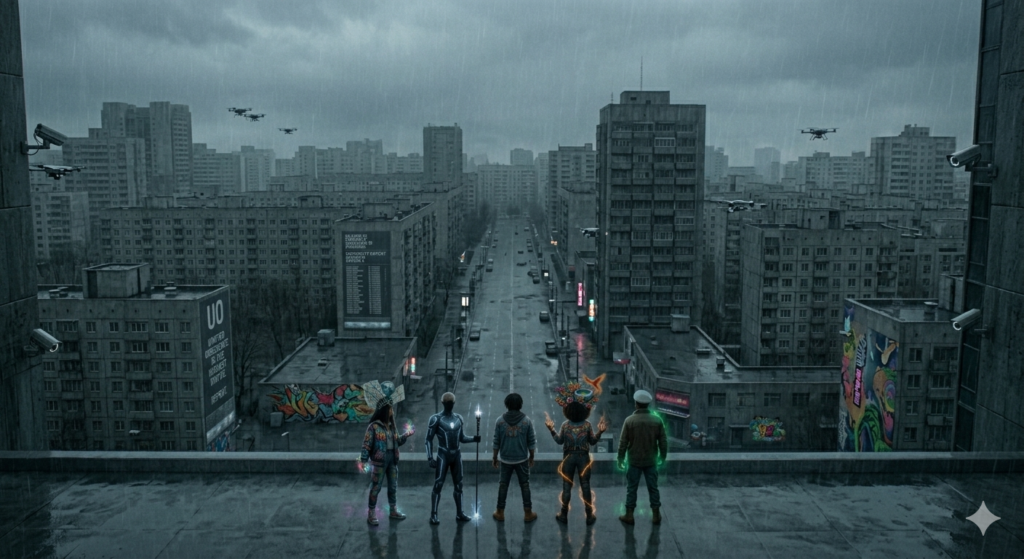
The Villain Is Cultural Erasure
One of the novel’s most fascinating choices is its antagonist.
The enemy threatening New York resembles cosmic horror inspired partly by H.P. Lovecraft, but Jemisin transforms Lovecraft’s fear of cities, diversity, and cultural mixing into the novel’s central political conflict.
The invading force does not simply want destruction.
It wants homogenization.
Its power appears through:
- gentrification
- sterilization
- cultural flattening
- fear of difference
- hostility toward urban complexity
This makes the novel politically unusual. Many fantasy stories frame evil as obvious tyranny or military domination. The City We Became presents danger as the destruction of cultural multiplicity itself.
The horror is not merely death.
It is the replacement of living complexity with controlled emptiness.
Jemisin Understands That Cities Contain Contradictions
One reason the novel feels so strange is because Jemisin refuses romantic simplification.
New York is not portrayed as morally pure.
It is unequal.
Violent.
Exhausting.
Economically brutal.
Yet the novel still fiercely defends the city’s vitality.
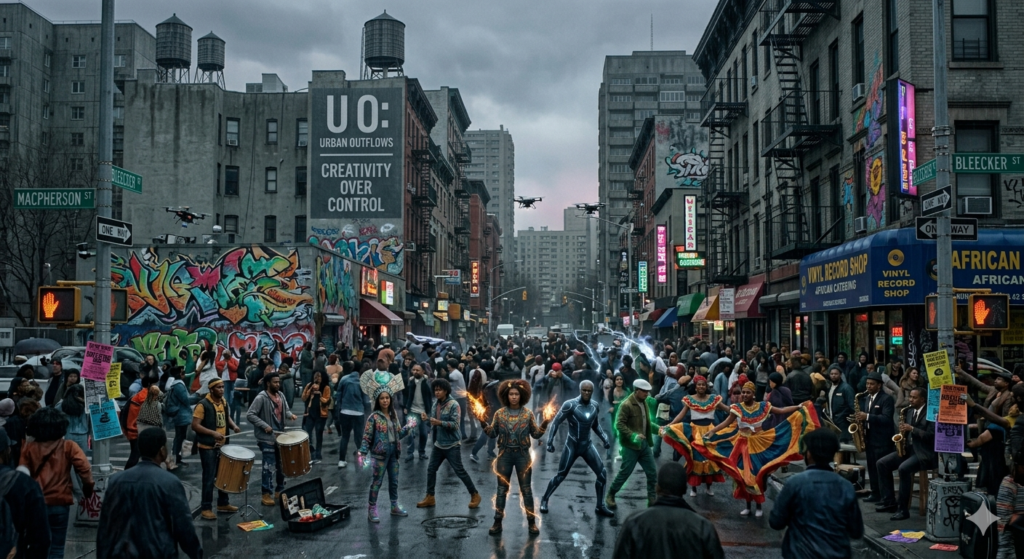
This balance matters enormously. Jemisin understands that cities generate creativity precisely because they force radically different people into shared space. Friction produces energy. Diversity produces unpredictability. Contradiction produces culture.
The avatars themselves constantly clash because the city’s identity depends on internal tension rather than perfect unity.
That insight gives the novel unusual political depth.
Many stories imagine community as harmony.
The City We Became imagines community as difficult coexistence.
The Novel Is About Who Gets to Define Reality
Underneath the fantasy elements, the book repeatedly returns to one central question:
Who has the power to define what a city means?
This question shapes every political conflict in the novel.
Developers define cities economically.
Politicians define them administratively.
Tourists define them romantically.
Residents define them emotionally.
Jemisin stages these competing visions through fantasy warfare. Reality itself becomes unstable because cities are collective narratives created through millions of overlapping experiences.
The cosmic horror elements work surprisingly well because urban life already feels slightly unreal:
constant noise,
constant motion,
millions of strangers sharing invisible systems,
histories layered on top of each other.
Jemisin simply pushes this psychological reality into literal fantasy.
Why the Novel Feels Intentionally Overwhelming
Some readers find The City We Became chaotic. That chaos is deliberate.
The prose moves quickly.
References pile up.
Dialogue overlaps.
The city constantly interrupts itself.
Jemisin writes New York as sensory overload.
This stylistic choice matters because the novel’s political argument depends on rejecting neat simplicity. Order and cleanliness in the book often become associated with sterilization, control, and cultural death.
Messiness becomes vitality.
The novel insists that living cities are noisy, contradictory organisms impossible to fully contain or simplify.
That is partly why the book feels so emotionally different from traditional epic fantasy. It operates through movement and collision rather than stable worldbuilding.
The Lovecraft Connection Matters Deeply
Jemisin’s relationship with Lovecraft is central to understanding the novel.
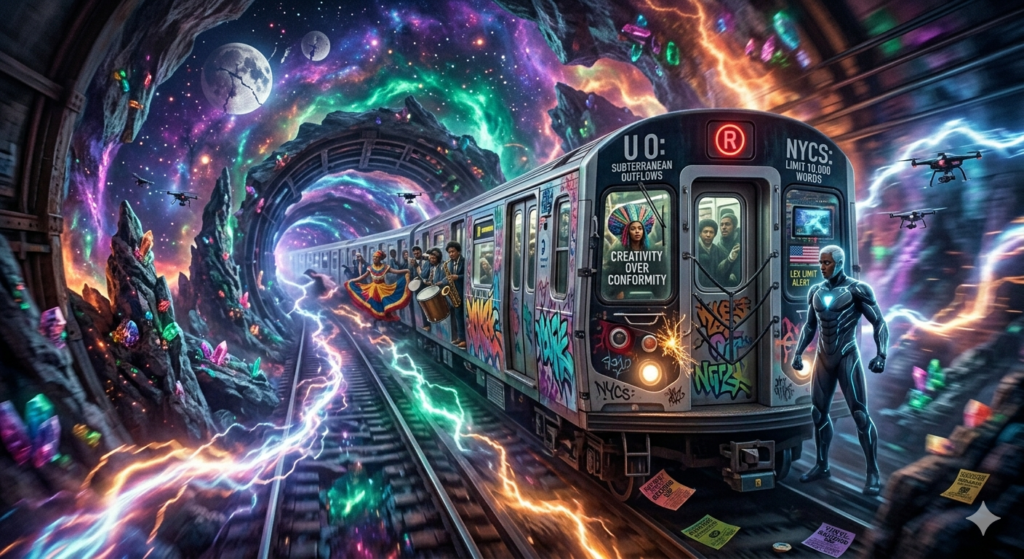
Lovecraft often portrayed cities, immigrants, racial mixing, and modern urban life as sources of horror and contamination. His fiction feared cultural transformation.
Jemisin responds by completely reversing that emotional logic.
In The City We Became:
- diversity becomes strength
- urban multiplicity becomes beauty
- cultural mixture becomes survival
- cities become living expressions of collective creativity
The novel essentially asks:
What if the things Lovecraft feared are exactly what make humanity vibrant?
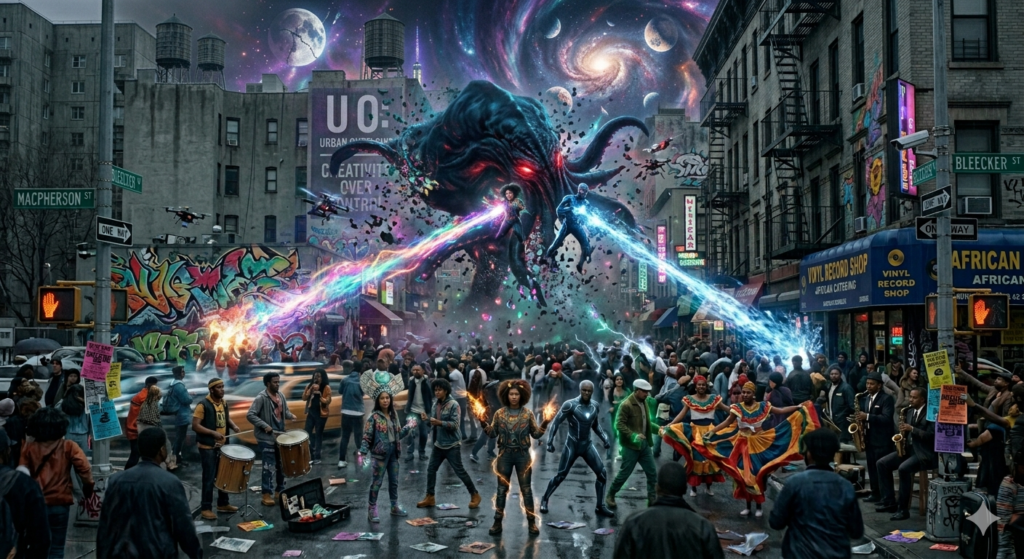
This transformation turns cosmic horror into political resistance.
The result is one of the most interesting literary conversations modern fantasy has attempted.
Why the Novel Matters Politically
Many political novels focus narrowly on elections, governments, or ideology.
The City We Became is political in a broader cultural sense. It argues that cities themselves are contested emotional spaces shaped by race, class, migration, memory, capitalism, art, and power.
The novel arrived during intense debates about:
- gentrification
- urban identity
- nationalism
- cultural belonging
- public space
- social fragmentation
Jemisin transforms these anxieties into fantasy without reducing them into simplistic allegory.
Importantly, the novel also insists that defending a city means defending the people, contradictions, and cultural energies that make it alive.
Not preserving it as static architecture.
Final Thoughts
The City We Became is strange because it refuses easy categorization. It blends fantasy, horror, politics, humor, and urban sociology into something emotionally chaotic and intellectually ambitious.
N.K. Jemisin understands that cities are more than infrastructure.
They are collective emotional realities built from conflict, memory, migration, creativity, inequality, and survival.
That is why the novel matters.
It treats urban life not as background scenery, but as one of the defining human experiences of modern civilization.
And in doing so, it asks a powerful question:
What happens when the struggle over a city becomes a struggle over whose humanity gets to shape reality itself?