
Station Eleven on HBO and the Adaptation That Took the Book More Seriously Than the Book
Most adaptations simplify novels.
Characters become flatter.
Themes become clearer.
Ambiguity disappears.
Complexity gets traded for emotional efficiency.
That is usually the bargain audiences accept when literature becomes television.
But HBO’s Station Eleven did something unusual with Emily St. John Mandel’s Station Eleven. Instead of reducing the novel, the series expanded its emotional philosophy. In some ways, the adaptation seems to understand the deeper implications of the story more intensely than the book itself.
Not because the novel is weak.
The novel is elegant, intelligent, and emotionally restrained.
But the HBO adaptation takes its central idea with frightening sincerity: survival alone is not enough. Human beings survive through art, memory, ritual, performance, and emotional connection.
The show does not merely adapt this idea.
It believes it completely.

The Novel Observes Hope. The Show Depends on It.
Emily St. John Mandel’s novel often feels distant in a deliberate way. The prose is cool, controlled, and observational. Characters drift across timelines like fragments of memory. The emotional restraint gives the book much of its beauty.
But the television series changes the emotional temperature entirely.
The HBO version feels intimate.
Raw.
Emotionally vulnerable.
The difference becomes obvious in how each version treats survival after collapse. In the novel, survival often feels accidental and fragmented. In the show, survival becomes communal and almost spiritual.
The Traveling Symphony matters more emotionally in the adaptation because the series fully commits to the idea that art is not decoration after catastrophe.
It is infrastructure for being human.
That shift changes everything.

The Show Understands Performance as Psychological Survival
One of the most powerful ideas in both versions of Station Eleven is the phrase:
“Survival is insufficient.”
The line comes from Star Trek Voyager: Pathways, but the HBO adaptation transforms it into the emotional foundation of the entire series.
Most post-apocalyptic stories focus on food, violence, disease, or rebuilding civilization. Station Eleven asks a stranger question:
What keeps people emotionally alive after the world ends?
The show’s answer is performance.
Shakespeare becomes more than culture or entertainment. Theater becomes a collective psychological ritual allowing people to process grief, preserve identity, and maintain continuity with the lost world.
The adaptation takes this idea more seriously than the novel by making performance feel sacred rather than symbolic.
Scenes of acting, music, and storytelling are filmed with emotional intensity usually reserved for action sequences in other dystopian dramas.
The show insists that art is not secondary to survival.
Art is survival.
Kirsten Feels More Human in the Adaptation
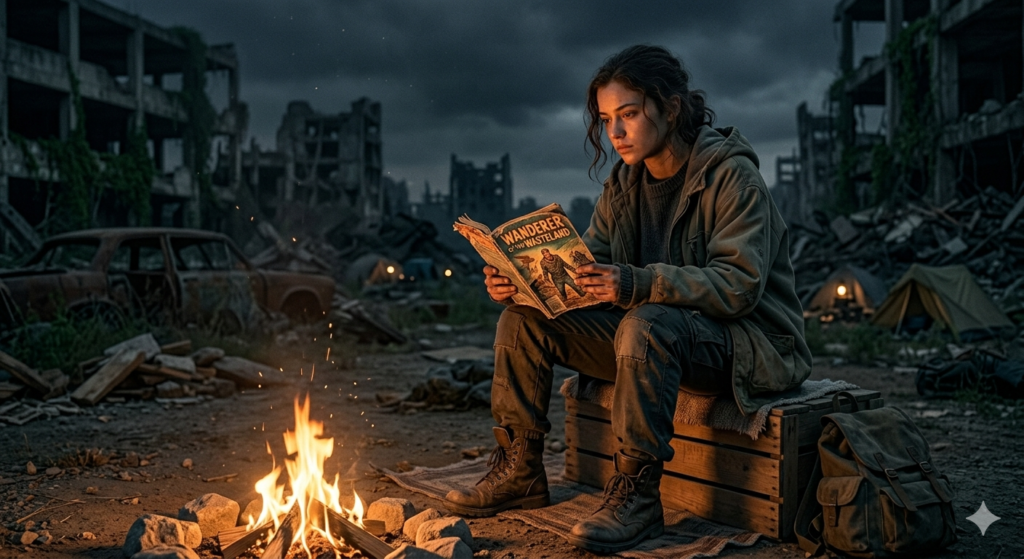
One of the clearest examples of the adaptation deepening the material is Kirsten herself.
In the novel, Kirsten remains somewhat emotionally distant. Readers observe her trauma more than inhabit it. The fragmentation mirrors the book’s larger structure and themes of memory.
The HBO version changes this dramatically.
The series allows viewers to experience Kirsten’s emotional development in real time. Her trauma becomes embodied rather than abstract. Her attachment to stories, performance, and ritual feels psychologically necessary rather than merely thematic.
This creates one of the adaptation’s greatest achievements: it transforms post-apocalyptic survival into an exploration of emotional continuity.
Kirsten survives because narrative survives.
Without stories, identity itself begins collapsing.
The show understands this with startling clarity.
The Adaptation Is More Interested in Trauma Than Collapse
Many apocalypse stories obsess over the moment civilization ends.
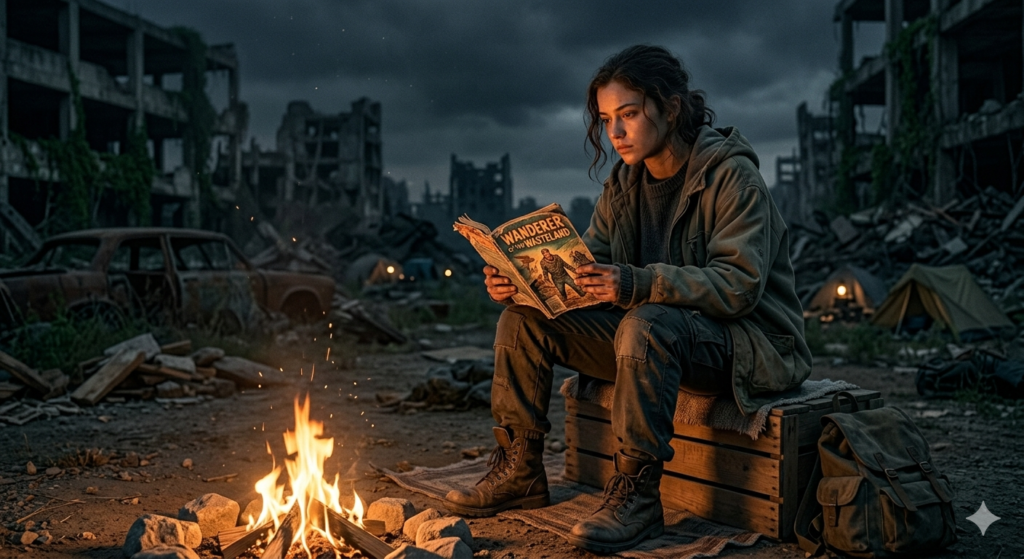
The HBO series focuses more on what happens afterward inside the human mind.
Characters repeatedly attempt to reconstruct meaning from shattered memory. Trauma shapes identity everywhere in the show:
- fragmented recollections
- ritual repetition
- emotional dissociation
- invented mythology
- nostalgia for lost normality
The adaptation understands that catastrophe is not only physical destruction.
It is narrative destruction.
People lose the story that once organized their lives.
This is why the series spends so much time on memory, art, and performance. These become methods of rebuilding psychological coherence after unimaginable rupture.
The book gestures toward these ideas beautifully.
The show fully inhabits them.
Why the Prophet Works Better on Television
The Prophet is perhaps the adaptation’s boldest improvement.
In the novel, he functions more symbolically. In the series, he becomes psychologically tragic. The HBO version deeply understands how damaged children create belief systems to survive emotional chaos.
The Prophet does not simply become dangerous because society collapsed.
He becomes dangerous because trauma transforms storytelling into ideology.
This fits perfectly with the show’s larger themes. Stories can heal people, but they can also imprison them. Narratives become survival mechanisms powerful enough to reshape reality itself.
The adaptation handles this complexity with remarkable seriousness.
It refuses simplistic morality.
It refuses easy villains.
It understands that human beings create meaning desperately after catastrophe.
Sometimes beautiful meaning.
Sometimes terrifying meaning.
The HBO Series Feels More Emotionally Ambitious
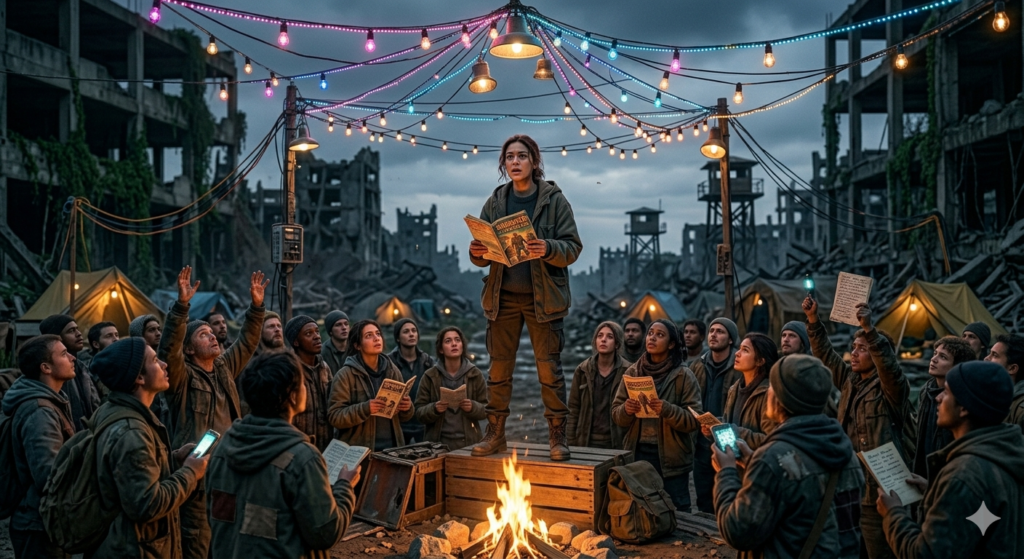
The novel is intellectually elegant. The show is emotionally expansive.
That difference matters because television operates through embodiment. Actors, music, silence, and visual rhythm allow emotional ideas to become physically felt rather than merely described.
The HBO adaptation uses this power brilliantly.
Moments linger longer.
Conversations breathe.
Music carries emotional memory between timelines.
Characters physically hold onto objects from the old world like sacred relics.
The result feels less like traditional dystopian fiction and more like collective mourning transformed into art.
The show understands that after catastrophe, people do not simply rebuild structures.
They rebuild emotional meaning.
Why the Adaptation Resonated So Deeply
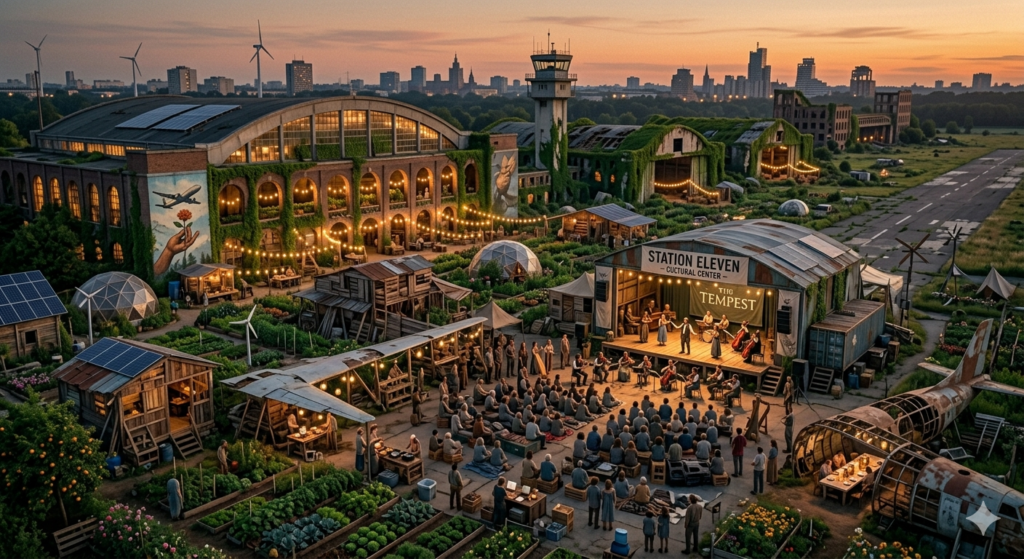
Part of the adaptation’s power comes from timing. Released during the aftermath of global pandemic anxiety, the series felt eerily intimate for many viewers.
But its emotional impact goes beyond relevance.
The show captured something modern audiences desperately needed: the idea that connection, creativity, and shared stories remain essential even when the world feels unstable.
Many post-apocalyptic narratives reduce humanity to brutality.
Station Eleven argues the opposite.
Human beings survive through imagination.
That may be why the adaptation affected audiences so deeply. It treated emotional life as seriously as physical survival.
Final Thoughts
HBO’s Station Eleven succeeds because it understands the philosophical core of Emily St. John Mandel’s novel and then pushes it further emotionally.
The series takes art, memory, ritual, and storytelling more seriously than most television dramas dare to. It treats performance not as luxury after collapse, but as one of the last remaining forms of humanity itself.
In some ways, the adaptation becomes more emotionally radical than the book because it fully commits to the novel’s central argument.
Survival is insufficient.
Human beings also need meaning.
They need stories.
They need connection.
They need ways to remember who they were before the world broke apart.
And sometimes adaptations reveal the deepest truths of a novel by believing in them even more fiercely than the novel did itself.


