The Maekar Ending Reveals What HBO Thinks the Story Is Really About
There are two kinds of adaptation changes. Most of them are cosmetic — a scene compressed, a character merged, a piece of dialogue tightened. Readers notice them, complain about them, get over them. The story underneath is the same story.
And then there are changes that aren’t cosmetic. Changes that tell you the adapter has read the source material, decided what it’s really about, and rewritten the architecture accordingly. The kind of change that, on a careful look, isn’t a betrayal of the original. It’s a thesis about it.
The ending of HBO’s A Knight of the Seven Kingdoms season one is the second kind.
In George R.R. Martin’s novella The Hedge Knight, Prince Maekar Targaryen, after Baelor’s death and the trial of seven, gives Dunk permission to take Egg on the road. It happens off-page — Egg simply turns up the next morning, dressed plainly, and says my father says I am to serve you.
The transaction is brief, dignified, sanctioned. Dunk and Egg ride off as a legitimate pair, prince and knight, with the blessing (however reluctant) of the realm’s most fearsome warrior.
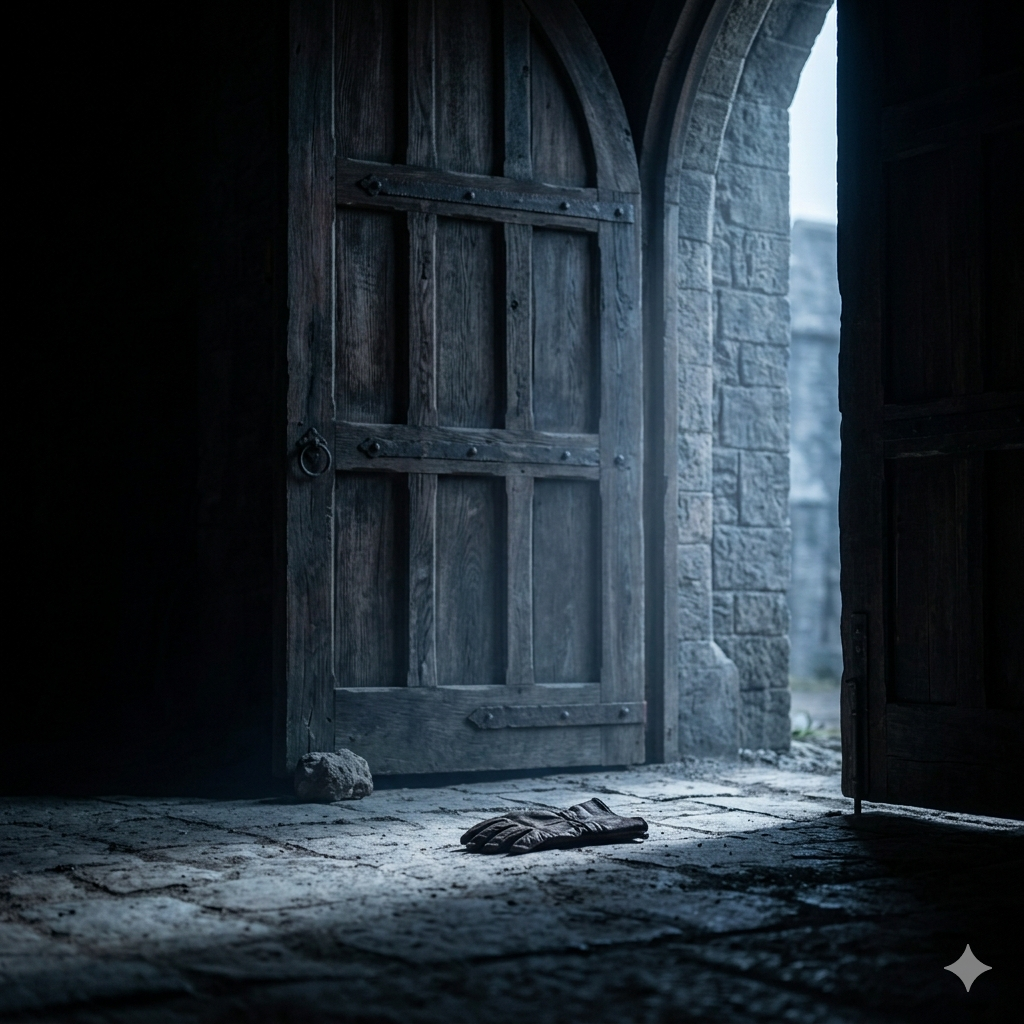
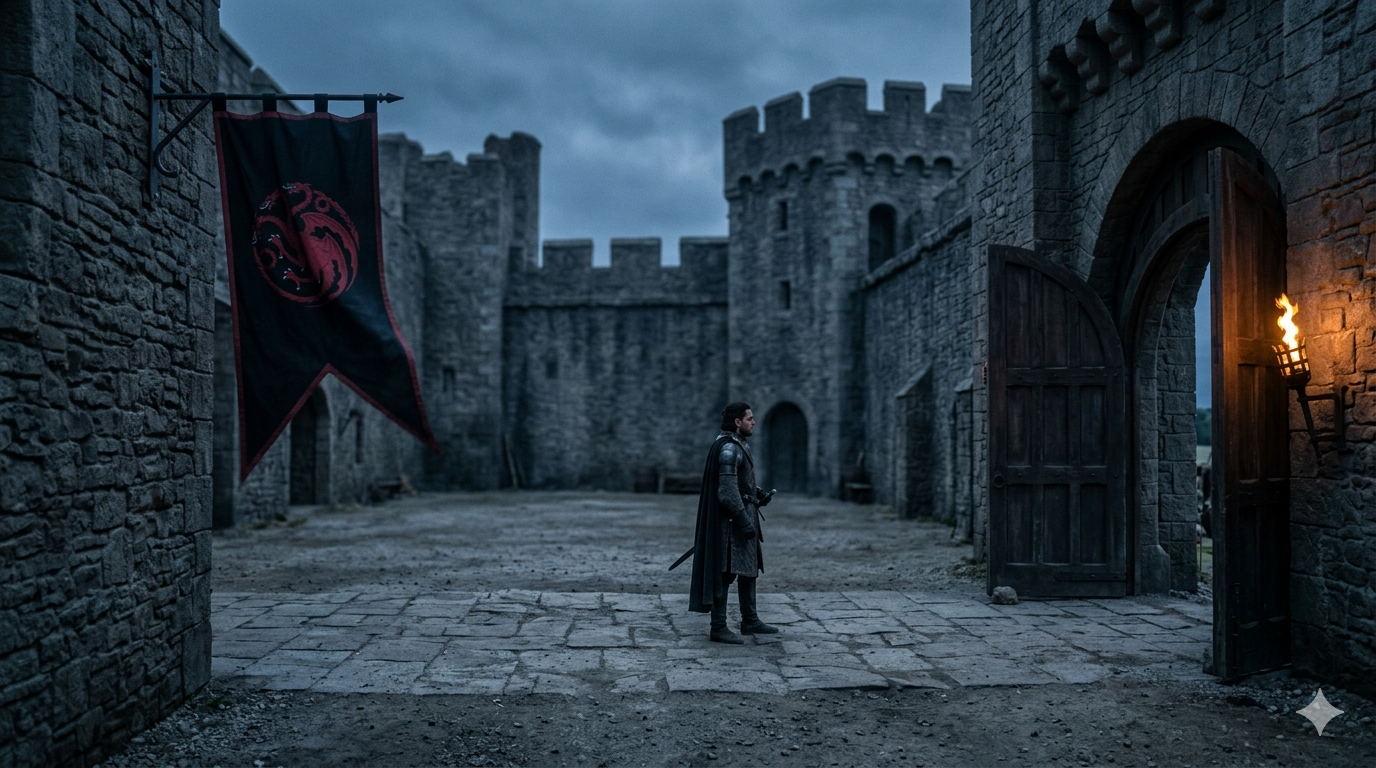
In the show, that doesn’t happen. Maekar refuses. Dunk asks. Maekar denies. Egg sneaks out anyway. The boy lies to Dunk about having permission. And the final shot of the season is not a horizon, not a sunrise, not the two of them riding into the Westerosi distance. The final shot is Prince Maekar Targaryen realising his son has vanished and asking, in pure fatherly panic, where the fuck the boy is.
That ending is the thesis. And the thesis is this: this show is not about Dunk.
What the Change Actually Does
Strip away the noise of finale reactions and just look at the structural work the change is doing.
In the novella’s version, the season would have ended on Dunk. The episode would have closed with our hero rising from his trial reborn — knighted in spirit if not in steel, accompanied by a royal squire he has earned the right to teach, riding off with the blessing of a prince. That’s a knighthood story. That’s the chivalric arc you’d expect from a book called The Hedge Knight. Dunk’s name is in the title. Dunk’s growth is the engine. Dunk’s apprenticeship of Egg, in that version, is the reward the season has been building toward.
The show refuses that ending. Pointedly.
Instead, the season ends on a family rupture. Maekar — a father who has spent six episodes failing one son after another — has just lost his last good one to a man he barely knows, in a flight he did not sanction, after watching his older brother die in a trial he himself dealt the killing blow in. The closing emotion of season one is not Dunk’s triumph. It’s Maekar’s anguish.
That isn’t a small choice. That is HBO standing up and announcing, in case anyone in the audience was confused, that Knight of the Seven Kingdoms is not, in their view, a knight’s tale at all.
It is, like every other show in this universe, a story about a family.
The Show Is Telling You Whose Story It Is
This is the part the showrunner has been almost laughably transparent about, if anyone is listening. Ira Parker has said in interviews that he wants the series to follow Egg across his whole life — four seasons of Egg the boy, four of Egg the prince, four of Egg the king. Twelve seasons in total, if the numbers go that way. Not Dunk the boy, Dunk the man, Dunk the legend. Egg.
That structural ambition tells you everything about how HBO has read the source material. Martin’s novellas are, on their surface, the adventures of a hedge knight. Dunk is the viewpoint character. His name comes first. His thoughts are the ones we sit inside. He is, by any traditional measure, the protagonist.
But the show has looked at those novellas and seen something underneath. It has seen that the real arc — the one that pays off in A Song of Ice and Fire a hundred years later — is the arc of the Targaryen line that runs from Maekar to Aegon V to the line of broken kings that eventually produces Aerys II, the Mad King, and through him the entire catastrophe of the original Game of Thrones.
The story that matters, the one that ripples forward across generations and burns the realm to the ground, isn’t the story of a hedge knight. It’s the story of a prince who runs away from his father with a hedge knight, and the dynastic consequences that follow.
The Maekar ending is HBO writing that thesis into the structure of the show. By denying Egg permission, by leaving Maekar furious and bereft, by closing the season on the family Egg has run from rather than the adventure Egg has run toward, the show is telling you exactly where the camera is going to live going forward. The camera is going to live with the Targaryens. Dunk is the vehicle. He is the lens. He is, like every Stark and Lannister who walked alongside power in the original series, the eyes through which we will watch a dynasty destroy itself.
He is not the subject of the show. He is the witness to it.
Why Maekar Has to Refuse
Once you see the structural logic, the change becomes inevitable. If the show wants Maekar — and through him the Targaryen dynasty — to be the gravitational centre of its long-term story, it cannot afford a clean, dignified, sanctioned departure for Egg. A blessed exit makes the family a backdrop. A refusal makes the family a wound.
The actor Sam Spruell understands this exactly. In his finale interviews he has been explicit: Maekar’s two older sons are a write-off. Daeron is a drunk. Aerion is a sadist. Egg is, in his father’s mind, the last chance. The last chance to produce an heir worth anything. The last chance to succeed as a father after a lifetime of failing. The last chance, in the longer view, to keep his branch of the Targaryen line viable when Baelor’s sons are all gone.
A man in that position, played as Spruell plays him, cannot simply nod and let his last son ride off into the kingdoms with a stranger. The character we have watched for six hours would not do it. To make him do it — as the novella, written quickly and lightly, did — would betray the depth the show has been at pains to build into him. The book’s Maekar is a sketch. The show’s Maekar is a portrait. A sketch can say yes. A portrait cannot.
This is the secondary thing the Maekar ending tells you. It tells you that HBO is invested in Maekar as a man, not as a plot device — and that the show intends to give the Targaryens the same psychological seriousness the original Game of Thrones gave the Starks. The same novelistic interior. The same slow accumulation of dread that comes from watching real people make real mistakes, generation by generation, that they will not live to see the consequences of.
The novella didn’t need that. The novella was a side dish. The show is not a side dish. The show is being structured as the opening movement of a hundred-year symphony that ends with dragons in the throne room and a Stark girl in a king’s bed. To do that, Maekar has to be a real man. And a real man, in the position Maekar is in, has to refuse.
What This Means for the Story Going Forward
This is the part of the change that should excite anyone watching closely. By ending on Maekar’s rage and Egg’s flight, the show has done something structurally interesting that the novellas, as written, never quite did. It has put the family at Egg’s heels.
In Martin’s The Sworn Sword — the second novella, which season two will adapt — there is essentially no Targaryen presence. Maekar barely features. The story is a small-scale war between minor houses in the Reach. Dunk and Egg are passing through. That works as a novella because novellas are self-contained little stones in a stream. It does not work as a season of television, especially not after a finale that has just stranded Egg’s father in a courtyard yelling for him.
So the show has, with a single line of dialogue and a single closing shot, built itself a structural promise for season two: Maekar is going to be looking. The Targaryens are going to be a presence over the horizon. The family Egg has fled is not going to politely disappear into a footnote while we wander the Reach for six episodes. They are going to be the weather under which everything else happens.
That is not the shape of the books. That is the shape of Game of Thrones. And it is HBO telling you, by reshaping a small scene, what kind of story they intend this one to be.
Reading Between the Lines
Every long-running adaptation eventually faces the question of what its source material is for. The cheap version of that question treats the books as raw material to be cut, compressed, and frosted with spectacle. The serious version treats the books as a body of work whose architecture has to be carried into the new medium even when individual scenes need to be remade to do that carrying.
A Knight of the Seven Kingdoms has, in its first season, quietly committed to the serious version. The Maekar ending is the clearest sign of that commitment.
The show has decided that the architecture of this universe — the architecture Martin himself has spent a career insisting on, in Game of Thrones, in House of the Dragon, in every interview he gives on the subject — is the architecture of family. Of dynasties that destroy themselves across generations. Of fathers who fail their sons in specific, datable, traceable ways, and of kingdoms that bear the cost a hundred years later.
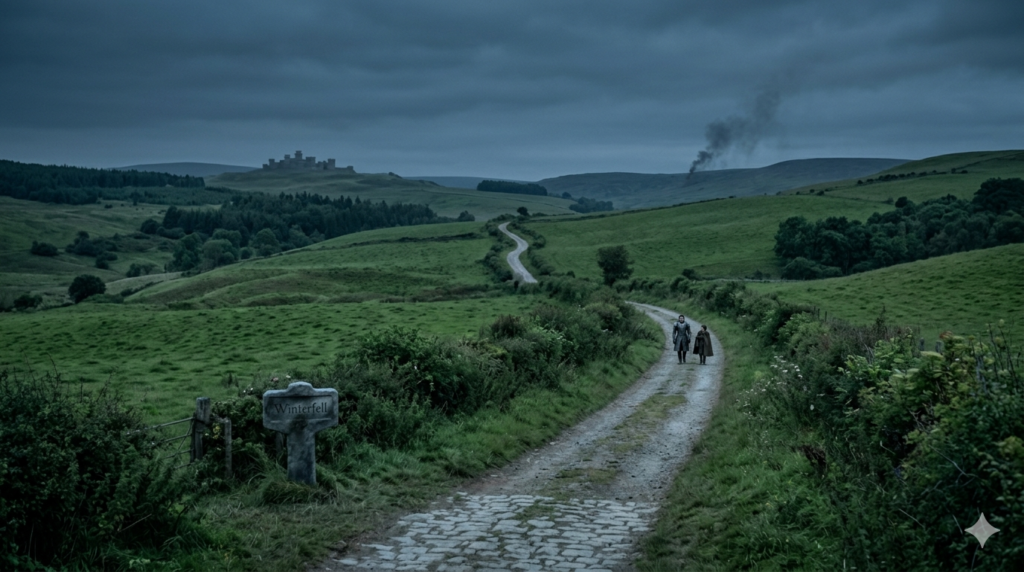
Dunk and Egg, in the books, look like an exception to that pattern. A small, warm, picaresque side-pocket in an otherwise brutal saga. The show has decided that they are not an exception. They are the origin. The Maekar who loses Egg in the closing seconds of season one is, by direct line, the Maekar who will become king and produce Aegon V, whose reign will plant the seeds that grow into Aerys II, whose madness will bring down the dynasty altogether.
The show is not adapting a hedge knight’s adventures. It is adapting the first crack in a long, slow tragedy.
That is what the Maekar ending tells you. That is what HBO thinks the story is really about.
And once you’ve seen it, you cannot watch season two as anything other than what it now obviously is — not the next leg of Dunk’s journey, but the next chapter of a family that has just begun, in the rage of one man in a courtyard, to break.


