Why Dystopian Narrators Are Almost Always Unreliable and What That Does to the Reader
Begin with a simple observation that becomes less simple the longer you sit with it.
The narrators of the greatest dystopian novels are, almost without exception, people who cannot fully see their own situation. Winston Smith does not understand the true nature of O’Brien until it is too late.
Offred admits repeatedly that she is telling the story from memory, that she may be misremembering, that she has reasons to shape the account in ways that are not purely documentary. Kathy H. narrates Never Let Me Go in a voice so thoroughly formed by the regime that produced her that she cannot perceive the atrocity she is describing as an atrocity. D-503, the narrator of Zamyatin’s We, begins the novel as a true believer and records his own psychological disintegration without ever fully comprehending what is happening to him.
These are not unreliable narrators in the way that, say, Stevens in Kazuo Ishiguro’s The Remains of the Day is unreliable, suppressing knowledge of his own emotional life through a very English form of professional self-effacement. The unreliability of dystopian narrators is structural rather than psychological. It is produced not by individual personality but by the conditions of the world the narrator inhabits. The regime has done something to the narrator’s capacity to perceive and report truly, and the novel’s deepest argument is conducted in the gap between what the narrator tells you and what you, reading from outside the regime, can see that the narrator cannot.
This is one of the most sophisticated techniques in the literary tradition, and it is so consistently present in dystopian fiction that it deserves to be understood not as a stylistic choice individual writers happen to make but as something close to a formal requirement of the genre itself.
Why the Dystopian World Produces Unreliable Narrators
The connection between dystopia and narrative unreliability is not accidental. It follows from the nature of what a dystopian regime actually does.
A fully realised totalitarian system does not merely control behaviour. It controls the framework through which behaviour is understood and evaluated. It shapes not just what people do but what they think they are doing, what they believe their actions mean, what they are capable of imagining as alternatives. A regime that has succeeded in this project produces citizens who are not simply obedient but genuinely convinced, or something close to genuinely convinced, that the world they inhabit is the only possible world.
A narrator produced by such a regime cannot be fully reliable, because full reliability requires access to a perspective outside the regime’s framework, and the regime’s framework is precisely what the narrator has been formed inside of. The narrator can report what happens. The narrator cannot always report what it means, because the meaning of events is partly determined by the conceptual vocabulary available to the narrator, and that vocabulary has been shaped by the very system whose operations the narrator is describing.
This is a different problem from ordinary human fallibility. We are all unreliable narrators of our own lives to some degree, because we all have blind spots, investments, and limitations of perspective. But the unreliability of dystopian narrators is not a product of ordinary human limitation. It is a product of systematic ideological formation. The blind spot is not accidental. It has been engineered.
This is the first thing the choice of an unreliable narrator in a dystopian novel announces: that the regime is so thoroughgoing in its effects that even the person telling you about it has been shaped by it in ways they cannot fully perceive.
Winston Smith and the Limits of His Understanding
Winston’s unreliability in 1984 is partly a matter of information and partly a matter of formation.
The information problem is straightforward. Winston does not know what the Party actually is, what it actually wants, or how it actually operates at its higher levels. He has theories, some of which are wrong. He believes, for most of the novel, that O’Brien is a secret dissident. He believes that the Brotherhood exists as a genuine organised resistance. He believes that Goldstein’s book, if he can only read it, will explain the system and provide the basis for opposing it. All of these beliefs are wrong in ways that Winston cannot detect because he does not have access to the information that would correct them.

But the formation problem is more interesting and more subtle.
Winston has been formed by the Party’s world in ways he does not fully recognise. His very conception of what resistance looks like, what freedom would mean, what a human life properly lived would consist of, has been shaped by the limited vocabulary available to him in a society that has been systematically stripping out the conceptual resources that would allow those ideas to be thought through fully. When Winston imagines freedom, he imagines it in terms derived from the scraps of the pre-revolutionary world he has managed to recover: a room with a bed, a woman, privacy, the past restored. His imagination of freedom is retrospective rather than prospective, which is itself a symptom of the damage the regime has done to his capacity to think beyond it.
The reader, coming from outside, can see this. The reader can see that Winston’s vision of liberation is constrained by the constraints the regime has imposed on his imagination. The reader can see that even in his rebellion, Winston is, in some ways, the Party’s product. This gap between what Winston understands about himself and what the reader can understand about Winston is where much of the novel’s most important work is done.
Offred and the Problem of Testimony
The Handmaid’s Tale is formally explicit about its narrator’s unreliability in a way that 1984 is not.
Offred tells you directly that she is not sure she is remembering accurately. She offers you alternative versions of scenes, presenting two different accounts of what happened and refusing to adjudicate between them. She acknowledges that she has reasons to shape the story in ways that serve her own emotional needs. She is, as a narrator, unusually honest about the dishonesty inherent in any act of retrospective narration.
But the novel goes further than this through the Historical Notes section that appears at its end.
The Historical Notes, which present a scholarly conference in 2195 at which a historian analyses the account you have just read as a primary source, perform a devastating manoeuvre. They reveal that what you have been reading is a reconstruction, assembled from recordings Offred made on cassette tapes and then transcribed and edited by a historian named Pieixoto. Pieixoto is scrupulously sceptical. He questions whether the account is accurate, whether it has been embellished, whether the chronology is reliable. He is more interested in what the account can tell him about the political and social structure of Gilead than in Offred as a person.
The effect is vertiginous. You have spent the entire novel inside Offred’s consciousness, trusting her perceptions even while being aware of their limitations. The Historical Notes remove you from that intimacy with a clinical abruptness and position you instead as an analyst of a document whose authenticity is uncertain.
What Atwood is doing here is extending the unreliability outward. It is not just Offred who cannot fully see her situation. It is also the historian who analyses her account from a distance of two centuries. And it is also, by implication, the reader who has been reading both with the assumption that reading is a form of access to truth.
The novel suggests that the effects of a regime like Gilead on narrative and testimony do not end when the regime ends. They propagate through the accounts that survive, through the silences in those accounts, through the agendas of those who later interpret them. The unreliability does not belong to Offred alone. It belongs to the entire chain of transmission through which her story reaches you.
Kathy H. and the Voice That Cannot Hear Itself
The most formally radical use of the unreliable dystopian narrator in the tradition is Kathy H. in Never Let Me Go, and it is radical precisely because the unreliability is so complete that it never declares itself.
Winston knows, at some level, that something is wrong with his world. Offred knows. D-503 comes to know, with great difficulty and pain. Kathy H. does not know. Or rather, she knows the facts of her situation with great clarity, the fact that she and her friends are clones raised to donate their organs, the fact that they will die from this process, the fact that the world around them has decided that this is acceptable, but she does not experience these facts as the atrocity they are.
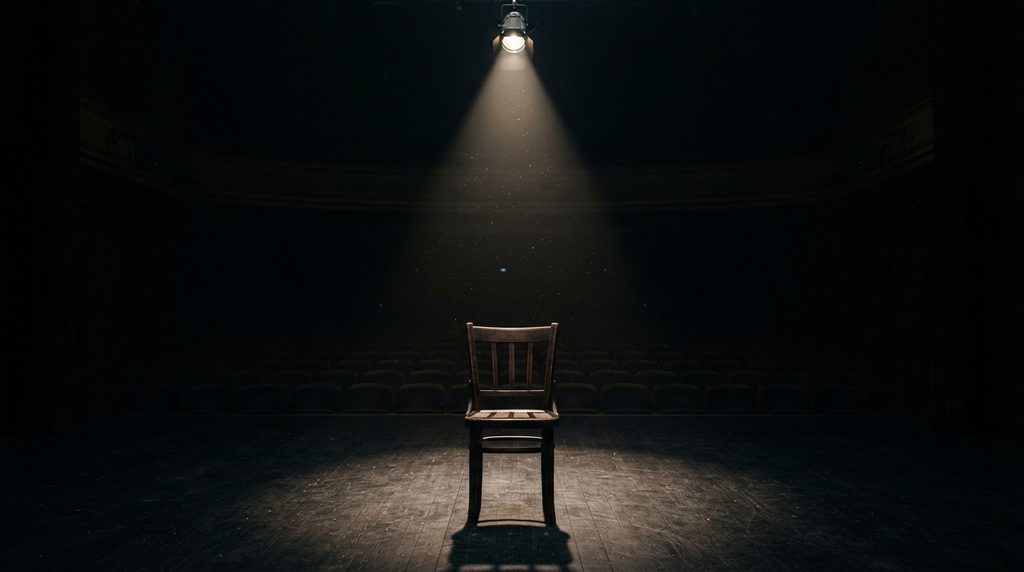
She experiences them as the weather.
This is the most devastating achievement of Ishiguro’s construction of the narrator. The voice is warm, thoughtful, reflective, and genuinely kind. Kathy H. is, by any ordinary measure, a good person. She cares about her friends. She pays attention to the world around her with considerable sensitivity. She has a rich interior life.
And she has been so thoroughly formed by a world that treats her as a means rather than an end that she cannot perceive her own situation with the moral clarity it demands. She talks about the donations, about completion, about carers and donors, in the language the system has given her, and the language has been constructed to make the thing it describes sound like a vocation rather than an atrocity.
The reader, coming from outside, is in a state of sustained moral horror that Kathy does not share. The gap between the reader’s perception and Kathy’s perception is the novel’s central argument, and it is conducted entirely through the narrator’s voice without ever being stated.
This is the most sophisticated version of the technique available to dystopian fiction. The narrator is not aware that she is unreliable. The regime has done its work so thoroughly that the narrator’s very capacity to perceive her situation as unjust has been removed. She is not suppressing a knowledge she has. She does not have it.
What This Does to the Reader
The consistent use of unreliable narration in dystopian fiction produces a reading experience that is structurally different from almost any other genre.
In most fiction, the reader’s relationship to the narrator involves some degree of identification and some degree of critical distance. You are inside the narrator’s consciousness enough to feel what they feel, and you are outside it enough to evaluate what they do. The balance between these two positions shifts throughout the text, but both positions are available throughout.
In dystopian fiction, the unreliable narrator creates a third position that is specific to the genre. You are inside the narrator’s consciousness, feeling what they feel. You are outside it, evaluating what they do. And you are also watching the regime operate on the narrator, seeing the ways in which the narrator’s perceptions and feelings and evaluations have been shaped by a system that the narrator cannot fully see.
This third position is uncomfortable in a very particular way. It is the position of someone who can see the trap and cannot warn the person inside it. Winston is walking toward O’Brien and you can see what O’Brien is. Kathy is describing the donations and you can feel the horror that she cannot. Offred is making her accommodations with Gilead and you can see both the necessity of those accommodations and their cost in a way that she is too close to her situation to fully see.
This discomfort is not incidental. It is the genre’s primary political mechanism.
Dystopian fiction does not primarily argue against totalitarianism by depicting its horrors from the outside. It argues against totalitarianism by placing you inside a consciousness that the regime has damaged, and making you feel, from the inside, what that damage costs. You are not observing the effects of the regime on someone else. You are inhabiting the effects of the regime on someone else, which is an entirely different experience, and one that produces a different kind of political understanding.
The unreliable narrator is the mechanism by which this inhabitation is achieved.
The Reader as Corrective
There is one more dimension to the unreliable dystopian narrator that is often overlooked, which is what it asks of the reader.
A reliable narrator asks the reader to receive. A reliable narrator is a guide, a source of information and evaluation, a consciousness whose perceptions can be trusted and whose judgments can be considered. The reader’s primary activity is reception and response.
An unreliable narrator asks the reader to produce. The reader must do the interpretive work that the narrator cannot do, must supply the perspective the narrator lacks, must read between the lines of what is being told to understand what is actually happening. The reader becomes the novel’s corrective mechanism. The gap between what the narrator sees and what the reader sees is not a flaw in the text. It is the text’s invitation to the reader to become an active participant in the construction of meaning rather than a passive recipient of it.
This is what dystopian fiction consistently asks of its readers, and it is one of the reasons the genre produces such intense and lasting responses. You are not merely reading about a world where people have been damaged by a regime. You are being asked to see what the damaged person cannot see, to hold onto the perspective the regime has tried to eliminate, to be, in your reading, the thing the regime most fears.
The reader of a dystopian novel, positioned in the gap between what the narrator can perceive and what the reader can perceive, is performing an act that is, in the logic of the novel’s world, a form of resistance.
This is why the unreliable narrator is not simply a technique dystopian fiction happens to use. It is the technique that makes dystopian fiction do what it is for.
The narrator cannot see clearly. The reader must. The act of reading clearly, in a genre built around regimes that destroy the capacity for clear seeing, is the point.