
What Parable of the Sower Is Actually Doing With Its Scripture
There is a particular way Octavia Butler’s Parable of the Sower gets praised, and the praise tells you something important about what the novel has not been read for.
The book is widely described as prescient. Reviewers point out that Butler, writing in the early 1990s, set the novel in 2024 and 2025, and that the world she imagined in those years resembles the actual world in unsettling ways. Climate collapse. Walled communities. Mass displacement. Private police forces. A political slogan about making America great again, given by a presidential candidate Butler invented and named decades before its real-world echo.
This is all true. The novel is, by ordinary measures of speculative accuracy, remarkably prescient.
It is also not what the novel is doing.
The prescience is a side effect of the analysis Butler was performing in the early 1990s, which was a careful piece of political extrapolation from the conditions she was observing around her at the time. She was not predicting the future. She was describing the present she could see, and projecting its visible trajectories forward. The fact that the projections turned out to be accurate is a confirmation of her diagnostic eye, not a sign that she was operating in some prophetic register.
To read the novel as prescient is to praise it for the wrong reason. The novel deserves better.
What the novel is actually doing, when read carefully at the level of form, is something almost no other dystopian novel of the twentieth century attempted. It is constructing, in real time on the page, a new sacred text. The novel is not about the writing of a new religion. The novel is the writing of a new religion. The form is the argument. Once you can see this, the book becomes clear in a way that the popular reception has consistently missed.
This post is an attempt to read the novel at that level. The work is the close-reading mode the blog has been using on other dystopias. The argument is that the novel’s most important contribution is formal rather than predictive, and that the form has been overlooked because the predictions have been so striking.
The Book in Brief
A short summary, for readers who have not read the novel or who need a reminder.
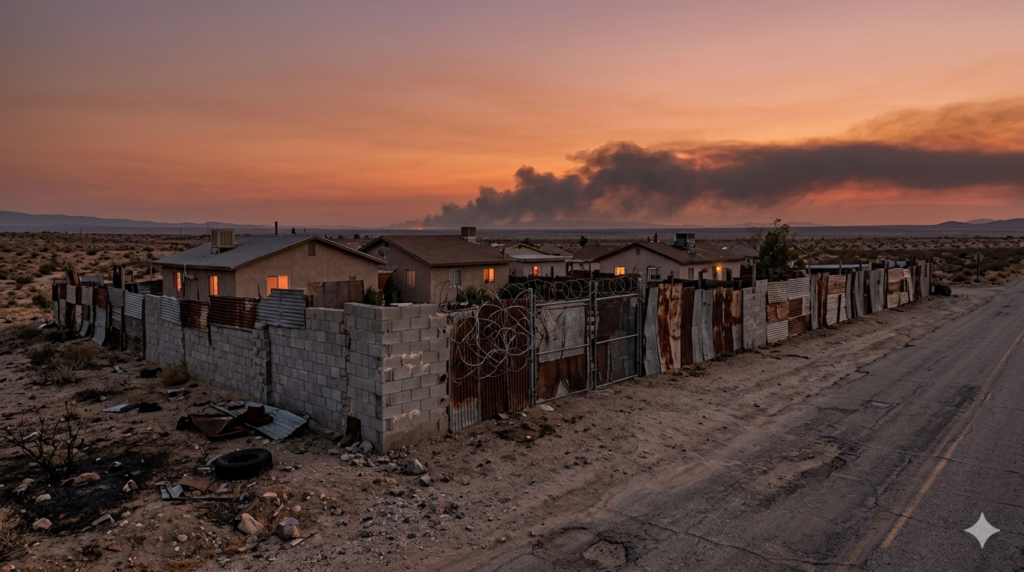
Lauren Olamina is fifteen at the start of the book. She lives in a small walled neighbourhood in southern California in 2024 and 2025. The world outside the walls is collapsing. Water is scarce. Fires are common. Roving bands of desperate people, many of them addicted to a drug that makes them set fires for pleasure, attack walled communities. The federal government has effectively withdrawn. State and local services have collapsed.
Lauren’s father is a Baptist minister who runs the small church inside the walls and is the moral centre of the community. Lauren attends his services. She also, in secret, has been working on something else. She has been writing.
What she has been writing is a religious text she calls Earthseed. The text consists of short verses about the nature of God, the nature of change, and the obligations of human beings in a world that no longer functions. The central claim of Earthseed is that God is Change. Not change as a metaphor. Change itself, as a force, as the only constant in the universe, as the thing all human beings live inside and must learn to shape.
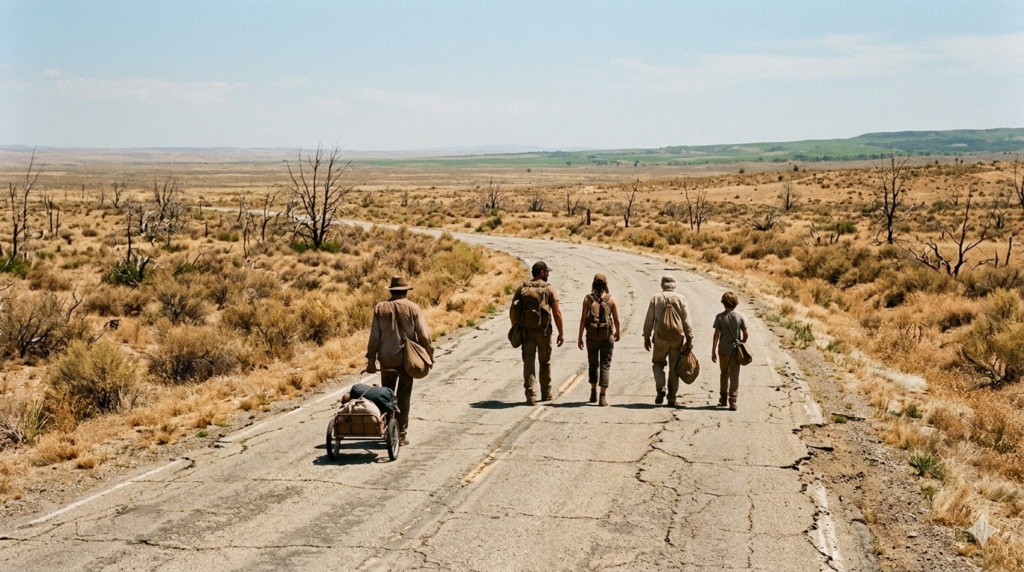
The neighbourhood is eventually destroyed. Lauren survives. She walks north with a small group of refugees. As they walk, she begins to share Earthseed with them. By the end of the novel, she has the beginnings of a community of believers and the beginnings of a plan for what Earthseed will become.
That is the plot. The novel’s form is what carries the argument.
What Is Actually on the Page
The novel is written as a series of diary entries by Lauren. Each entry is dated. Each entry begins with the date and her name and the place she is writing from.
But every entry is also preceded by a short verse from Earthseed. The verse is set off from the diary entry, often in a different visual register on the page, presented as scripture rather than as personal writing.
This is the most important formal feature of the novel and the one most readers do not consciously register on a first reading. The book is structured as a sacred text with commentary. Earthseed is the scripture. Lauren’s diary is the commentary. The two are presented together, on the same page, in a relationship that mimics the structure of religious texts that have come down to us through history.
Most religious texts arrive in the reader’s hands as the result of long processes of accumulation, editing, and canonisation. The original believers wrote things down. Other believers added context. Later editors arranged the material. By the time the text reaches a modern reader, the scripture and the commentary have been separated by centuries.
Butler is doing the opposite. She is showing the reader the moment when the separation has not yet happened. The scripture is being written. The commentary is being written. They are appearing together, in the same hand, by the same person, on the same days.
The reader is being placed inside the founding moment of a religion. The novel is not about that founding moment. The novel is performing it.
What Earthseed Actually Says
The verses themselves are short. Most are no more than four or five lines. They are written in a plain English that is conscious of being plain.
The central claim, returned to throughout the book, is that God is Change. The verse that establishes this is given early and repeated, in variations, across the novel. God is not a being who acts on the world. God is the action itself, the constant transformation of everything, the only thing that is reliably true about reality.
The implication of this claim, which Butler unfolds carefully, is that human beings have a different relationship to God than the one most existing religions describe. They do not pray to God. They do not ask God for help. They do not wait for God to intervene. They cannot. God is not the kind of thing that intervenes.
What they can do is shape God. Because God is change, and human beings can affect change, human beings can affect God. The relationship is not one of worshipper to deity. The relationship is one of participant to process. The human being is part of what God is, and the human being’s choices contribute to what God becomes.
This is, in compressed form, the theological argument of Earthseed. It is also, when you look at it carefully, a serious piece of philosophical writing. Butler is not playing at religion. She is constructing one. The construction is rigorous. The verses are spare because they are doing the work that religious verses do, which is to make a metaphysical claim available to ordinary people without requiring them to follow a long argument.
Why the Scripture Has to Be Inside the Book
A novel about a new religion could have been written several different ways.
Butler could have written a third-person novel about Lauren, in which her religious writing was described but not shown. The reader would have been told that Lauren was writing scripture, would have been given the general drift of what she believed, and would have followed the plot of the neighbourhood’s destruction and the walk north.
She did not write the book this way. The reason matters.
A novel about a new religion that does not contain the actual scripture is a novel that depicts religion from outside. It treats religion as an object the novel is describing. The reader is positioned as a third party, looking at someone else’s belief.
Butler did not want this position. She wanted the reader to be inside the founding of the religion, in the same way Lauren’s first followers are inside it. The reader is being given the scripture as it is being written. The reader is reading it in the same conditions in which Lauren’s followers read it, which is to say, embedded in the diary entries that record the daily circumstances of its writing.
This is what makes the novel different from almost every other novel about religion. The novel is not depicting religious experience. The novel is producing religious experience, in the reader, through the structure of the text itself.

The reader who reads the novel attentively comes to find the Earthseed verses landing with the weight of scripture rather than with the lightness of fiction. The verses begin to repeat in the reader’s mind. The reader returns to them, finds favourites, marks pages. This is not an accident of how the novel was written. This is the novel doing what religion does, which is to produce, through repeated encounter with a small set of memorable verses, a different relationship to language than the one the reader has with ordinary prose.
The novel is testing, in real time, whether a new scripture can do religious work on a contemporary reader. The test is, in many cases, successful. Readers of Butler’s novel report carrying the verses with them for years afterwards. The verses become part of how they think about change in their own lives. This is what scripture is supposed to do. Butler has demonstrated, by writing one, that it can still be done.
The Voice That Holds It Together
Lauren’s voice in the diary entries is one of the most controlled first-person narrations in twentieth-century American fiction, and it is doing specific work that the popular reception has not adequately credited.
The voice is fifteen years old at the start. It is eighteen by the end. The voice ages across the book. It becomes more confident. It loses some of its early hesitations. It does not lose its underlying patience.
What the voice does throughout, and what is doing the deepest work, is to keep the founding of Earthseed grounded in the practical material of Lauren’s daily life. She writes about water rationing. She writes about her relationship with her father. She writes about her stepmother’s death. She writes about the boy she is interested in. She writes about the dogs that have become a threat to the neighbourhood. She writes about her chores.
Interspersed with all of this is the scripture. The juxtaposition is not accidental. Butler is showing the reader that the founding of a religion is not a separate event from the founding’s writer’s daily life. The religion comes out of the life. The life and the religion are written in the same hand, on the same days, in the same notebooks.
This is one of the most important things the novel does. It de-mystifies the founding of religions. Most readers, asked to imagine the founding of a religion, would picture a dramatic moment of revelation, a charismatic figure on a mountain, a voice from the sky. Butler shows the reader a fifteen-year-old girl writing in her bedroom between chores. The scripture comes out of the ordinary days. The ordinary days are what the scripture is made of.
This has implications the novel does not state explicitly. If religions can come out of ordinary days, then the religions that have come down to us through history also came out of ordinary days. The dramatic founding stories that have accumulated around the historical religions are themselves later commentary. The original founders were people who wrote in notebooks between chores, and the scripture that has reshaped the world emerged from notebooks like the one Lauren is writing in.
The novel makes this argument by performing it. The reader, watching Lauren write Earthseed, is watching how religions actually begin. The novel is, in this respect, a piece of religious history conducted through fiction.
What the Walking North Sections Are Doing
The second half of the novel is structured around Lauren’s journey north with a small and growing group of refugees. The journey is, in plot terms, the action of the book. It is where most of the conflict happens, where most of the deaths occur, where the community of Earthseed begins to take shape.
A reader who reads the journey at the level of plot will register the events. The attacks. The deaths. The new arrivals. The slow accumulation of the group. The eventual arrival at the place where Earthseed will be founded.
A reader who reads at the level of form will register what the journey is doing for the religion.
Religions need stories. They need founding myths that can be told and retold, that can give the community its identity, that can be invoked when the community is under stress. The Christian gospels are founding stories. The Hebrew Bible is full of founding stories. The Quran contains founding stories. Every functioning religion has, at its core, a set of narratives that the community holds in common.
Earthseed, at the beginning of the novel, has scripture but no stories. The verses make claims about God and change, but they do not yet have characters, events, and tested principles. They are abstract. They cannot yet do the full work of a religion, because they have not yet been tested in narrative.
The walking north is the narrative the religion needs. Lauren’s journey, with its specific incidents and its specific losses, becomes the founding story of Earthseed. When the religion is established at the end of the book, it has both the scripture and the story. The reader has been present for both. The reader has watched the religion acquire what it needed to function.
This is one of the deepest formal things the novel does. The journey is not just plot. The journey is the religion writing its own founding myth in real time. By the end of the book, when Lauren and her followers arrive at the place that will become Acorn, the community is in possession of a complete religious package. Scripture. Stories. A specific cohort of founding members who have shared a specific journey. Rituals are about to emerge. A canon is about to form.
The novel ends at the point where most religious histories begin, which is the moment when the founding generation has gathered, the texts are in place, the stories have been lived, and the work of institutionalisation can begin.
What This Means for How We Read the Novel
I have been arguing that the novel is doing something specific at the level of form, and that the form has been largely missed in the popular reception.
The implications of recovering the form are several.
First, the novel becomes more impressive than the popular reception has allowed. It is not just a prescient piece of speculative fiction. It is a sustained experiment in whether a contemporary writer can write a functioning religion. The experiment is rigorous. The writing of Earthseed is not a stunt. It is a serious piece of theological work, conducted inside a novel, with the novel’s structure designed to test whether the theology can actually do religious work on contemporary readers.
Second, the novel’s project of social criticism becomes clearer. Butler is not just describing a collapsing society. She is asking what kind of belief system would be needed to function inside such a society. The existing religions in the novel are presented sympathetically but as insufficient. Lauren’s father’s Baptist faith is honourable but it cannot, by its structure, give its believers the equipment they need to survive what is coming. Earthseed is Butler’s proposal for what such equipment would look like. The novel is, in this sense, prescriptive as well as descriptive.
Third, the novel’s place in the dystopian tradition becomes more specific. Most dystopian novels are descriptive. They show the reader the regime and ask the reader to feel the appropriate emotions. Parable of the Sower is descriptive in its first half and constructive in its second half. The construction is the religion. The novel is offering the reader something, not just warning the reader against something.
This is unusual in the genre. Most dystopias do not propose solutions. Butler proposes one. The solution is not political in the conventional sense. It is religious. The novel is making the argument that under conditions of total social collapse, the kind of political action available to ordinary people is not the kind that overthrows regimes. It is the kind that builds new communities around new beliefs. The walking north is the political action of the novel. The community at the end is the political outcome.
This is a serious argument and a controversial one. The novel does not entirely defend it. Butler is honest enough to show the costs and limitations of Lauren’s project. But the novel is making the argument, in form as well as in content, and the argument has been almost entirely absorbed by the popular reception as something simpler than what Butler wrote.
Reading Between the Lines
The argument of this post is small and specific.
Parable of the Sower is doing something at the level of form that the popular reception has largely missed. The form is the construction, in real time on the page, of a new sacred text and the founding story that goes with it. The reader is being placed inside the founding of a religion, in a way that almost no other novel about religion attempts.
The popular reception has read the novel for its prescience and for its plot. Both readings are accurate at their own level. Both miss what the novel is actually doing.
The recovery of the form requires close attention to the Earthseed verses, to their relationship with the diary entries, to the way the journey north functions as a founding story, and to the larger structural fact that the novel ends at the point where most religious histories begin.
The novel is on the shelf. It is widely available. It has been read by hundreds of thousands of people. It has been read carefully by relatively few of them.
The careful reading is still available.
Read the verses. Read them as scripture, not as fiction. Notice what they begin to do in your mind as you encounter them across the book. Notice that you remember some of them. Notice that you mark pages.
This is what Butler was testing. The test is, for many readers, successful.
The novel is a religion in production.
The production continues every time the book is read carefully.
The reader is part of what God is.
That is, in the end, the novel’s central claim, and it is one the reader can verify by performing the experiment the novel sets up. Read the book. Read it slowly. Hold both the diary and the scripture in mind together.
The scripture will do what scripture does, or it will not. Either way, you will have read the novel for what it is, rather than for what the popular summary has reduced it to.
The book is waiting.
Read it as if you had never read it.
Most readers have not.


